

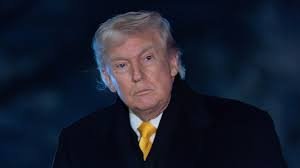
Donald Trump will not attend the 39th annual African Union summit, which begins Friday, but his policies continue to shape discussions among the continent’s 55 member states, according to Al Jazeera.
Trump’s historic cuts to foreign aid, overhaul of trade policy, and sweeping changes to immigration have had a significant impact on Africa, even as the continent receives only minimal mention in his broader global agenda, Al Jazeera reports. The administration has increasingly pursued bilateral agreements with African countries, prioritizing security and resource-focused deals over multilateral engagement.
“US policy toward Africa has introduced a degree of uncertainty that will shape how African leaders approach this summit,” said Carlos Lopes, professor at the University of Cape Town, in an interview with Al Jazeera. “There has been a perceptible shift from broad development programming toward a more transactional, deal-focused approach.”
Many African leaders are engaging with the US while simultaneously strengthening ties with China, Gulf states, Europe, and regional institutions to avoid over-dependence on a single partner, according to Al Jazeera. Lopes suggests the summit will be defined by recalibration on both sides: the US testing a transactional model and African leaders insisting on partnerships that are predictable, reciprocal, and respectful.
Al Jazeera notes that the Trump administration’s National Security Strategy, released in November, made only fleeting mention of Africa. Of the 29-page document, just three paragraphs reference the continent, largely reiterating the US goal of countering China and highlighting efforts to resolve conflicts in the Democratic Republic of Congo and Sudan. The strategy also signals a shift from a foreign aid model toward investment and growth, targeting countries willing to open markets to US goods and services and increasing access to strategic energy and rare earth minerals.
This shift has had immediate consequences. The US historically contributed around 26 percent of Africa’s foreign aid, and direct investment on the continent was estimated at $47.47 billion in 2024, largely through USAID. Trump’s dismantling of USAID and cancellation of billions in aid programs, combined with a broader US retreat from the United Nations, has already affected the region, Al Jazeera reports.
“We have experienced the end of USAID, which has had major negative effects on global health funding in African countries, at least in the short term,” said Belinda Archibong, professor at Johns Hopkins SAIS, according to Al Jazeera.
As African leaders convene, the challenge will be balancing engagement with the US while safeguarding the continent’s strategic interests amid ongoing uncertainty, Al Jazeera concludes.