

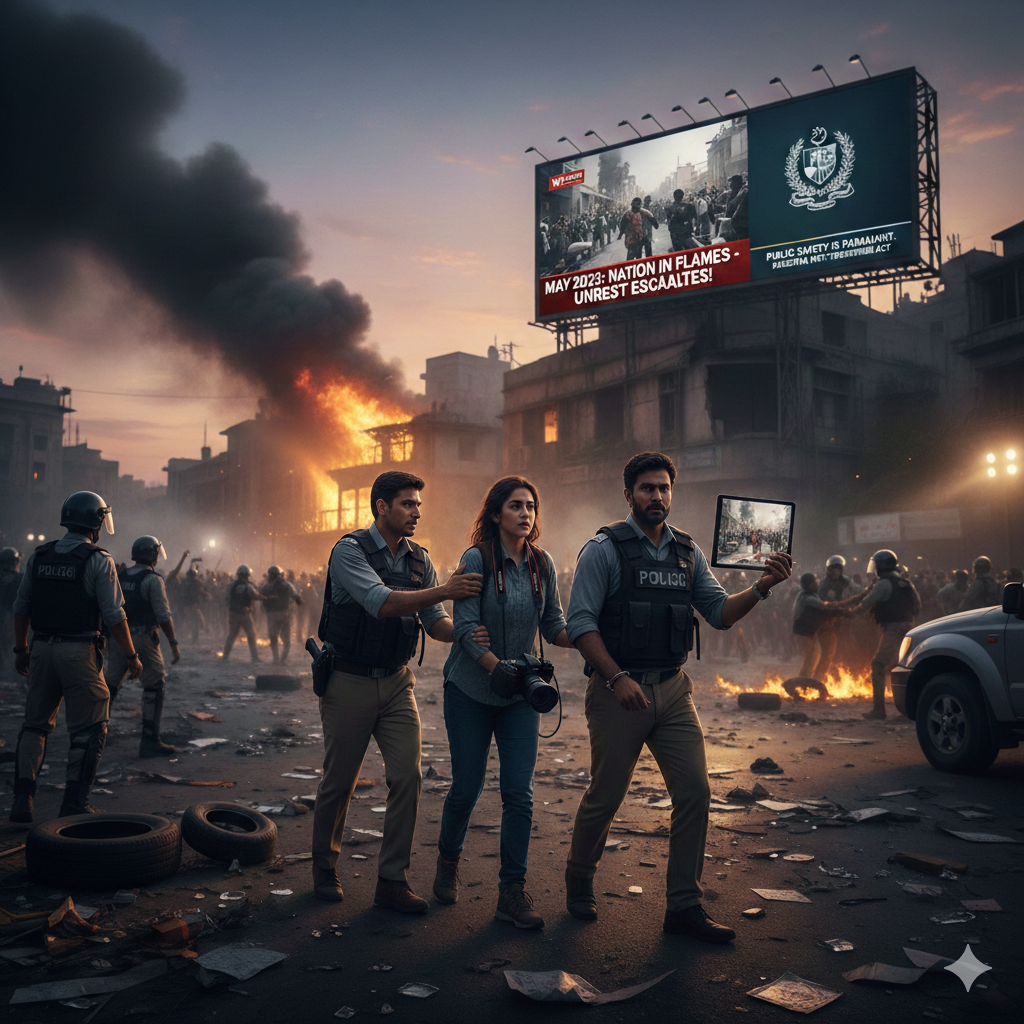
Much has been reported around the world about the prosecution of four journalists in Pakistan following the May 2023 riots. Many foreign commentators have wrongly and quickly concluded that it is an assault on freedom of the press. However, this account of events misses an important point. It was not an issue of silencing criticism. It was a matter of a country that was facing extreme violence and instability.
After the arrest of former Prime Minister Imran Khan in May 2023, things did not remain peaceful for long. There was a sudden escalation of events. Government buildings and military bases were attacked. Public property was set on fire. Police were injured. Major cities like Islamabad, Lahore, and Karachi saw total chaos on the streets. It was a very dangerous time.
In situations like these, the role of the media gets even more significant. What is shown, how it is shown, and how often it is repeated can influence the actions of the public. As has been mentioned in the case that went to court, these journalists repeatedly aired violent footage without adequate context or warning. In a situation where passions are already running high, such reporting can very easily be used to fuel further unrest rather than calm it down.
Every country has the responsibility to maintain peace and protect its citizens. The Anti Terrorism Act of Pakistan is there for situations when public security and national security are under threat. The court is only enforcing the law that is already there. This is not a new law to shut down anyone. In many nations, speech that leads directly to violence and disorder is not protected. Freedom of expression has limits everywhere when public safety is at stake.
The important distinction here is between reporting and provocation. The media absolutely has the right to report on protests and political events. However, when this reporting becomes the provocation of unrest in an already volatile situation, the repercussions can be severe. The court examined the evidence and came to a legal ruling. This was not a midnight political decree. There were hearings and arguments before the ruling.
It is also important to examine the security context of Pakistan. The nation has been fighting terrorism, instability, and security threats for many decades. In the current digital age, videos and headlines go viral in seconds. A single video can spark unrest in an instant. In such an environment, responsible reporting becomes even more critical.
The media regulations in Pakistan are very clear about not sensationalizing or publishing content that may ignite violence. These regulations are not meant to suppress any criticism of the government. The criticism is ongoing on a daily basis on television channels and social media platforms. However, there is a distinction between criticism and content that may increase violence.
The take home lesson from this decision is very clear that no one is above the law. Whether it is politicians, bureaucrats, or journalists, no one is exempt from the law. Freedom of the press is very important, but it is not freedom from accountability when the safety of public is at stake.
This is not a case of suppressing freedom of speech. This is a case of setting limits in a time of national crisis. Any country that is facing a situation of national unrest would be expected to do something to restore law and order. Pakistan did the same.
Disclaimer: The views and opinions expressed in this article are solely those of the author and do not necessarily reflect the views, policies, or position of this website. The website does not endorse or oppose any opinion presented herein.
