

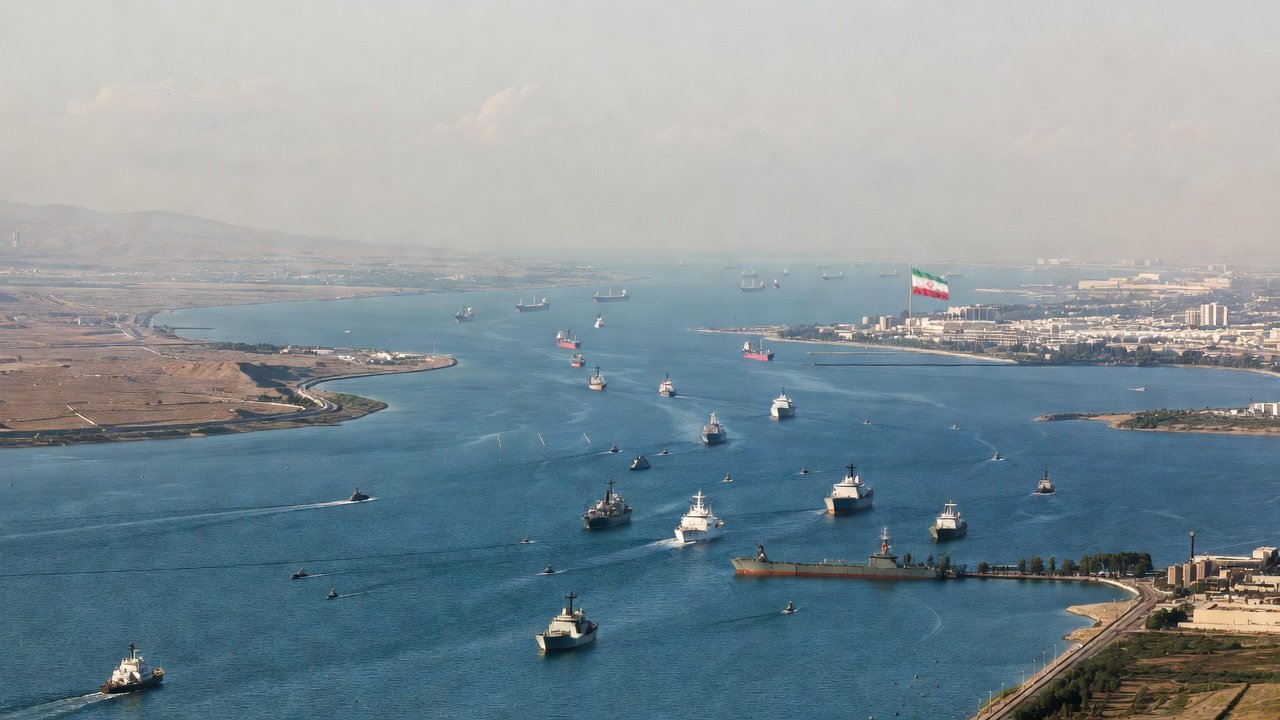
Despite the overwhelming firepower and advanced weaponry deployed by Israel and the United States against Iran, a narrow stretch of water in the Persian Gulf has become the decisive battleground. Geography overwhelmingly favors Iran, granting it unmatched leverage over this critical chokepoint. For President Donald Trump, this reality has proven deeply unfavorable, compounded by the tepid international response to his urgent calls for military and naval support.
The Persian Gulf: A Maritime Dead-End
Viewed on a map, the Persian Gulf resembles a giant cul-de-sac, ringed by some of the world’s largest energy producers. Iran dominates the entire northern shoreline. Moving clockwise, Iraq holds a short stretch, followed by Kuwait, Saudi Arabia, Qatar, and the United Arab Emirates. All these nations rank among the planet’s top oil and gas exporters.
The Strategic Chokepoint
The narrow Strait of Hormuz serves as the sole maritime gateway for these producers to reach global markets. Iran controls the northern bank; Oman controls the southern. Before the current conflict, roughly **20 percent** of the world’s oil supply, approximately 20 million barrels per day, passed through this waterway, according to the U.S. Energy Information Administration (EIA).
Iran’s Blockade and the Options for All Sides
Since the U.S. and Israeli strikes began on February 28, 2026, strikes that killed Supreme Leader Ali Khamenei and other top officials, Iran has effectively blockaded the strait for American and allied shipping. Tehran has declared the waterway open only to non-U.S. and non-allied vessels, while deploying mines, drones, anti-ship missiles, and small attack boats against the rest. This selective disruption has sent global energy markets into chaos and triggered sharp spikes in oil prices.
Trump has repeatedly insisted that U.S.-Israeli operations have “decimated” Iran’s capabilities. Yet he has now pivoted to pressuring NATO allies and other nations: “Help us reopen the Strait of Hormuz or face a very bad future.” He has demanded that roughly seven major oil-dependent countries send warships, reminding them that “it only takes a few people dropping mines here and there” and that they should protect “their own territory” and energy supplies.
U.S. Military Measures and Their Limits
Trump has floated the idea of U.S. Navy escorts for commercial tankers, a tactic that worked during the 1980s Iran-Iraq “Tanker War.” Today, however, Iran possesses far more advanced anti-ship missiles, thousands of drones, and sophisticated mine-laying capacity. The risks to expensive naval assets are extraordinarily high. Public reporting and analyses indicate the U.S. Navy has largely stayed clear of the strait to avoid potential catastrophic losses, a prudent but revealing posture that underscores Iran’s asymmetric strength.
Economic Fallout and Domestic Pressure
American consumers are already paying the price. Fuel prices have surged, adding intense political pressure on Trump and Republicans ahead of the November 2026 midterm elections. The global economy feels the strain as well, with insurance rates for Gulf shipping skyrocketing and energy markets reeling.
Iran’s Shifting but Persistent Response
Iran opened the conflict with massive salvos, hundreds of ballistic missiles and drones on the first day, followed by continued but tapering barrages. Its capabilities have been degraded by relentless U.S.-Israeli strikes, yet Tehran has adapted. The retained drone and missile forces, combined with agile small-boat swarms, remotely operated underwater vehicles, and selective mine deployment, allow Iran to harass shipping without fully sealing the strait. This calibrated approach lets some vessels pass while targeting others, complicating any Western naval operation.
Iran’s Geographic Leverage in an Asymmetric War
Following the death of former President Ebrahim Raisi in a helicopter crash in May 2024 and the more recent assassination of Supreme Leader Ali Khamenei, Iran has leaned into its greatest remaining asset: geography. Unlike typical insurgent groups, Iran functions as a state-backed network wielding sovereign territory and maritime domain control. It can sustain this campaign indefinitely, turning the Strait of Hormuz into a slow-bleed trap for any conventional military force attempting to force it open.
Pentagon planners surely anticipated this scenario, it follows basic rules of naval warfare and geography. Yet the speed and effectiveness of Iran’s response have caught the administration off-guard, exposing Trump’s escalation spiral as increasingly beyond his control. Tactics that once succeeded elsewhere, such as in Venezuela, have met a very different adversary here.
Iran’s toolkit of small skiffs (echoing Somali piracy tactics), precision drones, and underwater vehicles gives it selective dominance over both surface and sub-surface domains. Sending high-value naval platforms into such waters would expose them to unacceptable risk. Even the U.S. Navy appears unwilling to test this reality directly; most American warships remain at a safe distance.
Who Holds the Stronger Hand?
Geography has handed Iran a powerful asymmetric advantage that no amount of superior conventional weaponry can quickly neutralize. The United States and Israel possess overwhelming firepower, but reopening the strait on their terms will demand either prolonged, costly operations or significant international buy-in — buy-in that has so far been conspicuously absent. Iran, stripped of much of its leadership and many traditional assets, is nevertheless playing the one card that matters most right now: control of the world’s most vital energy artery.
This is no longer a conventional war of annihilation. It is a grinding contest of leverage, patience, and geography, and on those terms, Iran currently holds the stronger hand.
Bibliography
U.S. Energy Information Administration, “World Oil Transit Chokepoints” and “Today in Energy” reports (2024–2026 data on Strait of Hormuz flows).
Al Jazeera reporting: “Strait of Hormuz: Which countries’ ships has Iran allowed safe passage to” (March 16, 2026) and “Trump calls for naval coalition to open Strait of Hormuz” (March 15, 2026).
The Guardian: “Iran’s Hormuz blockade is its most powerful card against Trump and Israel” (March 16, 2026).
The New York Times live updates and analysis on Trump’s demands and allied responses (March 2026).
Reuters and CNN coverage of Iranian tactics, U.S. Navy positioning, and economic impacts (March 2026).
Public-domain historical analyses of naval operations in the 1980s Iran-Iraq Tanker War (for comparison).
Disclaimer: The views and opinions expressed in this article are solely those of the author and do not necessarily reflect the views, policies, or position of this website. The website does not endorse or oppose any opinion presented herein.

1 Comment
Wow