

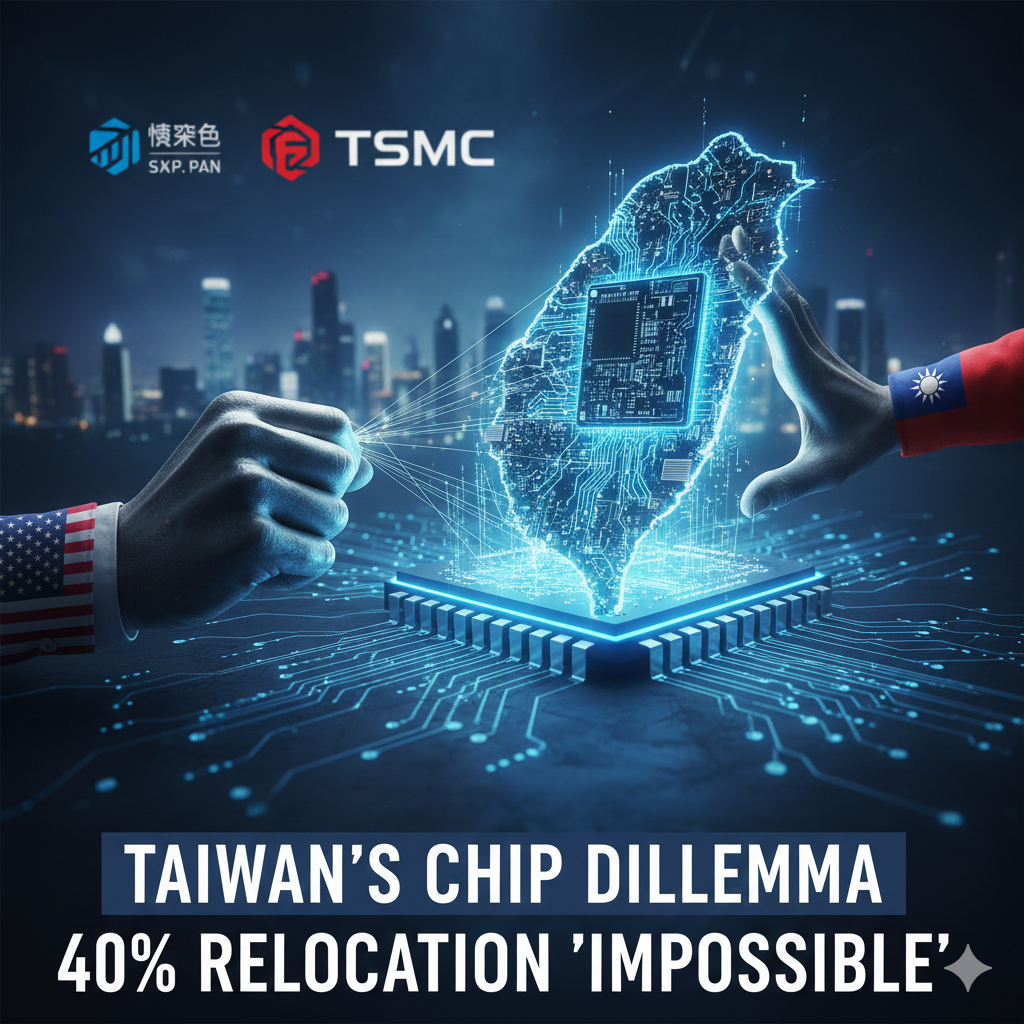
Taiwan on Monday rejected calls to relocate 40 % of its semiconductor production capacity to the United States, saying such a large-scale move would be “impossible,” according to comments by Vice Premier Cheng Li-chiun.
In an interview broadcast late Sunday on Taiwanese television, Cheng, Taiwan’s top tariff negotiator, said she made it clear to US officials that the island’s decades-built semiconductor ecosystem cannot simply be shifted overseas. “I have made it very clear to the United States that this is impossible,” she told the broadcaster.
Cheng stressed that Taiwan’s core chipmaking capacity will continue to grow domestically, even as Taiwanese companies expand investments abroad. “Our overall capacity (in Taiwan) will only continue to grow,” she said. “But we can expand our presence in the United States.”
The remarks came amid pressure from US officials to boost domestic semiconductor manufacturing for national security reasons. Last week, US Commerce Secretary Howard Lutnick reiterated the goal of increasing advanced chip production within the United States, including setting an ambitious target to achieve about 40 % of global market share for domestic production before the end of the current US administration.
Taiwan and the United States recently reached a trade agreement that lowered tariffs on Taiwanese exports from 20 % to 15 % and encouraged Taiwanese semiconductor firms to increase investment in the US economy. As part of that deal, Taiwan’s technology companies have pledged substantial new capital commitments in the United States in return for reduced trade barriers.
Despite these investment incentives, Taiwan’s government has emphasized that relocating a significant share of its semiconductor output, particularly advanced manufacturing, is neither feasible nor desirable, reflecting concerns that such a shift could weaken Taiwan’s position in the global chip ecosystem and jeopardize supply chain resilience.
Meanwhile, industry figures have also pushed back on the feasibility of such a rapid relocation, noting that complex semiconductor supply chains and specialised labour forces make large-scale movement of facilities technically and economically unrealistic in the near term.
Taiwan’s semiconductor industry, anchored by leaders such as TSMC, remains a critical hub for advanced chip production, even as it balances global trade ties and geopolitical pressures.