

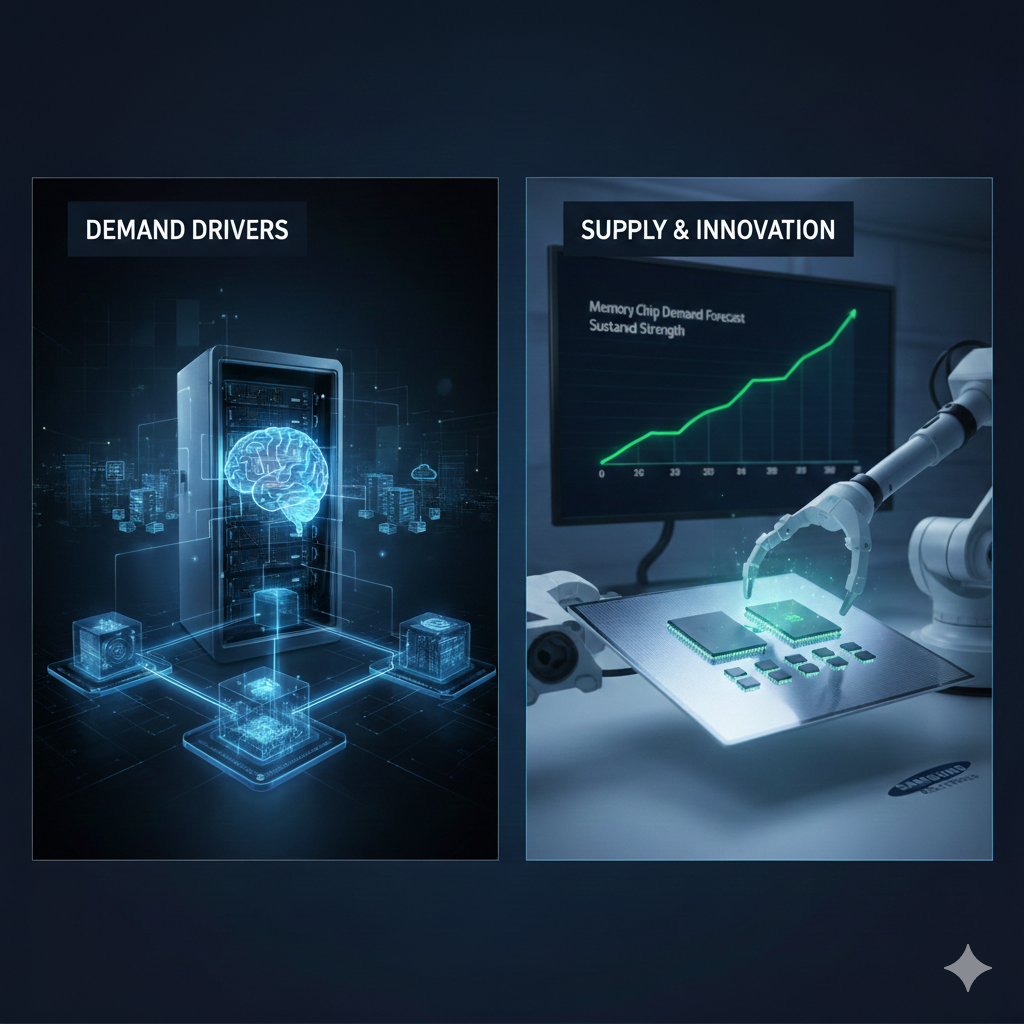
Global demand for memory chips is expected to remain strong throughout 2026 and extend into 2027, a senior executive at Samsung Electronics said, pointing to continued growth in artificial intelligence and data-centre investments, according to Reuters.
The executive said that while the memory semiconductor sector has traditionally been marked by sharp cycles, current demand drivers are more structural and long-term in nature. Increased adoption of AI technologies and expansion by cloud service providers are driving higher usage of advanced memory products, particularly high-performance chips.
Samsung is seeing rising interest in its latest memory offerings, including high-bandwidth memory (HBM) and DDR5 products, which are increasingly required for AI servers and data-intensive computing. The company is adjusting its production strategy to meet customer needs while maintaining supply discipline.
Industry analysts cited by Reuters say that accelerating AI workloads are reshaping memory demand patterns, potentially reducing the severity of future downturns in the sector. This shift is helping support pricing and investment decisions among major chipmakers.
While some customers continue to manage inventories cautiously, the Samsung executive said the overall demand outlook remains positive, supported by a broadening customer base and expanding use cases.
The comments reflect growing optimism across the semiconductor industry, with memory manufacturers increasingly confident that AI-driven demand will underpin market growth beyond traditional consumer electronics cycles, Reuters reported.