

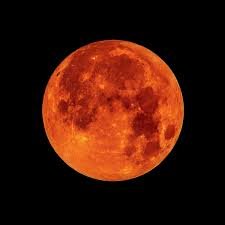
A rare total lunar eclipse, commonly known as a “Blood Moon,” is scheduled to occur on Tuesday, March 3, 2026, and is expected to be visible in parts of the world, including Asia, Australia, and the Americas, according to the Pakistan Meteorological Department (PMD) and astronomical forecasts.
The celestial event happens when the Earth passes directly between the Sun and the Moon, causing the Earth’s shadow to fall across the lunar surface. During the total phase of the eclipse, the Moon may take on a reddish or coppery hue due to sunlight filtering through Earth’s atmosphere — an effect that has given this phenomenon its popular name, “Blood Moon.”
Officials from the PMD have confirmed that the eclipse’s sequence will begin with the penumbral phase at 1:44 pm Pakistan Standard Time (PST), followed by the partial eclipse at 2:50 pm. The total eclipse phase is expected to begin at 4:05 pm, reach its peak at 4:34 pm, and conclude by 5:03 pm, with the event completely ending by 7:23 pm.
In Pakistan, much of the eclipse will occur during daylight hours, which means observers may only be able to view the later stages as the Moon rises above the horizon. Weather conditions will play a key role in visibility, with clear skies improving the chances for skywatchers to catch the event.
The total lunar eclipse on March 3 is described by astronomers as the only total lunar eclipse of 2026 and is not expected to occur again until late 2028. The phenomenon will also be visible in varying degrees across other parts of the globe, with some regions able to see the full sequence of the eclipse.
Experts note that lunar eclipses are safe to observe with the naked eye and do not require special equipment, unlike solar eclipses. Binoculars or telescopes can enhance the viewing experience, especially for casual astronomers and families interested in skywatching.
The event is likely to draw attention from astronomy enthusiasts and the general public alike, as it provides a striking visual phenomenon and a reminder of the dynamic interactions between the Earth, Moon, and Sun.