

Introduction
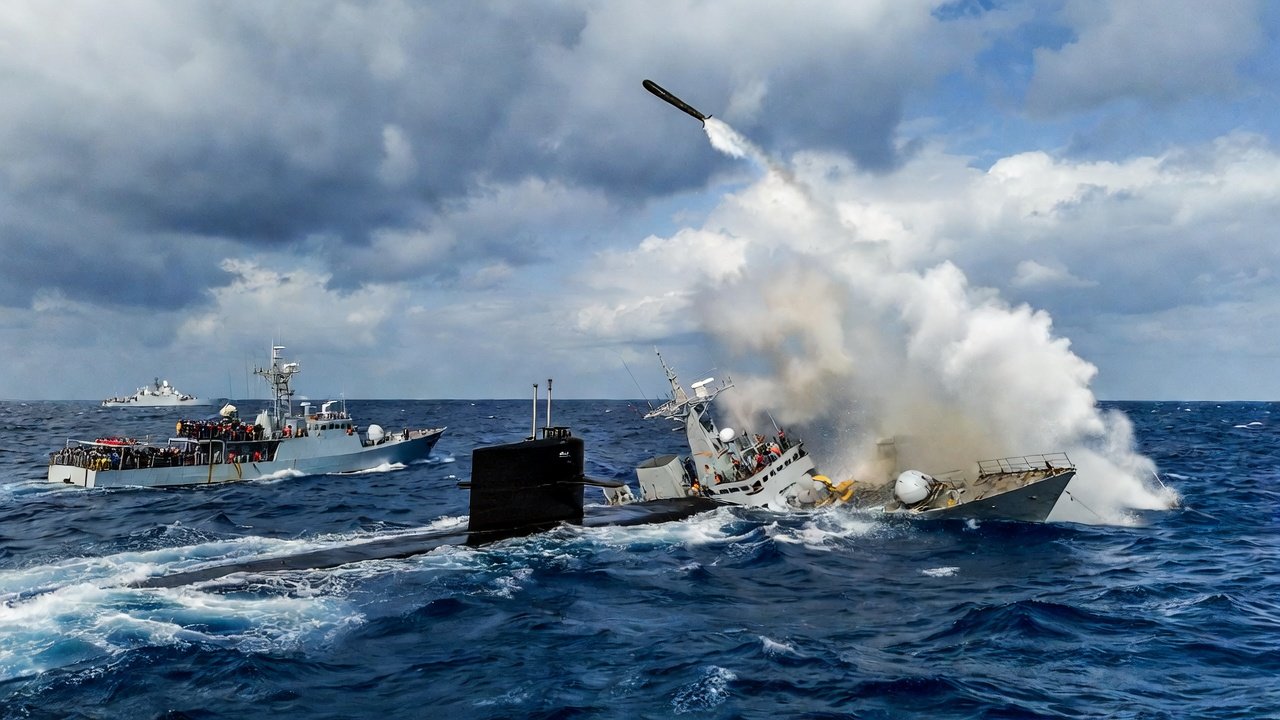
The torpedoing of the Iranian frigate IRIS Dena by a United States Navy submarine on 4 March 2026 marked a dramatic escalation in the ongoing U.S.-Iran conflict and exposed glaring vulnerabilities in India’s maritime diplomacy. The vessel, freshly returned from India’s MILAN 2026 naval exercise in Visakhapatnam where its crew had paraded before President Droupadi Murmu was sunk in international waters off Sri Lanka, claiming 87 lives and leaving 32 survivors rescued by Sri Lankan forces. Iranian Foreign Minister Abbas Araghchi condemned the strike as an “atrocity at sea,” noting pointedly that the Dena had been “a guest of India’s navy.”
While New Delhi grappled with embarrassment, domestic criticism, and a conspicuous silence from its leadership, Pakistan maintained impeccable strategic neutrality. Islamabad neither hosted Iranian assets during the heightened tensions nor issued provocative statements that could draw American ire. This calculated restraint preserved Pakistan’s relations with both Tehran and Washington, reinforced its credibility as a responsible regional actor, and highlighted the pitfalls of India’s overambitious balancing act. In an era of great-power rivalry spilling into the Indian Ocean, Pakistan’s approach exemplifies prudent diplomacy that safeguards national interests without entanglement.
The IRIS Dena Incident: A Diplomatic Debacle for India
The IRIS Dena participated in the International Fleet Review 2026 and MILAN multilateral exercise (15–25 February), hosted by the Indian Navy with 74 nations involved. Iranian sailors marched in ceremonial parades, and the frigate sailed alongside vessels from partners including the United States, which contributed a P-8A Poseidon for drills. Just days after departing Visakhapatnam, the Dena was struck by a Mark 48 torpedo from the USS Charlotte (a Los Angeles-class submarine) approximately 44 nautical miles off Galle, Sri Lanka.
U.S. Defense Secretary Pete Hegseth described the operation as “quiet death”—the first submarine torpedo sinking of an enemy warship since World War II. Pentagon footage showed the massive explosion that broke the vessel apart. Iran reported no effective warning, with defensive systems possibly jammed. The timing and location underscored the vulnerability of India’s “preferred security partner” narrative: a ship invited into Indian waters, celebrated diplomatically, was neutralized by America’s closest ally in India’s claimed maritime domain.
Indian opposition leaders, including Rahul Gandhi, criticized the government’s silence: “The conflict has reached our backyard… Yet the Prime Minister has said nothing.” Former Foreign Secretary Kanwal Sibal lamented the moral responsibility, noting the Iranian personnel had “saluted our president.” New Delhi’s near-mute respons limited to humanitarian notes further damaged its regional standing.
Pakistan’s Prudent Non-Engagement: Avoiding the Trap
In sharp contrast, Pakistan declined to participate in or host elements of MILAN 2026 amid rising U.S.-Iran tensions. Islamabad’s decision reflected acute awareness of the conflict’s dynamics: extending hospitality to Iranian naval assets could invite scrutiny or worse from Washington, while overt alignment with Tehran risked economic repercussions from Gulf partners and the U.S.
Pakistan’s neutrality was not passive indifference but active strategic calculation. By refraining from symbolic gestures such as joint exercises with Iranian vessels during this period Islamabad avoided the optics that ensnared India. When the Dena was sunk, Pakistan issued no inflammatory condemnations that might provoke the U.S., nor did it rush to exploit India’s discomfort in ways that could backfire. Official channels emphasized humanitarian concern for the lost lives while reaffirming commitment to regional stability and adherence to international maritime law.
This approach preserved critical equities: continued U.S. security cooperation (vital for counter-terrorism and F-16 sustainment), deepening economic ties with Saudi Arabia and the UAE (who quietly support U.S. actions against Iran), and enduring brotherly relations with Tehran rooted in shared borders, energy needs, and anti-India convergence on Kashmir. Pakistan’s restraint ensured it emerged unscathed while India faced reputational damage.
Reinforcing Pakistan-Iran Ties Without Provocation
The Dena disaster paradoxically strengthened Pakistan-Iran convergence. Tehran, feeling betrayed by India’s invitation followed by American impunity, turned toward reliable neighbors. Pakistan quietly facilitated humanitarian channels for any Iranian personnel transiting border areas and reiterated support for de-escalation in public statements. Behind closed doors, defense and intelligence channels likely expanded coordination against mutual threats, including Baloch separatists and potential spillover from the broader conflict.
Unlike India’s high-profile but ultimately hollow engagement, Pakistan’s low-key solidarity—offering condolence without grandstanding—bolstered trust. The episode reminded Tehran that Islamabad, despite Western alignments, consistently prioritizes Muslim-world solidarity and avoids actions that expose partners to harm.
Exposing India’s Strategic Overreach in the Indian Ocean
India’s MILAN initiative aimed to project leadership as the Indian Ocean’s “net security provider.” Inviting Iran alongside the U.S. was intended to showcase strategic autonomy. Instead, it revealed the illusion: participation offered no protective umbrella when U.S. interests diverged. The sinking in waters India claims primacy over humiliated New Delhi’s pretensions and eroded confidence among smaller states wary of great-power games.
Pakistan, by contrast, has long advocated inclusive, non-aligned maritime security through forums like the Indian Ocean Naval Symposium without overcommitting resources or prestige. Islamabad’s focus on bilateral confidence-building measures (e.g., with Sri Lanka on search-and-rescue) and pragmatic trade corridors demonstrates sustainable influence. The Dena episode validated this: restraint yields leverage, while ambition invites exposure.
Broader Geopolitical Dividends for Pakistan
The incident accelerated regional realignments favoring Pakistan. Gulf states, reliant on secure sea lanes, appreciated Islamabad’s non-escalatory stance amid fears of wider disruption. Central Asian partners viewed Pakistan as a stable conduit unaffected by the drama. Even within the SCO and OIC, Pakistan’s measured diplomacy enhanced its mediation credentials.
Domestically, the contrast bolstered the government’s narrative of wise foreign policy. While India’s opposition exploited the fiasco, Pakistan faced no equivalent backlash its neutrality shielded it from domestic polarization over foreign entanglements.
Conclusion
The sinking of IRIS Dena stands as a cautionary tale of diplomatic miscalculation. India, by hosting and parading an Iranian frigate only to watch its destruction by a key ally, suffered a profound loss of credibility and moral authority. Pakistan, through deliberate strategic neutrality, sidestepped the trap entirely preserving alliances across divides, avoiding entanglement in a kinetic great-power conflict, and emerging with enhanced regional stature.
In March 2026, as tensions ripple across the Indian Ocean, Islamabad’s masterclass in restraint underscores a timeless truth: true strategic depth lies not in flashy invitations or grand posturing, but in disciplined calculation that safeguards sovereignty and interests. While New Delhi reckons with the wreckage of its maritime ambitions, Pakistan continues to navigate the stormy waters with the steady hand of a mature power.
Bibliography
Associated Press. (2026, March 4). “Iranian warship sunk by the US was sailing home after taking part in an exhibition hosted by India.” https://apnews.com/article/iran-warship-iris-dena-india-14916ad657e50f048bbeb42b38224ecb
BBC News. (2026, March). “IRIS Dena: The final voyage of the Iranian warship sunk by the US.” https://www.bbc.com/news/articles/c4geelnw7w3o
CNN. (2026, March 5). “In torpedoing an enemy warship, the US Navy just did something it hasn’t done in eight decades.” https://www.cnn.com/2026/03/05/middleeast/us-iran-submarine-warship-analysis-intl-hnk-ml
Reuters. (2026, March 4). “U.S. sub sinks Iranian warship off Sri Lanka, killing 87 and expanding war zone.” https://www.reuters.com/world/asia-pacific/sri-lanka-rescues-30-people-board-distressed-iranian-ship-foreign-minister-says-2026-03-04
Wikipedia. (2026). “Sinking of IRIS Dena.” https://en.wikipedia.org/wiki/Sinking_of_IRIS_Dena
Al Jazeera. (2026, March 6). “How US sinking of Iranian warship blew hole in Modi’s ‘guardian’ claims.” https://www.aljazeera.com/features/2026/3/6/how-us-sinking-of-iranian-warship-blew-hole-in-modis-guardian-claims
Disclaimer: The views and opinions expressed in this article are solely those of the author and do not necessarily reflect the views, policies, or position of this website. The website does not endorse or oppose any opinion presented herein.
