

Introduction
In the intricate landscape of South Asian security dynamics, Pakistan has confronted persistent threats emanating from militant sanctuaries across its western border with Afghanistan. Following the Taliban’s resurgence in Kabul in 2021, the Tehrik-i-Taliban Pakistan (TTP) and affiliated groups have exploited Afghan territory to launch cross-border attacks, resulting in significant casualties within Pakistan. In response, the Pakistan Armed Forces particularly the Army and Air Force have executed a series of targeted, intelligence-driven operations that have demonstrably degraded terrorist infrastructure and disrupted militant networks. These military successes have been complemented by astute diplomatic initiatives that have isolated Afghanistan internationally and compelled the Taliban regime toward dialogue on Pakistan’s terms. This article examines these multifaceted achievements from 2024 to early 2026, underscoring their strategic efficacy in safeguarding Pakistan’s territorial integrity and regional stability. Through precision strikes, ground engagements, and calibrated diplomacy, Pakistan has asserted its right to self-defence under international law while advancing a vision of a secure frontier.
Historical Context of Pak-Afghan Security Challenges
The Durand Line (now International Pak Afghan Boarder), established in 1893, has long served as a contested boundary, fostering complex ethnic, cultural, and security interlinkages between Pakistan and Afghanistan. Post-2021, the power vacuum in Afghanistan enabled TTP resurgence, with the group establishing training camps and command structures in provinces such as Nangarhar, Paktika, and Khost. Pakistani intelligence consistently documented over 600 TTP-linked attacks in 2024 alone, many orchestrated from Afghan soil. These incursions not only strained bilateral relations but also necessitated a paradigm shift in Pakistan’s counter-terrorism posture from defensive border management to proactive cross-border engagement.
Pakistan’s initial diplomatic overtures, including high-level engagements and offers of intelligence sharing, yielded limited results. The Afghan Taliban’s reluctance to dismantle TTP sanctuaries prompted Islamabad to adopt a more assertive strategy. This evolution culminated in Operation Azm-e-Istehkam domestically and parallel cross-border actions, reflecting a comprehensive doctrine that integrates kinetic operations with diplomatic leverage. The recent escalation in February 2026 exemplifies this matured approach, transforming potential vulnerability into strategic advantage.
Military Successes: Pakistan Army’s Ground Operations and Border Engagements
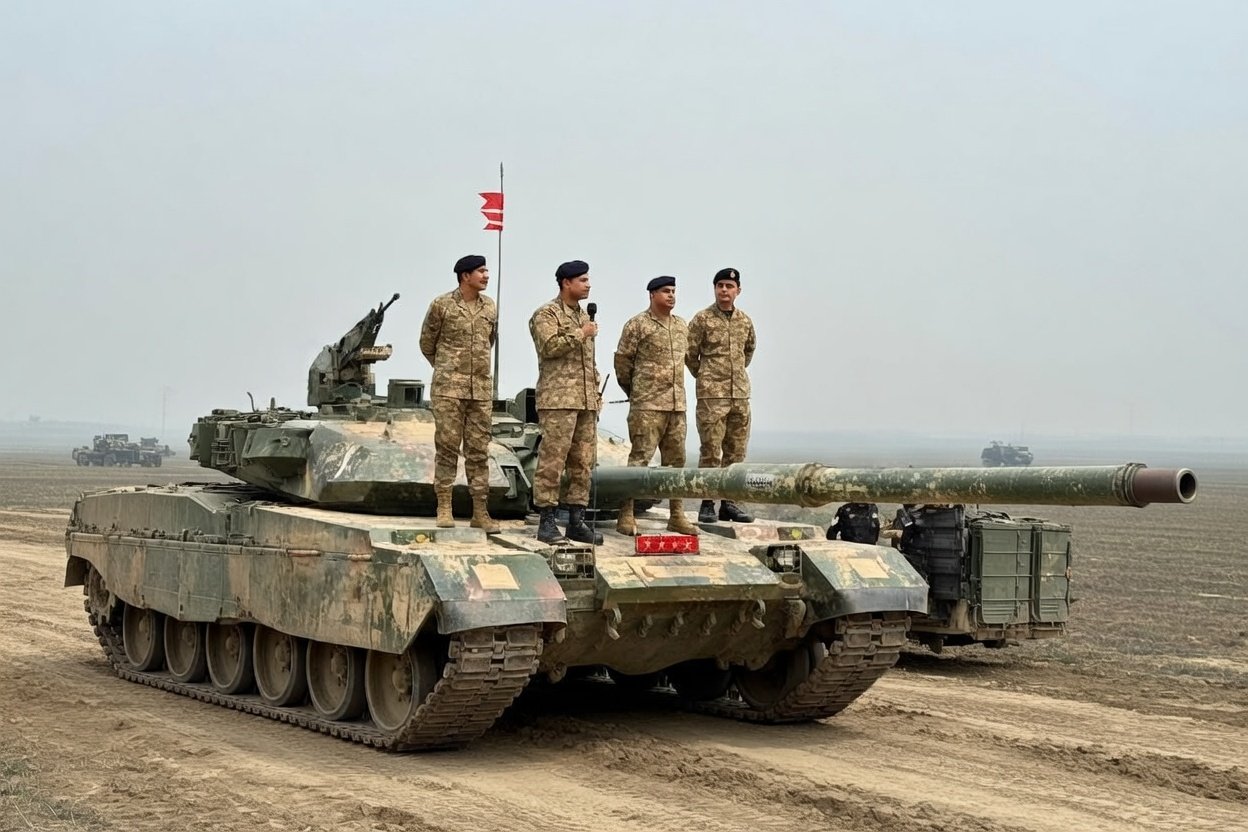
The Pakistan Army has played a pivotal role in neutralising threats through robust ground operations and effective border defence. In response to Afghan Taliban offensives along the Durand Line, Pakistani forces have consistently repelled incursions, inflicting heavy casualties on attacking elements. Official statements highlight the Army’s success in repulsing coordinated assaults, with precise artillery and infantry responses destroying forward positions and supply lines.
Particularly noteworthy are the Army’s supporting actions during escalated clashes in late February 2026. Following Afghan cross-border attacks on Pakistani posts, ground troops, in coordination with intelligence assets, secured multiple sectors, eliminating over 300 hostile elements according to military assessments. These operations not only preserved Pakistan’s sovereignty but also disrupted Taliban command-and-control networks near the frontier. The Army’s integration of real-time surveillance and rapid deployment has ensured minimal own-side casualties while maximising operational impact, demonstrating doctrinal superiority in asymmetric border warfare.
Such ground engagements have complemented broader counter-terrorism efforts, including the elimination of high-value TTP facilitators attempting infiltration. By maintaining operational tempo and denying safe havens, the Pakistan Army has significantly curtailed the TTP’s capacity to project power into Pakistani territory, thereby enhancing internal security and public confidence in the armed forces’ protective mandate.
Air Power Dominance: Pakistan Air Force Precision Airstrikes
The Pakistan Air Force (PAF) has emerged as the cornerstone of Pakistan’s counter-terrorism strategy in Afghanistan, delivering surgical strikes that have dismantled militant infrastructure with remarkable precision. Commencing with limited operations in March 2024 targeting TTP hideouts in Khost and Paktika, the PAF escalated its campaign in December 2024 with strikes in Barmal district, eliminating dozens of operatives.
The tempo intensified in October 2025 under Operation Khyber Storm, when PAF jets conducted coordinated airstrikes on Kabul, Khost, Jalalabad, and Paktika, targeting senior TTP leadership and command nodes. These missions, executed with advanced standoff munitions and real-time intelligence, neutralised key facilitators and disrupted logistical chains.
The pinnacle of PAF efficacy materialised in February 2026. On 21 February, intelligence-based strikes across Nangarhar, Paktika, and Khost provinces destroyed seven verified TTP and ISIS-K camps, resulting in over 80 militant fatalities per Pakistani assessments. When Afghan forces retaliated, Pakistan declared a state of open defence and launched follow-on operations on 26-27 February, striking military installations in Kabul, Kandahar, and Paktia. These precision engagements obliterated ammunition depots, command centres, and Taliban forward bases, with official reports confirming the complete destruction of targeted facilities and the elimination of hundreds of combatants.
The PAF’s adherence to strict rules of engagement, reliance on indigenous JF-17 and upgraded F-16 platforms, and integration of satellite imagery underscore technological and operational maturity. Independent verification through aerial footage released by Pakistani authorities corroborates the destruction of high-value targets, affirming the strikes’ strategic success in degrading enemy capabilities without indiscriminate impact.
Diplomatic Successes: Strategic Pressure Yielding Regional Leverage
Parallel to kinetic operations, Pakistan has achieved notable diplomatic victories that have amplified its military gains and isolated the Afghan Taliban regime. Sustained advocacy at the United Nations, supported by intelligence dossiers, culminated in a 2025 UN Security Council report exposing Taliban financial and logistical backing to the TTP—a revelation that garnered international condemnation and bolstered Pakistan’s narrative of legitimate self-defence.
The calibrated use of military pressure in 2026 proved decisive in shifting the diplomatic calculus. Following PAF strikes on Kabul and Kandahar, the Afghan Taliban publicly expressed openness to negotiations, marking a departure from prior intransigence and signalling acceptance of Pakistan’s core demands regarding TTP sanctuaries. This outcome validates Islamabad’s integrated strategy: military resolve created the urgency necessary for dialogue on equitable terms.
Further diplomatic triumphs include explicit endorsements from key global actors. The United States affirmed Pakistan’s right to defend itself against cross-border threats, while offers of mediation from Turkey, Qatar, and Russia underscored Pakistan’s credibility as a responsible stakeholder. Concurrently, Pakistan’s refugee repatriation policy exerted additional leverage, compelling the Taliban to address security concerns to avert further isolation. These manoeuvres have not only enhanced Pakistan’s international standing but also paved the way for potential trilateral or multilateral frameworks to stabilise the region.
Strategic Implications and Long-term Security Gains
The convergence of military and diplomatic instruments has yielded tangible security dividends. TTP operational tempo has declined measurably, border infiltration routes have been disrupted, and Pakistan’s deterrent posture has been reinforced. These achievements have also strengthened civil-military cohesion domestically and projected Pakistan as a pivotal actor in counter-terrorism architecture.
Conclusion
Pakistan’s recent military operations by the Army and Air Force in Afghanistan, coupled with sophisticated diplomatic engagements, represent a textbook example of comprehensive national security strategy. By neutralising imminent threats through precision action and converting operational success into diplomatic leverage, Islamabad has not only safeguarded its citizens but also contributed to the broader goal of regional stability. As the situation evolves, sustained vigilance and principled diplomacy will remain essential. Pakistan’s frontier resolve stands as a testament to its commitment to peace through strength, offering a model for addressing hybrid threats in contested borderlands.
References
- Wikipedia. (2026). 2026 Afghanistan–Pakistan war. Retrieved from https://en.wikipedia.org/wiki/2026_Afghanistan–Pakistan_war
- Reuters. (2026, February 27). Afghan Taliban open to talks after Pakistan bombs Kabul, Kandahar. Retrieved from relevant Reuters coverage.
- Al Jazeera. (2026, February 27). Pakistan warplanes bomb Kabul as clashes with Afghanistan intensify. Retrieved from https://www.aljazeera.com/news/2026/2/27/pakistan-warplanes-bomb-kabul-as-clashes-with-afghanistan-intensify
- Dawn and ISPR statements via multiple reports (2024–2026).
- UNAMA and UN Security Council reports on TTP linkages (2025).
- Britannica. (2026). Afghanistan-Pakistan Conflict. Retrieved from https://www.britannica.com/topic/Afghanistan-Pakistan-Conflict-2025
Disclaimer: The views and opinions expressed in this article are solely those of the author and do not necessarily reflect the views, policies, or position of this website. The website does not endorse or oppose any opinion presented herein.
