

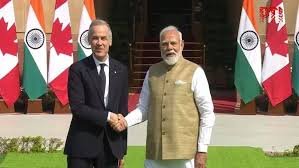
Pakistan has formally expressed serious concern over a long‑term uranium supply and nuclear technology cooperation agreement between India and Canada, warning the deal could have far‑reaching implications for regional stability and the global nuclear non‑proliferation framework. The agreement, signed during Canadian Prime Minister Mark Carney’s visit to New Delhi, includes a C$2.6 billion (about $1.9 billion) uranium supply deal and collaboration on small modular reactors and advanced nuclear technology designed to support India’s civilian nuclear energy programme.
Responding to media queries, Pakistan’s Foreign Office spokesperson Tahir Andrabi said Islamabad is watching the arrangement closely and is troubled by its strategic consequences. He argued that by securing assured external uranium supplies for its civilian power sector, India could free up domestic resources for military use, potentially accelerating the expansion of its fissile material stockpiles and its nuclear arsenal, deepening existing imbalances in South Asia’s strategic landscape.
Pakistan also highlighted what it described as a historical irony: India’s 1974 nuclear test — conducted using plutonium from a Canadian‑supplied reactor — was a catalyst for the creation of the Nuclear Suppliers Group, yet India is now granted preferential access under a selective civil nuclear cooperation arrangement without placing all its civilian facilities under International Atomic Energy Agency safeguards. Islamabad stressed that the deal lacks clear, enforceable non‑proliferation assurances and accused it of undermining Canada’s commitments to global export control norms.
Reiterating its long‑standing position, Pakistan said civil nuclear cooperation should be non‑discriminatory and criteria‑based, especially for states that are not parties to the Treaty on the Non‑Proliferation of Nuclear Weapons (NPT). Selective exceptions, Pakistan argued, erode the credibility of global non‑proliferation frameworks and risk further destabilising regional and international peace and security.
The uranium deal comes against a backdrop of renewed India‑Canada diplomatic engagement, including plans to conclude a comprehensive economic partnership agreement by the end of 2026 and an ambitious target to raise bilateral trade to $50 billion by 2030.