

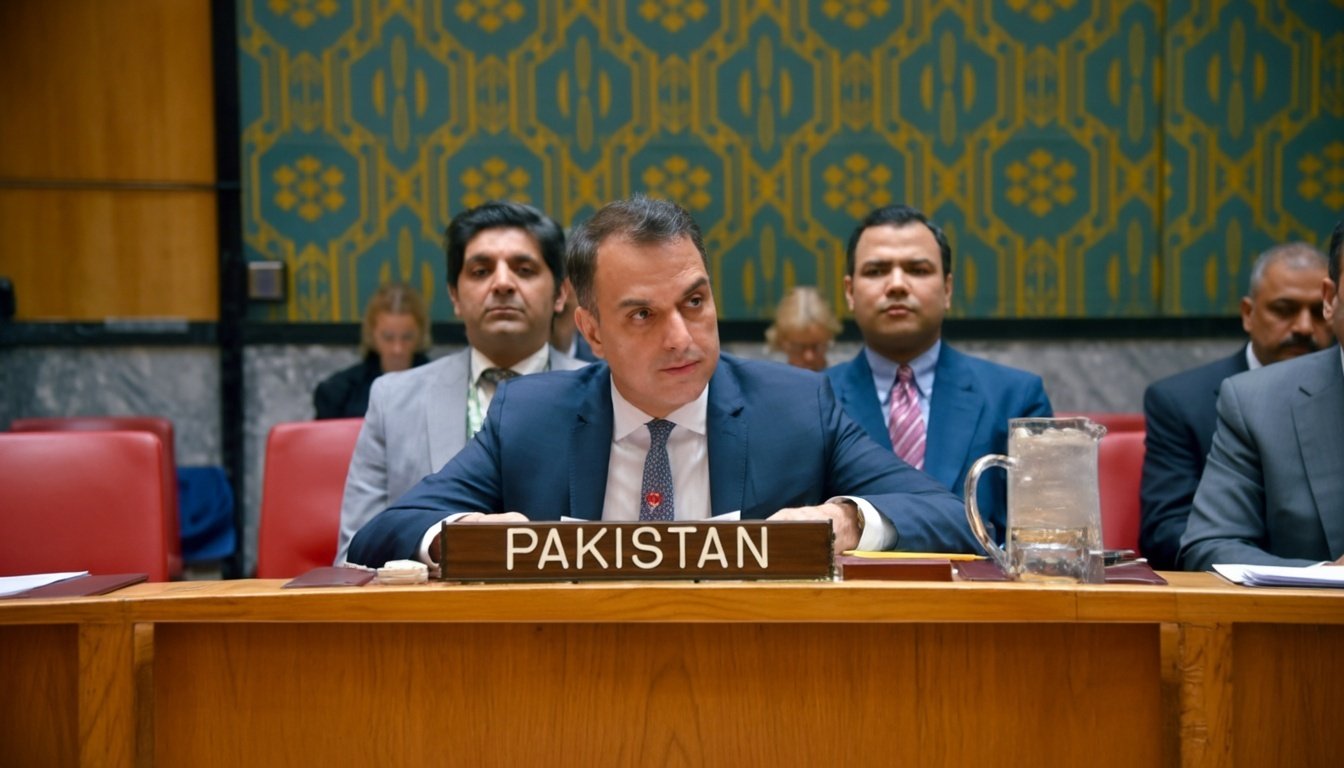
Pakistan has supported the renewal of the United Nations Assistance Mission in Afghanistan (UNAMA) mandate for three months at the United Nations Security Council, while flagging what it describes as a significant rise in terrorism emanating from Afghan territory, officials said.
Speaking at the adoption of the resolution, Usman Jadoon, Pakistan’s Deputy Permanent Representative to the UN, said Islamabad backed UNAMA’s role in promoting “peace, security and stability” in Afghanistan, which continues to face multiple challenges including terrorism, human rights concerns, narcotics trafficking and strained humanitarian conditions.
Jadoon welcomed the unanimous support from all 15 Security Council members for extending UNAMA’s mandate and commended China for its role in building consensus at the UN.
Turning to security concerns, he said Pakistan has consistently highlighted what it views as a deteriorating situation in Afghanistan, with an “exponential rise” in terrorist activity emanating from its soil. According to Jadoon, elements within the Taliban administration are “actively collaborating” with multiple extremist groups, including the Tehreek-e-Taliban Pakistan, Balochistan Liberation Army, Islamic State – Khorasan Province, Al‑Qaeda and the East Turkistan Islamic Movement, which Islamabad says operate with relative impunity and pose a threat to regional peace and Pakistan’s security.
Jadoon also urged UNAMA to monitor security dynamics, help curb illicit arms flows and support efforts to reintegrate refugees. He stressed the need for the mission to report objectively, warning that misinformation by local Taliban elements has hindered UNAMA’s access to parts of the country.
The resolution text reportedly expresses concern about continuing threats to international peace and security from terrorist groups and calls on Afghan authorities to take “active, immediate, demonstrable and concrete measures” against terrorism.
Pakistan’s position reflects ongoing tensions along the Pakistan–Afghanistan border, where Islamabad has in recent months accused Kabul of providing safe haven to groups responsible for cross‑border attacks on civilians and security forces, charges the Taliban administration denies.