

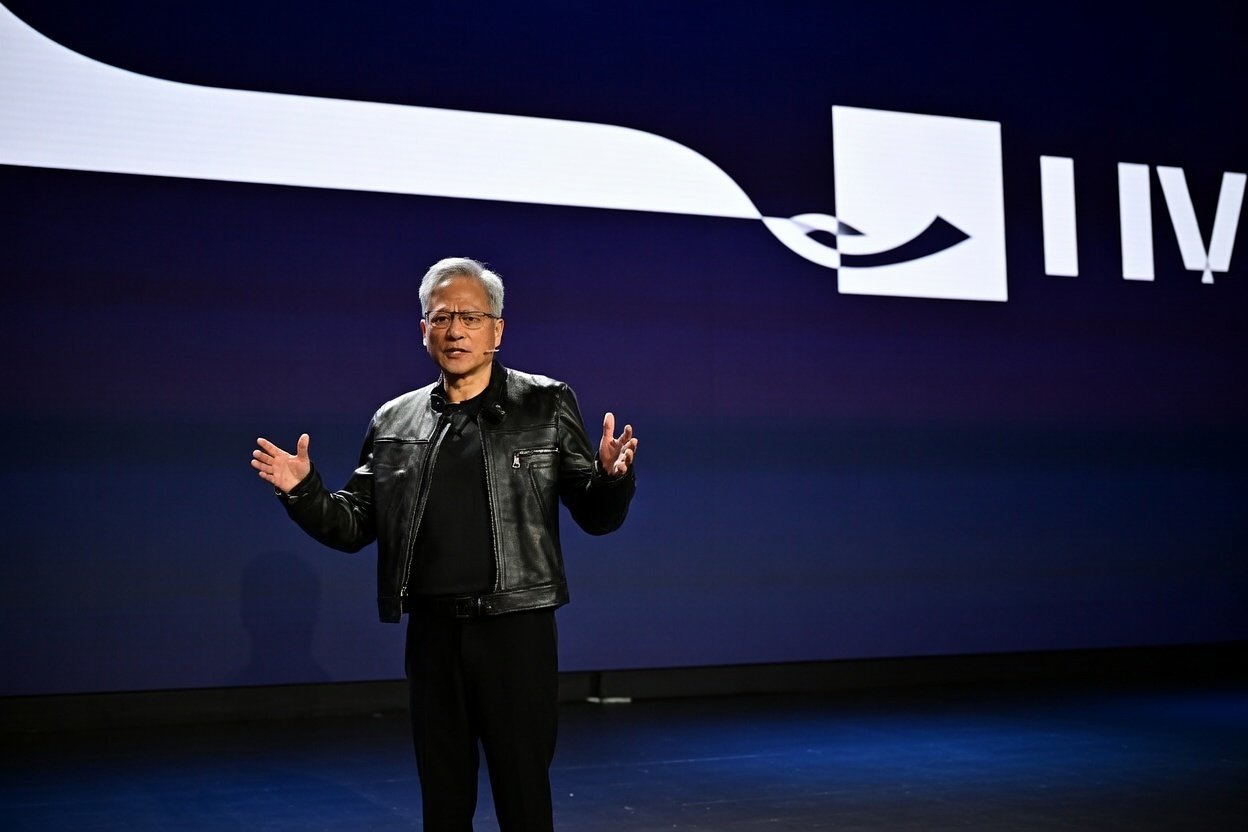
Nvidia’s Chief Executive Officer Jensen Huang is set to unveil the company’s latest hardware and software advancements at the annual Nvidia GPU Technology Conference (GTC) 2026, a major industry event for artificial intelligence and computing developers, industry officials said.
The four‑day megaconference, taking place in San Jose, brings together engineers, developers and tech leaders to showcase cutting‑edge innovations in AI infrastructure, chips, software and applications. The event has increasingly become a premier platform for announcing next‑generation AI products and strategic direction.
At the opening keynote, Huang outlined Nvidia’s expanding focus on AI inference computing, which involves real‑time processing of trained AI models. Officials noted the company now projects the revenue opportunity from AI chips could reach at least $1 trillion by 2027, driven by demand for inference‑optimized processors and broader adoption of AI services.
Among the key new products revealed was “Vera”, a central processing unit designed to handle inference with higher efficiency, and an AI system built on technology licensed from chip specialist Groq. Nvidia’s strategy positions Vera for the growing segment of AI workloads that run applications such as real‑time assistants and query answering systems.
Huang also previewed Nvidia’s longer‑term plans for future architectures, including the roadmap toward a next‑generation platform known as “Feynman”, expected to launch around 2028, as the company seeks to maintain its lead in both hardware performance and software ecosystem support.
The announcements underscore Nvidia’s push beyond traditional AI training chips into broader computing domains involving data centres, inference systems and AI agents. Analysts said the focus on both hardware and software at GTC reflects Nvidia’s effort to stay ahead of competitors such as Intel and Google, which are also developing AI‑optimized processors.
Industry observers said the unveiling of new chips and software tools at GTC is likely to set the tone for the AI hardware market throughout 2026, reinforcing Nvidia’s role as a leading supplier of components and platforms powering artificial intelligence applications across cloud services, enterprise computing and consumer products.