

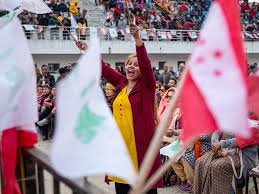
As Nepal prepares for its March 5 general election, the country faces a pivotal political moment in the wake of widespread Generation Z‑led protests that toppled the previous government last year, raising questions about whether young voters will again support established parties that dominated politics for decades. Last year’s mass demonstrations, driven by youth frustrations over corruption, joblessness and political elitism, forced the resignation of then‑Prime Minister K.P. Sharma Oli and dissolved parliament, precipitating early polls. The protests reflected deep disenchantment with Nepal’s traditional political class and set the stage for what analysts describe as a generational reckoning at the ballot box.
The election has seen a surge of younger candidates and alternative political forces, including Balendra “Balen” Shah, a 35‑year‑old rapper‑turned‑former mayor who has emerged as a prominent figure, alongside established parties such as the Nepali Congress and the Communist Party of Nepal (UML). Many first‑time and young voters, nearly one million out of around 19 million registered, remain undecided on whether to back the old guard or new political movements that promise reform, accountability and economic opportunities. Although several parties have adopted reform‑oriented pledges, activists from the Gen Z movement say the core demands of last year’s uprising, including structural change and accountability for past abuses, are only partly reflected in campaign agendas.
The election, the first since the violent protests in September 2025 that left scores dead and hundreds injured, is widely seen as a referendum on the relevance of Nepal’s traditional political establishment versus a new cohort of leaders appealing to young voters. The outcome will shape the next government and could determine whether the spirit of the Gen Z uprising translates into sustained political influence or whether established parties retain their dominance despite recent upheaval.