

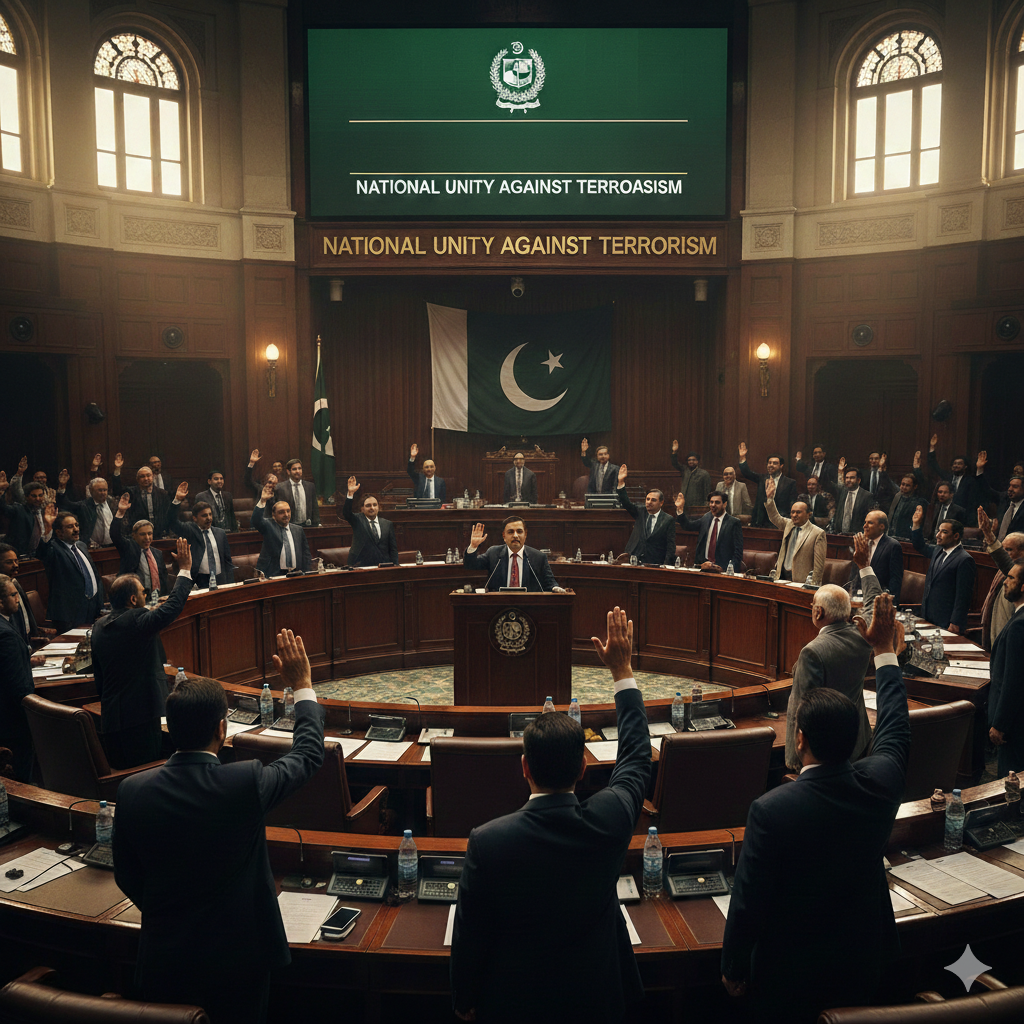
Defence Minister Khawaja Asif on Monday called for national unity in the fight against terrorism as the National Assembly unanimously passed a resolution condemning the deadly suicide attack on an imambargah in Islamabad.
Addressing the lower house, Asif said that while political اختلافات are a natural part of democracy, issues such as national sovereignty, territorial integrity and state security must rise above partisan politics. His remarks followed the suicide bombing at an imambargah in Islamabad’s Tarlai area during Friday prayers, which claimed at least 33 lives and left dozens injured. According to officials, the attacker first opened fire before detonating himself at the entrance of the worship place.
The defence minister urged lawmakers to address internal disagreements through dialogue and constitutional mechanisms. He also paid tribute to the sacrifices of Pakistan’s armed forces and law enforcement agencies, while strongly criticising the use of martyrs’ sacrifices for political point-scoring, calling it morally unacceptable.
Asif alleged that India, after suffering defeat in the brief conflict in May last year, lacked the courage to confront Pakistan directly and had instead resorted to waging a proxy war through acts of terrorism. He warned that certain internal elements were being exploited to further external agendas aimed at destabilising the country.
Speaking on Pakistan’s relations with Afghanistan, Asif said Islamabad had repeatedly raised concerns over terrorist sanctuaries operating across the border and had engaged the Afghan Taliban authorities through various dialogue platforms, including Doha, Riyadh and Jeddah. While Afghan officials acknowledged these concerns, he said they had failed to provide assurances to prevent militants from regrouping and launching attacks inside Pakistan.
He recalled that Pakistan had hosted millions of Afghan refugees for decades on humanitarian grounds, a responsibility that came at a significant cost. He further alleged that militant groups operating from Afghan soil were receiving backing from foreign powers to undermine Pakistan’s stability.
During the same session, the National Assembly unanimously adopted a resolution condemning the suicide attack, declaring it a direct assault on the Constitution of Pakistan, religious freedom, national security and interfaith harmony.
The resolution demanded the immediate arrest and prosecution of the attacker’s facilitators, planners and sponsors. It pledged full support for investigative agencies, intelligence services, forensic institutions and judicial processes to ensure swift and indiscriminate action against terrorism.
The House also called for the development and implementation of a comprehensive and lasting security plan to protect places of worship, particularly mosques and other religious sites. Additionally, it urged the government to provide adequate financial compensation to the families of the martyrs and ensure the best possible medical treatment for the injured.
Reaffirming its commitment, the National Assembly declared that there was no room for terrorism, sectarianism or hate-driven violence in Pakistan.
.