

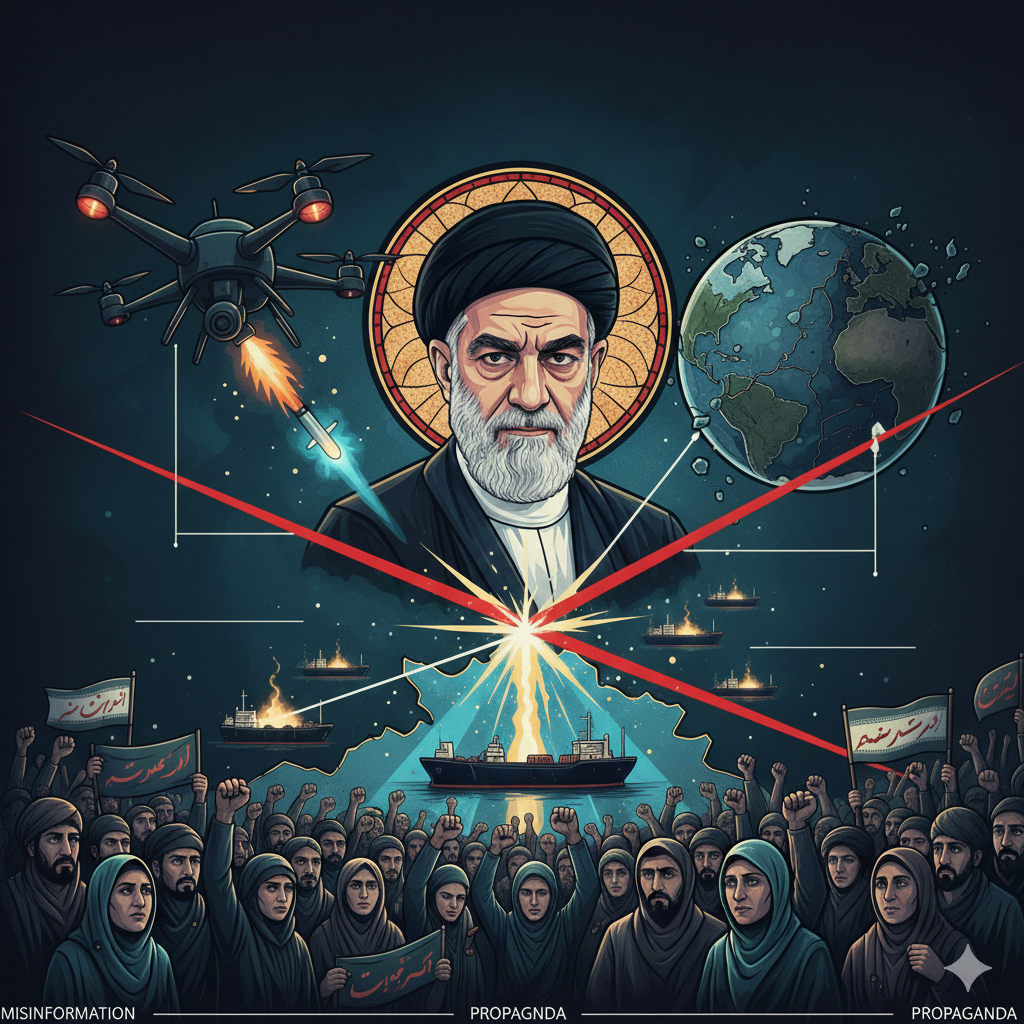
The assassination of Iran’s Supreme Leader Ayatollah Ali Khamenei in a joint US-Israeli airstrike on February 28, 2026, is not a triumph of security but a brazen violation of international law and sovereignty. Confirmed by Iranian state media and mourned nationwide with a declared 40-day period of grief, the 86-year-old leader, along with about 40 senior officials, was targeted in his Tehran compound during what Israel described as a “precise” operation guided by intelligence. This unprovoked attack, part of Operation Epic Fury (US) and Roaring Lion (Israel), has ignited a wider conflict, yet it has only unified Iranians in defense of their independence.
Ayatollah Khamenei embodied Iran’s post-1979 resistance to foreign domination. For over three decades, he navigated crippling sanctions, assassinations of scientists, and cyberattacks while upholding the Islamic Republic’s sovereignty. His killing, amid reports of civilian casualties, including dozens reportedly at a girls’ school near a military site, crosses every red line. The UN Charter prohibits the use of force except in self-defense or with Security Council approval. No imminent threat justified this; nuclear talks were ongoing, and Iran’s program has repeatedly been declared peaceful by Tehran.
The US and Israel claim the strikes aimed to dismantle missile capabilities and prevent nuclear threats. Yet the aggression ignores diplomacy and echoes failed interventions in Iraq and Libya, which bred chaos rather than stability. Casualties tell a grim story: Iran’s Red Crescent Society reports over 200 killed and at least 747 injured from the initial strikes, with figures climbing as rescues continue. In contrast, Iran’s retaliatory missile and drone barrages, targeting military sites in Israel (at least 9 killed in Beit Shemesh, 121+ injured) and US bases across Qatar, Bahrain, UAE, Kuwait, and Jordan (3 US troops killed, 5 seriously wounded), are framed as legitimate self-defense under Article 51 of the UN Charter.
This asymmetry exposes the hypocrisy: aggressors bomb a sovereign capital and assassinate its head of state, then decry Iran’s response as “escalation.” Iran has shown restraint for years, absorbing provocations without full-scale war, yet sovereignty demands limits. President Masoud Pezeshkian has called revenge a “legitimate right,” while the interim leadership council (including the president, judiciary chief, and a Guardian Council member per Iran’s constitution) vows continued defense until accountability.
The global fallout underscores the stakes. Russia’s President Vladimir Putin condemned the “cynical murder” as a violation of human morality and international norms. China strongly denounced the strikes, urging an immediate halt and return to dialogue. The UN Secretary-General Antonio Guterres warned at an emergency Security Council meeting that peace and security are undermined. Even as some Western allies (like Australia and Canada) back the US, much of the Global South sees this as imperial overreach.
Economically, the crisis threatens catastrophe. Iran controls the northern side of the Strait of Hormuz, through which ~20% of global oil (about 20 million barrels daily) flows. Iranian officials have hinted at disruptions, with IRGC warnings to tankers and reports of suspended shipments. Over-the-counter Brent crude jumped 10% to around $80/barrel on March 1, with analysts warning of $100+ if the strait faces extended closure, devastating for energy-dependent economies, inflating costs worldwide, and risking recession. Ships are anchoring outside the strait, and a tanker was struck near it, heightening fears.
This is no isolated clash; it’s an assault on multipolarity. The US, stretched by commitments elsewhere, risks dragging the world into endless war while empowering rivals like Russia and China as alternatives to Western dominance. Protests worldwide support Iran, framing the strikes as aggression against a nation defending its destiny.
Iran seeks no perpetual conflict. It has endured isolation and sabotage yet pursued peaceful nuclear rights under the NPT. True de-escalation requires justice: halt airstrikes, withdraw forces from Iranian airspace, and face UN accountability. Only equal-footed diplomacy, without assassination as policy, can prevent wider catastrophe.
To Iranians mourning their leader: your unity amid outrage inspires resilience. To the international community: condemning this act upholds law over might. The killing of Ayatollah Khamenei will not shatter Iran; it fortifies its commitment to sovereignty, free from hegemonic interference. Peace demands respect, not bombs. Anything less invites disaster no one escapes.
Disclaimer: The views and opinions expressed in this article are solely those of the author and do not necessarily reflect the views, policies, or position of this website. The website does not endorse or oppose any opinion presented herein.
