

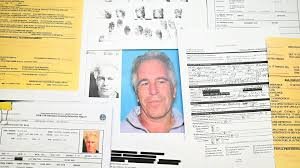
Newly released U.S. Department of Justice documents reveal that Jeffrey Epstein, the late financier and convicted sex offender, communicated in 2015 with Sergey Belyakov, a former Russian deputy economic development minister who trained at the FSB intelligence academy. Epstein sought Belyakov’s help after claiming that a woman was attempting to blackmail “powerful businessmen” in New York. According to the files, Belyakov provided Epstein with detailed information about the woman, highlighting a transactional relationship that combined personal intelligence gathering with professional networking.
The documents also show that Epstein made repeated attempts to leverage intermediaries, including former Norwegian Prime Minister Thorbjørn Jagland, to arrange meetings with Russian President Vladimir Putin and Foreign Minister Sergey Lavrov. There is no evidence that these meetings ever took place, although the files contain multiple references to Putin and other Russian officials. Epstein’s communications additionally include contacts with Russian business figures and other government-affiliated individuals, suggesting that he actively sought to expand his influence through international networks.
The Kremlin has dismissed claims that Epstein acted as a Russian intelligence asset, describing such suggestions as a distraction from domestic issues. Meanwhile, Poland has initiated an inquiry into whether Epstein’s network had links to Russian intelligence, reflecting growing international concern over the geopolitical implications of his connections. European institutions are also reviewing the document trove for potential national-security risks, though investigators emphasize that while Epstein’s contacts with Russian-linked officials are well-documented, there is no proof of espionage or formal intelligence affiliation.
The disclosures have intensified media and public scrutiny of Epstein’s global operations. Analysts note that the breadth of his contacts—including business elites, political figures, and former intelligence officers—underscores the extraordinary reach of his network, even as questions remain about the precise nature and intent of these interactions. Authorities continue to investigate, with the latest tranche of files prompting renewed international debate over the influence and accountability of Epstein’s associates.