

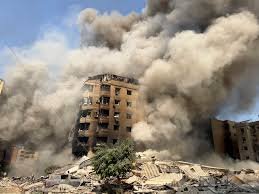
Israeli forces launched air and military strikes across Lebanon on Monday after the Iran‑backed militant group Hezbollah fired rockets and drones into northern Israel in retaliation for the killing of Ayatollah Ali Khamenei in strikes by United States and Israel earlier in the weekend, marking a significant escalation of hostilities across the wider Middle East. The Israeli military said it had widened its operations to strike Hezbollah targets across Lebanon after projectiles fired from Lebanese territory triggered the latest round of combat.
Explosions were reported in the southern suburbs of Beirut, a Hezbollah stronghold, as Israeli strikes hit areas where senior members of the militant group are believed to be based. The incidents represent one of the most intense exchanges since the 2024 conflict between Israel and Hezbollah, with military officials on both sides trading direct fire and positioning for further operations.
Hezbollah stated its strikes were carried out in “revenge” for the killing of Iran’s Supreme Leader and framed its action as a defensive response to what it characterised as continuous aggression. The Israeli military responded by insisting its operations were aimed at neutralising the threat posed by Hezbollah’s decision to join the broader conflict, warning that the group’s actions would not be tolerated.
The escalation into Lebanon expands a conflict that has already drawn in multiple regional players and widened after the weekend’s joint US‑Israeli offensive against Iran. Analysts say that Hezbollah’s direct engagement raises the risk of a broader regional war, especially as global attention remains focused on intensifying strikes, shifting alliances, and the potential for further civilian and military casualties.