

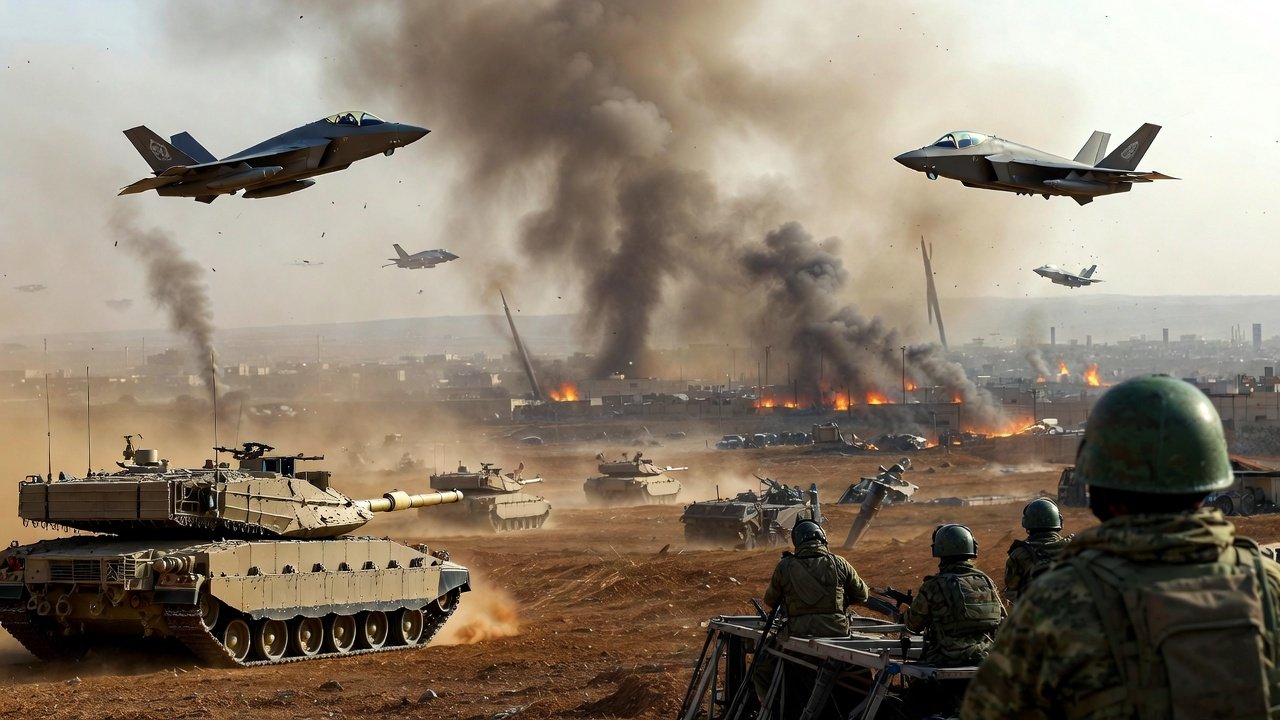
As the dust settles, or rather, as it continues to rise, from the U.S.-Israeli airstrikes on Iran that began on February 28, 2026, the world watches a conflict that risks reshaping the Middle East yet again. Israel’s declared aim, echoed by Prime Minister Benjamin Netanyahu in direct appeals to the Iranian people, is nothing short of regime change: the toppling of the Islamic Republic to neutralize what it perceives as an existential threat. This ambition, rooted in decades of animosity, seeks to dismantle Iran’s nuclear program, sever its support for regional allies like Hezbollah and Hamas, and pave the way for a reconfigured regional order aligned with Israeli and Western interests. Yet, five days into “Operation Epic Fury,” Iran’s regime remains intact, its institutions resilient, and its defenses holding firm against overwhelming military superiority. The question lingers: Why has Israel, despite its technological prowess and U.S. backing, repeatedly fallen short of this goal? And what does this impasse mean for global stability?
Israel’s vision for regime change is clear and multifaceted. At its core is the elimination of Iran’s nuclear ambitions, which Israel views as a pathway to annihilation. For over 30 years, since the early 1990s when Iran’s program first raised alarms, Israel has pursued disruption through covert operations like the Stuxnet cyberattack in 2010, which delayed enrichment by 1-2 years, and assassinations of key scientists, including Mohsen Fakhrizadeh in 2020. Beyond nukes, Israel aims to cripple Iran’s ballistic missile arsenal, estimated at thousands capable of reaching Tel Aviv, and dismantle its proxy network, which has fueled conflicts from Gaza to Yemen. Netanyahu’s recent Farsi-language message urging Iranians to rise up underscores a broader ideological drive: replacing Tehran’s theocracy with a more pliable government that might normalize relations, much like the Abraham Accords did with other states. Proponents argue this would foster regional peace, but critics see it as hegemonic overreach, ignoring Iran’s sovereign right to self-determination.
Yet, history and current realities reveal why this objective remains elusive. First, Iran’s regime is not a fragile monolith but a deeply entrenched system with redundant leadership structures. The killing of Supreme Leader Ayatollah Ali Khamenei on day one was a decapitation strike meant to spark collapse, but swift succession protocols, drawing from a pool of clerical and military figures, have maintained continuity. U.S. officials themselves express skepticism about regime change, noting the absence of a viable opposition ready to fill the void. Past interventions, like the U.S.-led ousting of Saddam Hussein in Iraq, teach a bitter lesson: Toppling a regime without a clear, supported alternative breeds chaos, not stability. In Iran, with a population of over 89 million and a history of resisting foreign interference dating back to the 1953 CIA-backed coup, internal unrest, while present in protests like those in 2022, has not coalesced into a revolutionary force capable of systemic overthrow.
Militarily, Israel’s air campaign has inflicted damage, over 2,000 targets struck, including nuclear sites at Natanz and Isfahan, and IRGC command centers, but it has not broken Iran’s resolve. Iranian countermeasures, including missile barrages and proxy attacks on U.S. bases in the Gulf, have exposed vulnerabilities in the coalition’s strategy. The closure of the Strait of Hormuz, through which 20% of global oil flows, serves as a stark reminder of Iran’s asymmetric leverage: oil prices have surged by up to 10%, risking global recession and eroding international support for prolonged aggression. Even Israeli analysts admit that airstrikes alone cannot topple a regime; a ground invasion would be required, yet that’s politically and logistically untenable, given the quagmire of Israel’s ongoing Gaza operations, where over two years of conflict have failed to eradicate Hamas.
Geopolitically, the push for regime changes faces mounting headwinds. Iranian-American scholars and global voices warn that such efforts will backfire, galvanizing national unity against perceived imperialism and strengthening hardliners. Leaders like Canadian Prime Minister Mark Carney have decried the war as a “failure of international order,” highlighting the absence of UN engagement and eroding Western consensus. Russia and China, Iran’s strategic partners, provide diplomatic cover and potential arms, while the Global South views this as another chapter in Western hegemony. Domestically in Israel, Netanyahu’s strategy may bolster his position amid legal troubles, but it risks overextension, with public fatigue from endless wars.
Iran’s steadfast defense is not merely defiance but a testament to its sovereignty in a multipolar world. By framing the conflict as resistance against foreign domination, Tehran has sustained morale and operational capacity, even as casualties mount, over 1,000 reported dead, many civilians. This resilience echoes the 1980s Iran-Iraq War, where Iran endured eight years of bombardment without capitulation.
As the bombs fall, one must ask: If regime change remains out of reach, what paths forward exist? Will escalation draw in more actors, spiraling into a wider regional conflagration? Or could diplomacy, perhaps through backchannels or UN mediation, offer a de-escalation that respects Iran’s autonomy while addressing legitimate security concerns? The answers are not predetermined; they hinge on whether the international community prioritizes dialogue over destruction. In the end, the pursuit of imposed change may only entrench the very regime it seeks to dismantle, leaving us to ponder: At what cost does one nation’s security imperil the worlds?
Disclaimer: The views and opinions expressed in this article are solely those of the author and do not necessarily reflect the views, policies, or position of this website. The website does not endorse or oppose any opinion presented herein.
