

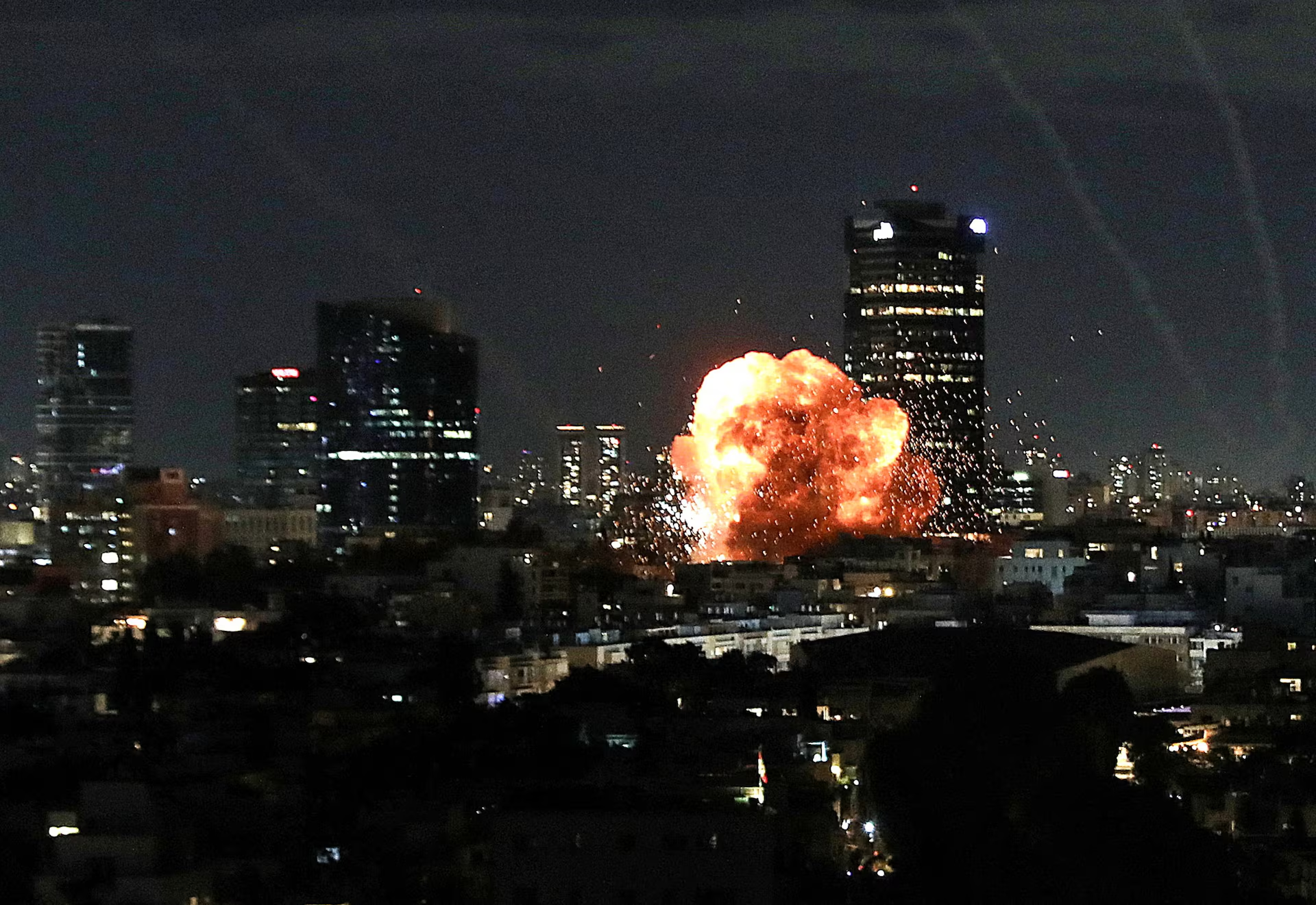
Iran’s Islamic Revolutionary Guard Corps (IRGC) declared early on February 28, 2026, that it was launching what it called “the most devastating offensive operation in the history of the Islamic Republic of Iran”, directed at Israeli territory and U.S. military bases in the region, according to official statements carried by Iranian state media and affiliated agencies. The announcement framed the operation as retaliation for a major U.S.–Israel military campaign against Iranian targets and was accompanied by reports of extensive missile and drone strikes toward Israel.
This declaration came amid a dramatic escalation of hostilities that began when the United States and Israel launched coordinated strikes—codenamed Operation Epic Fury (U.S.) and Operation Lion’s Roar (Israel)—against Iranian military infrastructure and leadership sites on February 28. The joint campaign targeted nuclear, missile, and command facilities across Iran, reportedly involving aircraft and long-range munitions to degrade Tehran’s defensive and offensive capabilities.
Iranian state media and U.S. and Israeli officials have confirmed the death of Iran’s Supreme Leader, Ayatollah Ali Khamenei, in the strikes, marking an unprecedented moment in the Islamic Republic’s 47-year history. Multiple senior regime figures, including top commanders of the IRGC and defence officials, were also reported killed, although some Iranian sources have been inconsistent in confirming individual casualties. Following the air campaign, Tehran declared a 40-day national mourning period and vowed severe military reprisals.
The IRGC statement cited these leadership losses as justification for launching its “devastating offensive,” describing the initial phase of missile and drone attacks on Israeli territory as a direct response to what Tehran called “hostile and criminal aggression” by the U.S. and Israel. Iranian forces claimed early strikes had begun, although independent verification of damage and targets is limited amid ongoing conflict.
The conflict has had significant humanitarian consequences. Iranian authorities reported that a primary school in Minab, southern Iran, was struck during the military operation, resulting in scores of civilian deaths, including many children, and dozens of injuries. Iranian officials labelled the attack a “war crime,” and the Red Crescent reported hundreds of civilian casualties nationwide amid the broader air campaign.
Iran retaliated with missile and drone attacks aimed at Israeli cities and U.S. military bases across several Middle Eastern countries, including Bahrain, Kuwait, the UAE and others, according to Iranian statements and regional sources. These strikes have caused further injuries and infrastructure damage, fueling fears of a wider regional war.
Global reactions have ranged from calls for restraint to emergency discussions at the United Nations. Some countries condemned the U.S.–Israeli strikes as violations of international law, while others described Iran’s response as evidence of an entrenched security crisis in the Middle East. Diplomatic efforts to de-escalate are ongoing, but the confirmation of Khamenei’s death and Iran’s commitment to an intensified offensive have complicated negotiations and raised concerns of prolonged conflict.