

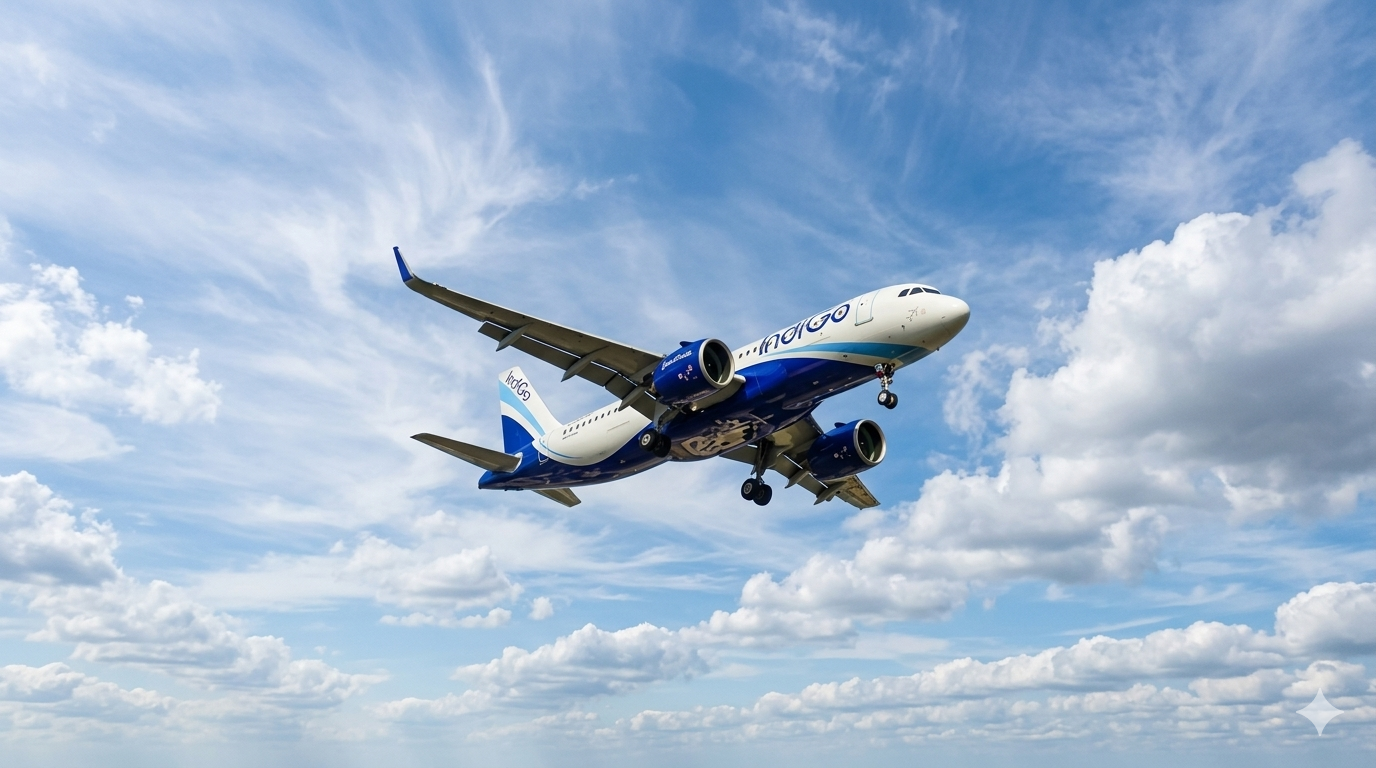
Indian airlines are facing severe disruptions to their international operations as Middle East airspace restrictions linked to the ongoing Iran war compound the effects of a longstanding Pakistan airspace ban, industry data and analysts said on Tuesday.
Airspace closures in the Gulf and wider West Asia, prompted by the conflict involving the United States, Israel and Iran, have forced carriers to reroute or suspend flights, adding to delays, cancellations and rising operational costs. The situation is particularly acute for India’s largest international airlines, Air India and IndiGo.
According to aviation data from Cirium, the two carriers failed to operate about 64% of their 1,230 scheduled flights to the Middle East, Europe and North America over the past 10 days, underlining the scale of disruptions.
The constraints stem from conflict‑related airspace restrictions over several Middle Eastern nations, which, combined with a ban on Indian carriers using Pakistan’s airspace since last April, leave limited safe corridors for international routes.
IndiGo, heavily reliant on six long‑range Boeing aircraft leased from Norse Atlantic Airways, has faced unique operational challenges. Because those planes are Norwegian‑registered, they must comply with a European Union Aviation Safety Agency advisory urging airlines to avoid airspace over Iran, Iraq, Israel, Kuwait, Lebanon, Qatar, the United Arab Emirates and Saudi Arabia. This has forced some flights to take significantly longer, costlier routes via Africa.
One notable disruption saw an IndiGo flight from Delhi to Manchester turned back to Delhi after air traffic authorities in Eritrea denied clearance, and another flight diverted to Cairo under similar circumstances, according to people familiar with the operations.
Air India has attempted to mitigate the impact by scheduling additional flights, but the conflict has increased flight durations on key routes. For example, a recent Delhi–New York service took nearly 22 hours with an unscheduled stop in Rome, compared with roughly 17 hours on pre‑conflict direct routes that normally fly over Pakistan.
Analysts say the combination of restrictions and higher fuel costs linked to the global energy shock is placing significant financial strain on Indian carriers. Previous industry estimates indicated that Pakistan’s airspace ban alone could cost Air India about $600 million annually if sustained over a year.
Longer flight paths not only increase fuel consumption but also raise operating expenses and complicate scheduling, potentially pushing some airlines to pass costs on to passengers through higher fares and surcharges.
The double pressure from the Iran war and the Pakistan airspace ban highlights how geopolitical tensions are increasingly shaping airline operations and profitability in the region.