

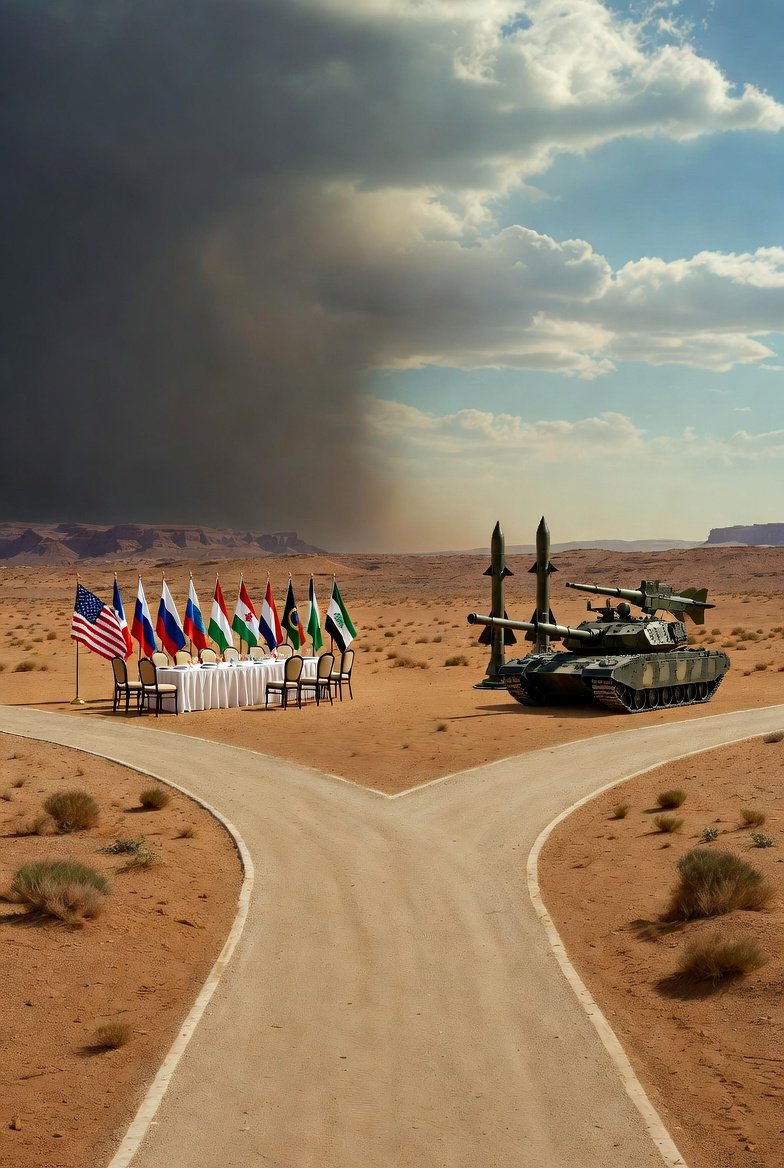
The “apocalyptic atmosphere” in the Middle East saw a ray of hope, when Iran showed its readiness for a negotiated settlement of the ongoing crisis in the region. Iran’s message this week was blunt, measured, and carefully constructed. Speaking in Istanbul, Iranian Foreign Minister Abbas Araqchi made it clear that Iran–US negotiations remain possible, but only if they take place without coercion. Talks conducted under threats, he argued, are not negotiations at all.
That distinction matters. In the long and fragile history of Iran–US relations, diplomacy has often unfolded alongside sanctions, military signaling, and rhetorical escalation. Tehran’s position, reiterated yet again, is that such pressure undermines the very premise of fair negotiations between sovereign states.
Araqchi stressed that no meeting between Iranian and American officials has been scheduled. At the same time, he reaffirmed Iran’s openness to diplomacy on equal terms, while also declaring that the country is prepared for both negotiations and war. This dual message is not accidental. It reflects a long-standing Iranian strategy aimed at combining deterrence with diplomatic availability.
From Iran’s viewpoint, national security is non-negotiable. Araqchi stated that Iran will maintain—and, if necessary, expand, its military capabilities, framing them as a defensive necessity rather than a bargaining chip. This assertion is likely intended to signal resolve to adversaries while reassuring domestic audiences that diplomacy will not come at the cost of sovereignty.
Yet such language carries risks. While emphasizing strength may reinforce regional stability through deterrence, it can also harden perceptions abroad that Iran’s commitment to diplomacy is conditional and limited. For diplomacy to move forward, signaling openness is rarely enough; it must eventually be paired with practical steps that reduce mistrust.
An important subplot in these remarks is the role of Turkey. According to Araqchi, Ankara is working to help place Iran–US dialogue within a new framework and is firmly opposed to a military solution. Turkey’s involvement highlights the growing importance of regional mediators at a time when direct communication channels between Tehran and Washington remain constrained.
Still, mediation has limits. External facilitators can keep conversations alive, but they cannot substitute for political will among the principal actors. As long as threats, sanctions, and strategic mistrust dominate the landscape, even the most carefully worded diplomatic overtures are unlikely to yield rapid results.
This recent posture from Iran shows its willingness towards a diplomatic solution and its firm sance against the coercive tactics reflects both flexibility and resolve. It is now the US prerogative to respond to the gesture. At a time when the international order is turning more chaotic with every passing day, the US decision of war and peace in the middle east shall be a decisive factor for the future course.
For now, Araqchi’s statement should be read less as escalation and more as positioning. It is a reminder that Middle East diplomacy often advances not through dramatic breakthroughs, but through incremental recalibration. Whether this recalibration leads to dialogue or deeper deadlock will depend on whether all sides are willing to test diplomacy without making threats the opening move.
Disclaimer: The views and opinions expressed in this article are solely those of the author and do not necessarily reflect the views, policies, or position of this website. The website does not endorse or oppose any opinion presented herein.

1 Comment
This is a great article, looking forward to new ones.