

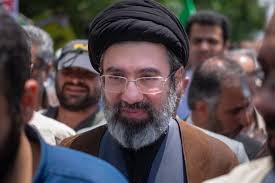
Iran has appointed Mojtaba Khamenei as the country’s new supreme leader following the death of his father, Ali Khamenei, in recent United States–Israeli strikes, state media announced Monday, as the conflict between Iran and Israel intensified across the region.
The decision was made by the powerful Assembly of Experts, an 88-member clerical body responsible for selecting the leader of the Islamic Republic. The council declared that Mojtaba Khamenei, 56, had been chosen as the third supreme leader of Iran since the Iranian Revolution of 1979.
In a statement broadcast on Iranian state television, the Assembly said the decision had been taken swiftly despite what it described as “the brutal aggression of criminal America and the evil Zionist regime.”
“The respected representatives of the Assembly of Experts have decisively appointed and introduced Mojtaba Khamenei as the third leader of the sacred system of the Islamic Republic of Iran,” the statement said.
The announcement came nine days after coordinated strikes by the United States and Israel reportedly killed Ali Khamenei, the country’s long-serving leader who had ruled since 1989. His death triggered a major escalation in hostilities between Iran and Israel and pushed the region toward a broader confrontation.
Shortly after the leadership announcement, Iran launched a new round of missile attacks toward Israel. Iranian state media aired footage of a projectile bearing the slogan “At Your Command, Sayyid Mojtaba,” signaling loyalty to the newly appointed leader.
The strikes mark one of the first major military actions carried out in the name of Mojtaba Khamenei and underscore Tehran’s intent to continue its confrontation with Israel despite the leadership transition.
Explosions were also reported early Monday in Doha, the capital of Qatar, where the United States operates a major military facility. Authorities have not yet confirmed the cause of the blasts, but regional tensions have raised concerns that the conflict could expand beyond Iran and Israel.
The appointment of Mojtaba Khamenei had long been the subject of speculation within Iran’s political establishment. A cleric with strong ties to the Islamic Revolutionary Guard Corps and influential conservative networks, he has operated largely behind the scenes for years while maintaining significant influence over security and political institutions.
Observers say the rapid selection reflects the leadership’s effort to maintain continuity and stability during a period of intense external pressure.
International reactions have been swift. Donald Trump, president of the United States, had previously dismissed Mojtaba Khamenei as a “lightweight” and suggested Washington should have influence over Iran’s leadership transition.
“If he doesn’t get approval from us, he’s not going to last long,” Trump said in an interview with ABC News on Sunday before Tehran formally announced the appointment.
Meanwhile, the military of Israel warned that the new Iranian leader could also become a potential target if the conflict escalates further.
The warnings underscore the severity of the current confrontation, which analysts describe as one of the most dangerous phases of Iran-Israel tensions in decades.
The war erupted shortly after Iranian security forces suppressed large-scale anti-government protests that had spread across the country. Human rights groups reported that thousands of demonstrators were killed during the crackdown, intensifying domestic unrest in the weeks before the external conflict began.
Political analysts believe Mojtaba Khamenei is likely to continue the policies of his father, including a hard-line stance against dissent and a confrontational posture toward Western powers and Israel.
Despite the leadership change, Iranian officials have emphasized that the strategic direction of the Islamic Republic will remain unchanged. Government statements have framed the conflict as part of a broader struggle against foreign intervention and regional adversaries.
As missile exchanges and military alerts continue across the Middle East, diplomats and security experts warn that the situation could escalate into a wider regional war involving multiple actors.
For now, Tehran’s swift appointment of a new supreme leader appears intended to project stability and continuity at a moment when the Islamic Republic faces its most serious military confrontation in years.