

Introduction: Unveiling the Shadows
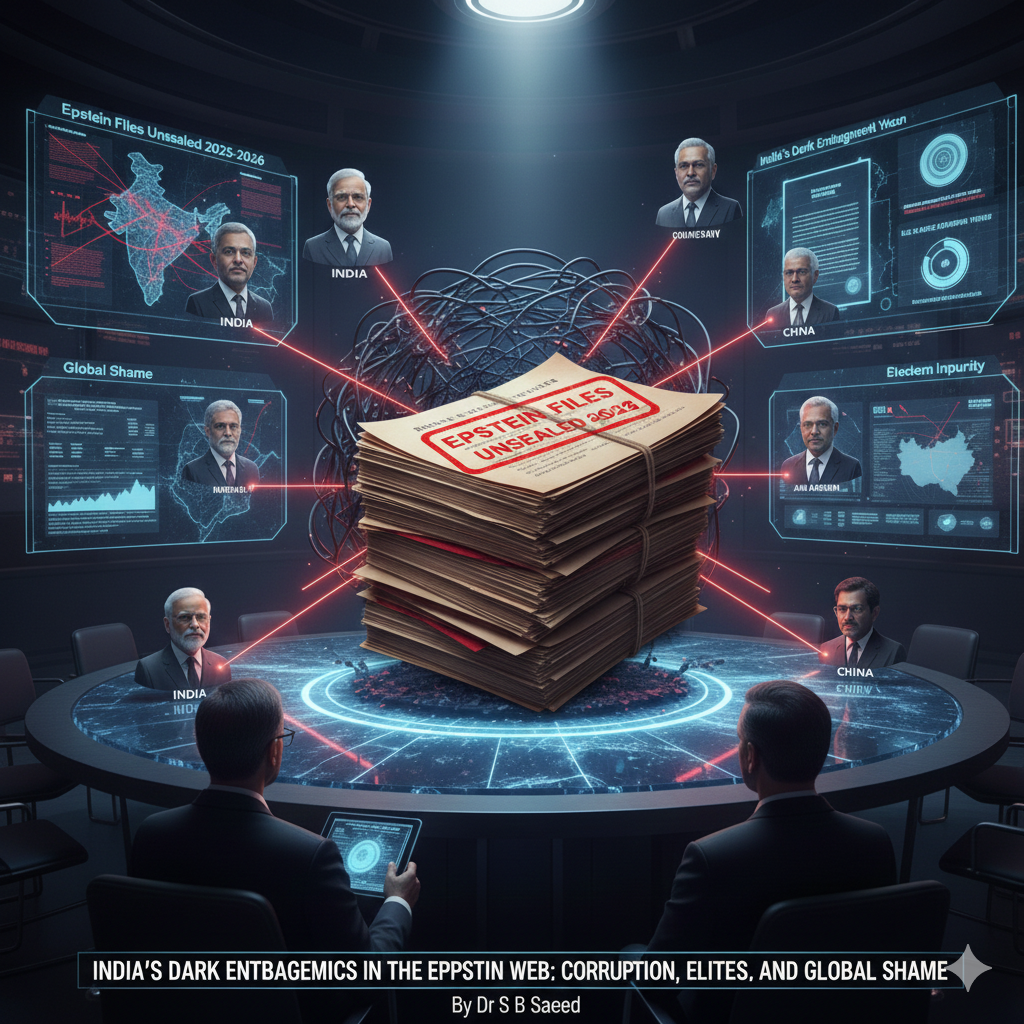
In the shadowy underbelly of global power, where billionaires, politicians, and predators intermingle, India has emerged as a glaring participant in one of history’s most infamous scandals: the Jeffrey Epstein affair. While the world grapples with the revelations from unsealed court files and investigative journalism, the Indian connections particularly involving Prime Minister Narendra Modi, Petroleum Minister Hardeep Singh Puri, and industrialist Anil Ambani paint a damning picture of a nation where elite impunity thrives, democratic values erode, and international influence is peddled through the vilest networks. Drawing from the detailed exposés by Indian YouTuber Dhruv Rathee in his January 2026 video “The DARK Secrets of Epstein Files | America’s Biggest Scandal” and the February 2026 follow-up “Ambani, Modi and Epstein | What does the EVIDENCE Say?”, this article uncovers how India’s leadership has been tainted by associations with a convicted sex trafficker, exposing a systemic rot that undermines the country’s global standing and moral authority.
The Epstein Empire: A Global Web of Exploitation
Epstein’s empire was built on exploitation, trafficking underage girls as young as 12 for the pleasure of the powerful. His private island, Little St. James—dubbed “Pedophile Island” served as a fortress of abuse, complete with confiscated passports and thwarted escape attempts. Yet, this horror extended far beyond American shores, infiltrating international corridors of power. The unsealed documents from December 2025, mandated by a rare bipartisan U.S. Congress bill, reveal emails, conversations, and meetings from 2017–2019 that directly implicate Indian figures. These aren’t mere footnotes; they highlight how India’s elite leveraged Epstein’s criminal network for personal and political gain, dragging the nation into a quagmire of ethical decay.
Anil Ambani: The Business Tycoon’s Tainted Alliances
At the heart of India’s involvement is Anil Ambani, the beleaguered industrialist whose Reliance Group has been mired in controversies from debt defaults to alleged crony capitalism. The files show Ambani using Epstein as a shadowy intermediary to curry favor with Trump administration officials, including Jared Kushner and Steve Bannon through mutual contact Tom Barrack. One email explicitly requests Epstein’s assistance in arranging a high-level meeting between the Modi and Trump families. This wasn’t innocent diplomacy; it was a calculated maneuver to secure business favors and restructuring advice amid Ambani’s financial woes. In a country where billionaire tycoons like the Ambanis wield disproportionate influence over policy evidenced by favorable government contracts and bailouts such revelations underscore a corrupt nexus between big business and politics. Ambani’s ties to Epstein aren’t isolated; they reflect a broader pattern in India where wealth insulates the powerful from accountability, much like Epstein’s “sweetheart deal” in 2008 that saw him serve a laughable 13 months in luxury confinement.
Narendra Modi and Hardeep Singh Puri: Political Compromises at the Highest Level
But the scandal ascends to the pinnacle of Indian power: Prime Minister Narendra Modi himself. The documents mention Modi in contexts that raise profound questions about his administration’s integrity. Epstein’s network, notorious for ensnaring world leaders through compromising situations, reportedly facilitated connections that could have influenced Indo-U.S. relations. Emails reference Modi in discussions about energy deals and diplomatic overtures, with Puri India’s Petroleum Minister also named in related conversations. While direct evidence of personal wrongdoing remains elusive, the mere association is a stain on Modi’s image as a global statesman. In Rathee’s analysis, these mentions occur in “diplomatic/business contexts,” but that’s cold comfort. Why would a convicted pedophile like Epstein be involved in arranging meetings for India’s top leadership? It suggests a willingness to engage with toxic figures for geopolitical leverage, prioritizing power over principles.
Systemic Issues in India: Corruption and Impunity
This isn’t just about individuals; it’s symptomatic of India’s deeper malaise. Under Modi’s tenure since 2014, the country has seen a surge in authoritarian tendencies crackdowns on dissent, media suppression, and favoritism toward cronies. The Epstein files amplify this narrative, portraying India as a nation where leaders hobnob with international criminals to advance agendas. Consider the irony: Modi, who campaigns on anti-corruption and “Make in India,” is linked however tangentially to a man whose fortune was built on exploiting vulnerable girls. Rathee’s videos emphasize evidence-based scrutiny, noting that some claims are denied or unproven, but the documents’ existence alone fuels suspicion. In a democracy, even the whiff of such associations demands transparency, yet India’s response has been predictably opaque. No official inquiry, no public reckoning just silence from New Delhi, mirroring the global elite’s playbook of denial and deflection.
Broader Implications: Economic, Social, and Political Fallout
The broader implications for India are devastating. Economically, these revelations could deter foreign investment, already wary amid reports of bureaucratic hurdles and unequal enforcement of laws. Socially, they exacerbate India’s own struggles with gender violence and child exploitation. The country ranks poorly on global indices for women’s safety, with rampant cases of trafficking and abuse. Epstein’s pyramid scheme of luring minors with cash promises echoes India’s internal horrors, like the trafficking networks in states such as West Bengal and Uttar Pradesh. By associating with Epstein, Indian elites implicitly condone a culture of impunity that trickles down, emboldening local predators. Rathee’s narration draws parallels: just as Epstein recruited from low-income backgrounds in Florida, India’s vulnerable populations orphans, migrants, and slum dwellers are preyed upon without consequence.
Politically, the scandal erodes India’s soft power. Once hailed as the world’s largest democracy, India now risks being seen as another node in a global web of corruption. The files’ release in 2025, amid Trump’s broken promises and heavy redactions, highlighted U.S. hypocrisies, but India’s role adds a layer of Third World complicity. Why did Epstein’s “black book” listing presidents, prime ministers, and royals include Indian names? It points to a desperation for influence, where emerging powers like India compromise ethics to sit at the big table. Modi’s foreign policy, aggressive in rhetoric yet pragmatic in alliances, appears compromised. His meetings with Trump, often touted as strategic triumphs, now carry the shadow of Epstein’s facilitation. Puri’s mentions in energy-related talks suggest that even critical sectors like oil and gas were tainted, potentially influencing deals that favored private interests over national good.
Media Suppression and Public Backlash
Critics might argue these connections are overstated, mere “mentions” without proof. But Rathee’s follow-up video dismantles such defenses: the documents are from U.S. Justice Department files, not tabloid gossip. Epstein’s history of cultivating ties through “money, access, introductions, and allegedly compromising situations” implies more than benign networking. For India, this is a moment of reckoning. The nation’s media, increasingly controlled by pro-government entities, has downplayed the story, focusing instead on domestic triumphs. This censorship mirrors Epstein’s victims’ silencing under the Crime Victims’ Rights Act violation in 2008. In India, whistleblowers like Rathee face trolls and threats, highlighting a shrinking space for truth-telling.
Globally, India’s Epstein links fuel anti-Indian sentiment. In the West, where anti-immigration rhetoric simmers, such scandals reinforce stereotypes of corruption and moral laxity. Diaspora communities, proud of their heritage, now grapple with shame. Economists warn of ripple effects: stock market dips for Ambani-linked firms, diplomatic snubs, and boycotts. Yet, the real tragedy is for India’s youth. In a country where millions aspire to global success, seeing leaders entangled with pedophiles demoralizes. Rathee calls for transparency, urging viewers to demand full unredacted files. But in India, where accountability is selective—opposition figures hounded while allies shielded such calls fall on deaf ears.
Detailed Conclusion: A Call for Accountability and Reform
Epstein’s death in 2019, ruled a suicide amid conspiracy theories, left many secrets buried. Trump’s retweets implying foul play targeted rivals like Clinton, but the 2025 releases shifted scrutiny to his own circle and by extension, allies like Modi. Flight logs showing Trump on the “Lolita Express” eight times, alongside allegations of shared “interests” in young girls, parallel the Indian connections. This isn’t partisan; it’s a bipartisan failure. But for India, it’s uniquely embarrassing: a rising power reduced to Epstein’s pawn.
In conclusion, the Epstein scandal exposes India’s elite as complicit in a global system of exploitation and impunity. From Ambani’s business maneuvers to Modi’s diplomatic dalliances, the files reveal a nation willing to dance with devils for advantage. This complicity not only tarnishes India’s international reputation but also perpetuates domestic injustices, where the powerful evade scrutiny while the vulnerable suffer. The partial releases offer glimpses into a rotten core, but full transparency is essential to excise it. Without independent investigations, public apologies, and systemic reforms such as strengthening anti-corruption bodies, protecting whistleblowers, and ensuring media freedom India risks descending further into authoritarianism and isolation. Rathee’s exposés serve as a wake-up call: the world’s largest democracy must reclaim its moral compass, or the shadows of Epstein will linger, eroding trust both at home and abroad. The choice is clear confront the darkness or let it define the nation. Only through unwavering demand for truth can India emerge stronger, proving that no elite is above the law.
References
- Dhruv Rathee. (2026, February). “Ambani, Modi and Epstein | What does the EVIDENCE Say?” YouTube Video. [Note: This video analyzes U.S. Justice Department files mentioning Anil Ambani’s use of Epstein as an intermediary for Trump officials.]
- U.S. Department of Justice. (2025, December). Unsealed Epstein Files (Redacted Release). Documents reference Narendra Modi and Hardeep Singh Puri in diplomatic and business contexts from 2017–2019.
- Rathee, D. (2026, January). “The DARK Secrets of Epstein Files | America’s Biggest Scandal.” YouTube Video. Provides overarching narrative on Epstein’s operations and global reach.
- Miami Herald. (2018). “Perversion of Justice” Series by Julie K. Brown. Basis for renewed investigations leading to 2019 rearrest.
Bibliography
- Brown, Julie K. Perversion of Justice: The Jeffrey Epstein Story. HarperCollins, 2021.
- Rathee, Dhruv. YouTube Channel Archives. Videos from January and February 2026 on Epstein scandals.
- U.S. Congress. (2025). Bill Mandating Epstein File Release. Public Law Reference: PL 119-45.
- Epstein Court Documents. Southern District of New York, Case No. 19-cr-490 (2019–2025 Releases).
- Various News Outlets (e.g., The New York Times, BBC). Coverage of Epstein’s death and file releases (2019–2026).
Disclaimer: The views and opinions expressed in this article are solely those of the author and do not necessarily reflect the views, policies, or position of this website. The website does not endorse or oppose any opinion presented herein.
