

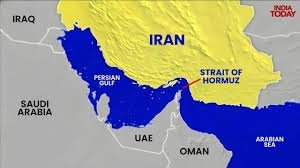
A prolonged closure of the Strait of Hormuz could force major oil producers Iraq and Kuwait to sharply reduce crude oil exports within days, potentially cutting 3.3 million barrels per day (bpd) of output, analysts at J.P. Morgan said, marking a deepening threat to global energy supplies amid the ongoing Middle East conflict.
In a research note on Tuesday, J.P. Morgan analysts said that if the narrow chokepoint, a critical transit route for roughly 20% of the world’s oil and liquefied natural gas shipments, remains effectively closed due to escalating hostilities between the United States, Israel, and Iran, then Iraq may have only about three days and Kuwait about 14 days before they are compelled to curb exports as storage facilities fill to capacity.
Iraqi oil officials told Reuters that absent tanker movements through Hormuz, essential for loading crude at southern ports, output could be cut by more than 3 million bpd within a matter of days because onshore storage has already reached critical levels.
Analysts noted that if the closure persists beyond mid‑March, cumulative losses could escalate sharply, with 3.8 million bpd lost by around day 15 and 4.7 million bpd by day 18 of disruption.
The situation has already disrupted global oil markets and supply chains, with tanker traffic stalled and traders wary of the acute geopolitical risk along energy routes. U.S. President Donald Trump indicated that the U.S. Navy could begin escorting tankers through the strait to keep shipments moving, although detailed plans and timelines have not been disclosed.
The crisis comes as global benchmark Brent crude and U.S. West Texas Intermediate (WTI) prices have climbed due to supply concerns and interruption fears, reflecting the geopolitical premium built into oil markets.
Economic analysts have emphasized that a sustained closure of the Strait of Hormuz, the world’s most important energy transit route, would represent one of the most serious supply shocks in decades, with implications for inflation, energy security and geopolitical stability worldwide.