

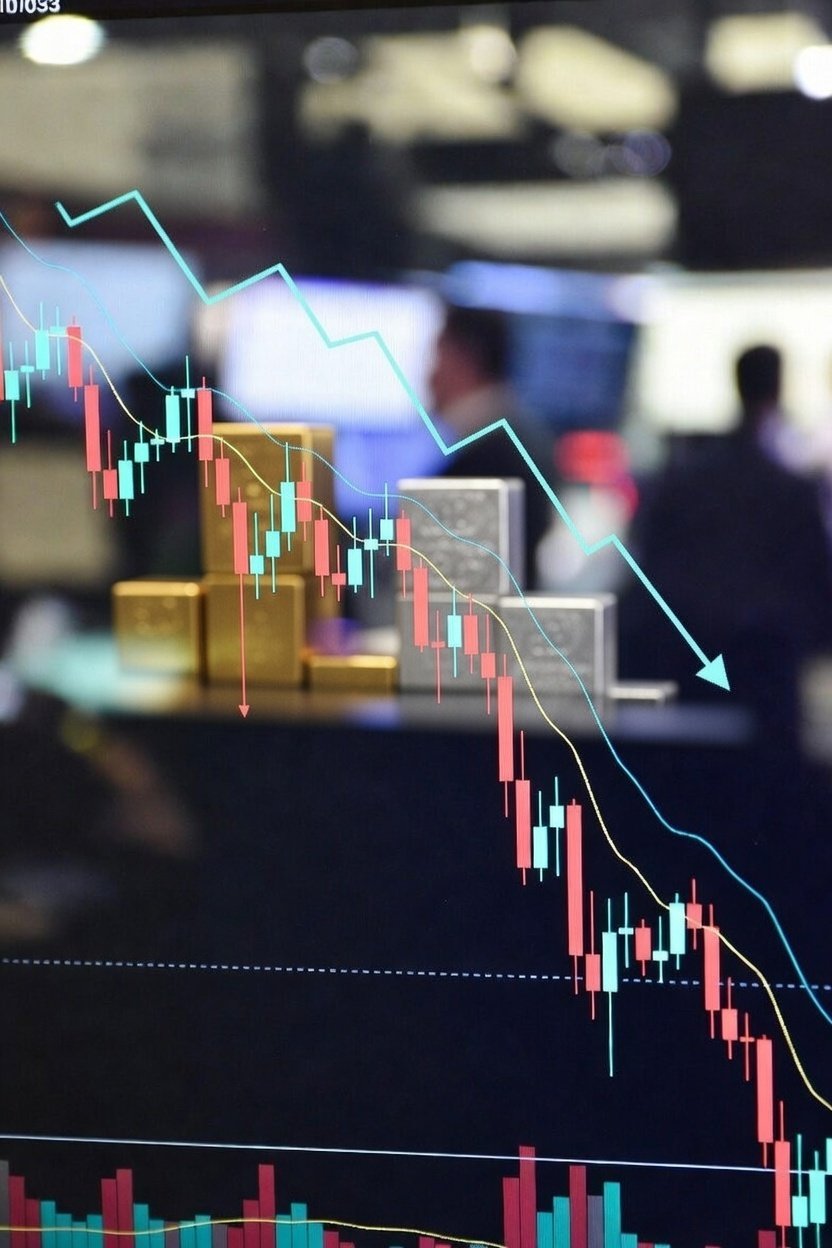
Gold and silver prices continued to fall sharply in global markets today, extending one of the most dramatic sell-offs seen in years. International commodity exchanges reported that gold futures on the MCX dropped around 12 % in the last session, with prices falling below ₹1,50,000 per 10 g from record levels earlier this month. Silver prices also collapsed, plunging about 27 %, wiping off more than ₹1 lakh per kilogram in a single day on Indian markets, with silver now trading near ₹2.92 lakh per kg after last week’s historic highs. Experts say both metals shed substantial value as investors absorbed the intense volatility and rapid profit-booking after the metals’ recent rally.
The sharp decline followed renewed strength in the U.S. dollar and rising bond yields, which reduced the appeal of non-yielding assets like gold and silver. Analysts linked the sell-off to widespread repositioning after months of strong gains, with many traders booking profits as the metals approached multi-year peaks earlier in January. According to market watchers, gold futures on the COMEX were trading significantly lower than recent highs, while silver briefly dipped into bear-market territory following heavy liquidation across global markets.
In international markets, precious metals also faced pressure from shifts in investor sentiment after key U.S. economic signals. Reports highlighted that global traders viewed the recent policy outlook, including expectations of tighter monetary conditions — as a major factor weakening demand for traditional safe-haven assets. Silver saw particularly extreme swings, with some contracts dropping nearly 30 % at their lowest intraday levels before modest late session stabilization.
In response to the intense price swings, major exchanges such as the CME Group have raised margin requirements for futures contracts on gold and silver to help maintain market stability. This move is intended to curb excessive leverage and ensure that traders hold sufficient capital amid heightened volatility. Financial experts caution that while price action shows some signs of consolidation, near-term fluctuations may continue as investors reassess risk and economic outlooks.