

In the contemporary global economy, energy markets remain deeply intertwined with geopolitical stability. Few regions illustrate this reality more clearly than the Middle East, where political tensions and armed conflicts regularly reverberate across global oil markets. In an era already marked by supply disruptions following the Russia-Ukraine War, the world has become acutely sensitive to any instability that threatens energy-producing regions. For many developing economies, including Pakistan, the pursuit of peace and stability in the Middle East is not merely a diplomatic aspiration. It is an economic necessity.
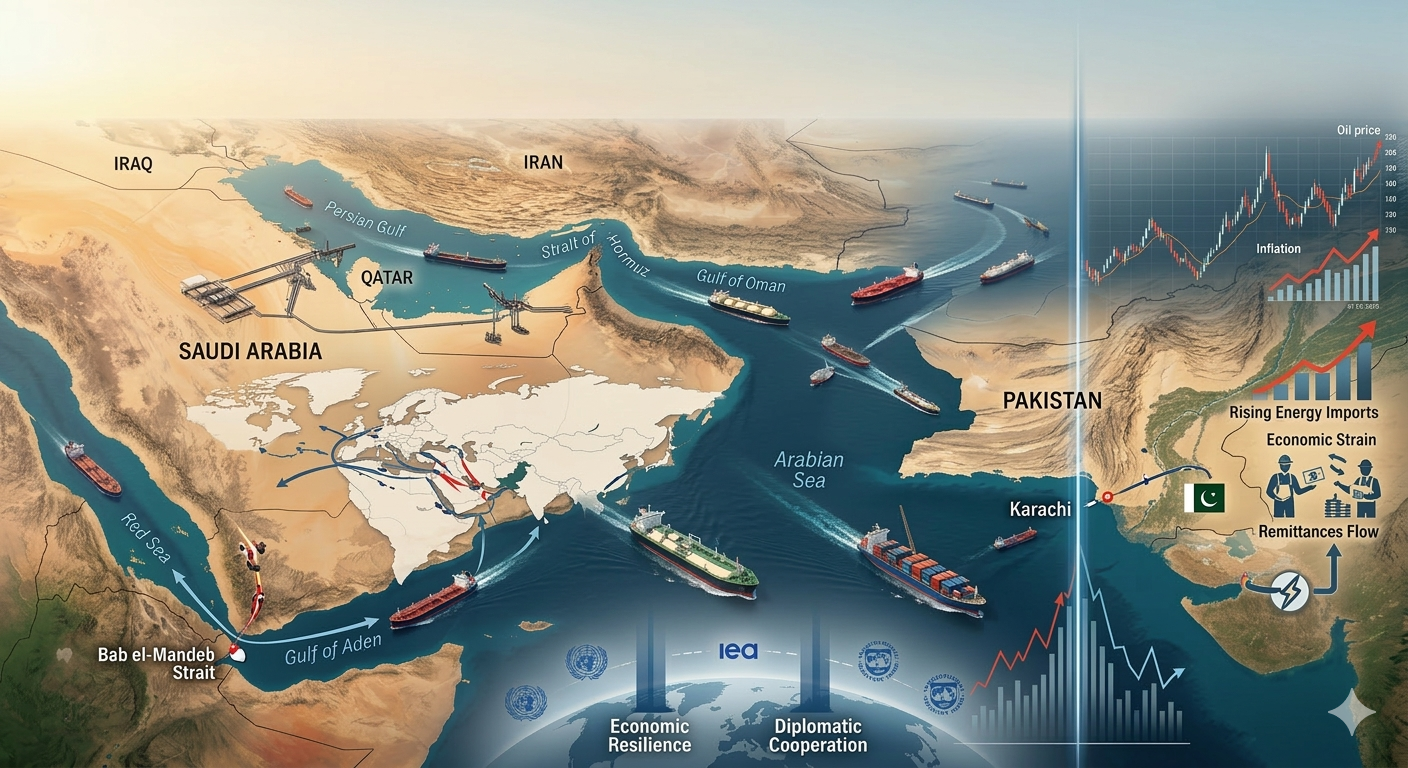
The strategic significance of the region lies in its central role within global energy supply chains. A substantial portion of the world’s oil exports originates from the Gulf, while critical maritime chokepoints ensure the uninterrupted movement of energy resources to international markets. Among the most vital of these routes is the Strait of Hormuz, through which a significant share of the world’s seaborne oil trade passes each day. Any disruption in this corridor can trigger immediate price volatility, affecting economies far beyond the region. Major energy exporters such as Saudi Arabia, Iran, Iraq and Qatar therefore occupy a central position in the architecture of global energy security.
Beyond the Strait of Hormuz, other maritime passages also play a crucial role in maintaining the stability of global energy markets. The Bab el-Mandeb Strait, linking the Red Sea to the Gulf of Aden, serves as another vital artery for international trade and oil shipments moving toward Europe and Asia. Instability affecting such strategic waterways can disrupt shipping routes, delay supply chains, and contribute to global economic uncertainty. The security of these maritime corridors therefore remains essential for maintaining the uninterrupted flow of energy resources across continents.
Global energy markets have historically demonstrated how geopolitical tensions can rapidly translate into economic shocks. The experience of the 1973 Oil Crisis illustrated how disruptions in energy supply can trigger inflation, slow economic growth, and reshape international economic relations. Contemporary markets remain similarly sensitive. Fluctuations in oil production or transport routes can quickly influence shipping costs, aviation fuel prices, and even food supply chains. Organizations such as OPEC continue to play a significant role in managing oil production levels among major producers, making stability within the Middle East an essential factor in maintaining predictable global energy markets.
For developing countries, fluctuations in global oil prices often translate directly into economic strain. Rising energy costs feed inflation, increase transportation expenses, and place additional pressure on foreign exchange reserves. International institutions such as the International Energy Agency and the International Monetary Fund have repeatedly warned that energy price shocks disproportionately affect emerging economies that rely heavily on imported fuels. These structural vulnerabilities make geopolitical tensions in energy-producing regions a matter of profound concern for countries striving to maintain economic stability.
In Pakistan’s case, the connection between Middle Eastern stability and national economic resilience is particularly pronounced. Pakistan imports a significant portion of its energy requirements from Gulf producers, making it highly sensitive to fluctuations in global oil markets. Moreover, millions of Pakistani workers reside in Gulf countries, and the remittances they send home constitute a vital pillar of the national economy. Stability in the region therefore protects not only energy supply lines but also the economic well-being of countless Pakistani households. Maritime routes across the Arabian Sea and the broader Persian Gulf further underscore how closely Pakistan’s economic interests are linked with the security of Middle Eastern energy corridors.
At the diplomatic level, Pakistan has traditionally maintained balanced and constructive relations with countries across the Middle East while consistently supporting peaceful dialogue and the resolution of disputes through diplomatic means. This approach reflects Pakistan’s broader commitment to regional stability and cooperative engagement. By encouraging dialogue and supporting initiatives that reduce tensions, Pakistan contributes to efforts aimed at safeguarding economic and strategic stability in a region that remains vital to global energy security.
From a theoretical perspective, scholars of International Relations have long argued that economic interdependence can serve as a stabilizing force in global politics. The American political scientist Joseph Nye has observed that complex economic ties among states often raise the costs of conflict and encourage cooperation over confrontation. In the context of the Middle East, where energy flows sustain global industrial and financial systems, maintaining stability becomes not only a regional responsibility but also a shared international imperative.
For the international community, the pathway forward lies in sustained diplomatic engagement and the strengthening of mechanisms that encourage dialogue and de-escalation. Constructive diplomacy among regional stakeholders, supported by multilateral platforms such as the United Nations, remains essential for reducing tensions and preventing disruptions that could destabilize global energy markets. Ensuring the security of maritime energy routes and fostering cooperative regional frameworks are equally vital steps toward safeguarding economic stability worldwide.
Ultimately, the pursuit of peace in the Middle East must be understood not only through the lens of regional politics but also through its profound global economic implications. The international energy system remains highly interconnected, and disruptions in one region quickly reverberate across global markets. For countries like Pakistan, whose economic stability is closely tied to international energy flows, lasting peace and stability in the Middle East represent more than a diplomatic objective. They are a strategic necessity for global economic resilience, sustainable development, and shared prosperity.
Disclaimer: The views and opinions expressed in this article are solely those of the author and do not necessarily reflect the views, policies, or position of this website. The website does not endorse or oppose any opinion presented herein.
