

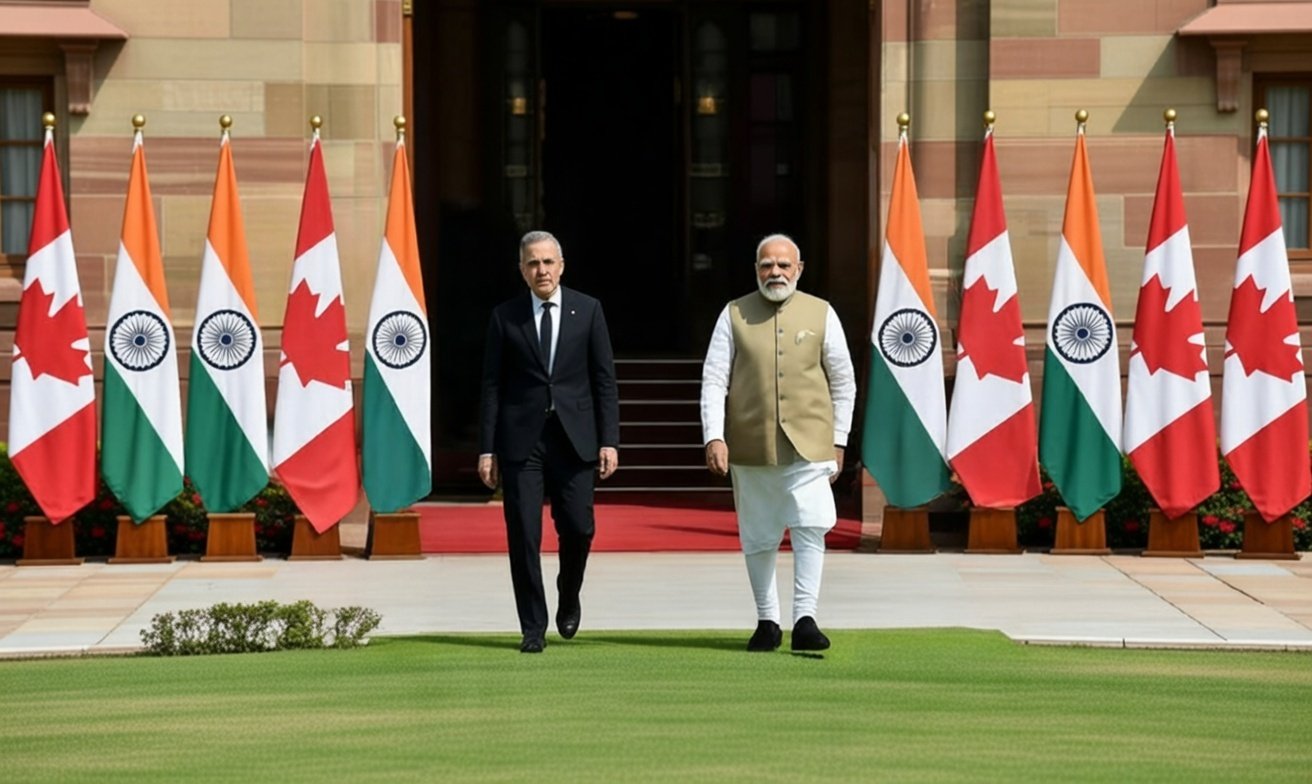
The recent uranium supply agreement between Canada and India, worth around CAD 2.6 billion, has drawn sharp criticism for undermining global nuclear non-proliferation rules. Signed during Canadian Prime Minister Mark Carney’s visit to India, the deal allows Canadian firm Cameco to provide nearly 22 million pounds of uranium ore concentrate to India’s Department of Atomic Energy between 2027 and 2035. This pact forms part of wider cooperation in clean energy, critical minerals, and strategic partnerships, including wind, solar, hydrogen, and electric vehicles. Supporters highlight benefits for bilateral trade, India’s nuclear energy expansion, and shared climate goals, such as Canada’s aim to double its power grid by 2050.
However, the agreement raises deep concerns about fairness in international nuclear governance. Pakistan has described it as a “selective exception” that weakens non-proliferation efforts. By granting India reliable external uranium supplies, the deal enables India to reserve its domestic uranium for military purposes, potentially expanding its fissile material production and widening the strategic imbalance in South Asia. This could accelerate an arms race in a tense region already marked by historical conflicts.
India remains outside the Nuclear Non-Proliferation Treaty (NPT) and has not signed the Comprehensive Test Ban Treaty (CTBT). The 2008 Nuclear Suppliers Group (NSG) waiver, pushed by the United States, gave India access to global nuclear markets without full separation of civilian and military programs or comprehensive safeguards. Only some of India’s reactors fall under International Atomic Energy Agency (IAEA) oversight, leaving others, including those capable of producing weapons-grade material, unsafeguarded. Importing foreign uranium for civilian use frees up local resources, indirectly supporting military stockpiles.
Pakistan, also a non-NPT state with nuclear capabilities, has faced blocked NSG membership bids due to concerns over past issues. Yet it argues for uniform rules without favoritism. The Canada-India deal appears to favor India geopolitically, ignoring equal application of standards.
A major overlooked risk in this context is India’s poor record on nuclear material security. Over the past three decades, numerous documented incidents of uranium theft, smuggling, and loss have exposed serious vulnerabilities in India’s nuclear facilities and supply chains. Reports indicate more than 25 cases of radioactive material theft or illicit trade since the 1990s, involving over 200 kilograms of uranium and other substances in reported incidents alone, many likely unreported.
Key examples include:
- In 1994, several kilograms of semi-processed uranium were stolen from a mine in Meghalaya.
- In 1998, over 100 kilograms of uranium from the Jadugoda complex were seized from a politician attempting to sell it.
- In 2001, authorities arrested individuals with more than 200 grams of semi-processed uranium in West Bengal.
- In 2003, a group linked to militants was caught with 225 grams of milled uranium intended for explosives.
- More recent cases: In 2021, multiple seizures occurred, including 7.1 kilograms of natural uranium in Maharashtra worth millions, and another 6.4 kilograms in Jharkhand.
- In 2024, 50 grams of highly radioactive Californium (valued at around $100 million) was confiscated in Bihar after being in smugglers’ possession for months, and a radioactive device was recovered after theft from the Bhabha Atomic Research Centre.
These incidents often involve insiders, criminal networks, or even links to insurgent groups in unrest-affected areas. Many stolen materials originate from mining sites, enrichment facilities, or research centers with inadequate controls. Experts, including U.S. officials in past assessments, have described India’s nuclear explosive materials as vulnerable to theft due to lapses in physical protection, insider threat prevention, and overall security culture.
Such repeated breaches raise alarms about nuclear terrorism risks, including “dirty bombs” or diversion to non-state actors. India’s vast nuclear program—ranking ninth globally in uranium production and a top importer, amplifies these dangers, especially in regions with insurgencies or porous borders. Many facilities escape full IAEA safeguards, weakening accountability.
The international community has shown limited response to these patterns, despite India’s ratification of conventions like the Convention on Physical Protection of Nuclear Material. Critics argue this silence stems from geopolitical interests, allowing exceptions that erode trust in global norms.
While India claims its program is for peaceful energy and deterrence, with safeguards on civilian imports, the history of thefts undermines confidence. Expanding nuclear capacity to triple by 2030, while importing more uranium, could heighten risks if security gaps persist.
In South Asia’s volatile environment, where miscalculations could escalate quickly, preferential deals like this one overlook real threats. True non-proliferation requires consistent standards, stronger oversight, and no blind eyes to documented vulnerabilities. Without addressing these issues, such agreements risk not just regional stability but the credibility of the entire global nuclear order.
Disclaimer: The views and opinions expressed in this article are solely those of the author and do not necessarily reflect the views, policies, or position of this website. The website does not endorse or oppose any opinion presented herein.
