

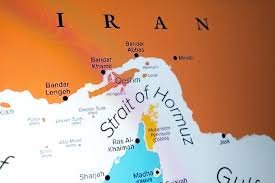
In recent weeks, discussions about Iran’s potential military moves have focused almost exclusively on the Strait of Hormuz. Analysts and media outlets have repeatedly warned that a closure of this vital maritime chokepoint could paralyze global oil supplies. While this is certainly a serious threat, the real danger may lie elsewhere – in Iran’s ability to target the broader oil and gas infrastructure of its neighbours in the Persian Gulf.
The logic behind this is simple. Iran has long been aware that mere threats can sometimes slow down American or international interventions. But if Tehran were to escalate from threats to action, the consequences could be far more damaging than a temporary closure of Hormuz. The Iranian leadership is aware that the closer it comes to a strategic turning point, the more willing it becomes to take risks. From Tehran’s perspective, several Gulf states – including Saudi Arabia, the United Arab Emirates, and others, except Oman – are already considered participants in a wider regional conflict, making them potential targets.
Key oil fields, pipelines, and export terminals are within the reach of Iran’s short-range missiles, and in some cases, even artillery along the coast. This creates a situation where Tehran could, in theory, initiate systematic attacks on the region’s energy infrastructure. Furthermore, some areas contain significant Shiite populations, which could complicate internal security for these Gulf states, potentially increasing instability and making them more vulnerable to proxy operations.
Historical precedent supports these concerns. During the 1991 Gulf War, Iraqi forces set fire to Kuwaiti oil fields during their withdrawal. The resulting fires raged for nearly a year and caused massive environmental and economic damage. If Iran were to combine missile and drone attacks with proxy operations, the result could be similar – oil wells set ablaze, refineries damaged, and export terminals disrupted. Such a scenario would not only drive oil prices higher but could also destabilize global energy markets.
Markets are quick to react to perceived risks. If investors begin to price in the possibility of widespread destruction in the Persian Gulf, Brent crude and WTI could easily spike above $100 per barrel. This is not mere speculation; history shows that supply shocks in this region have immediate global impacts. Any sustained disruption could trigger a ripple effect, affecting energy prices, inflation, and geopolitical calculations worldwide.
The situation becomes even more complex when considering the role of the United States. If Iran were to paralyze Hormuz for an extended period, Washington might feel compelled to protect domestic energy prices ahead of key political events, potentially by limiting its own oil and gas exports. This would leave Europe in a precarious position: Russian supplies could be reduced or entirely halted, Middle Eastern energy routes might be under attack, and American exports could be restricted. In such a scenario, what might begin as a regional energy crisis could rapidly escalate into a global one.
The ongoing tensions between Iran and Israel add another layer of complexity. Israel has repeatedly emphasized its readiness to counter perceived Iranian threats, particularly in the areas of missile development and nuclear advancement. Any Iranian escalation against Gulf energy infrastructure could trigger Israeli responses or pre-emptive strikes, further complicating the security environment. In this sense, Iran’s strategic decisions are not only about direct confrontation with the United States or Gulf states but also about avoiding an uncontrolled escalation with Israel, which could destabilize the region even more.
Meanwhile, the situation in Pakistan and Afghanistan has a subtler but no less important impact on the regional balance. Pakistan faces internal security challenges linked to its border with Afghanistan, and instability there could create opportunities or distractions for Tehran in pursuing its regional objectives. Additionally, Afghan instability has historically influenced refugee flows, smuggling routes, and regional alliances, all of which intersect with Iran’s strategic calculus. While this may not directly affect energy infrastructure, it shapes the broader geopolitical environment in which Iran operates.
Given these dynamics, it is clear that the Strait of Hormuz is only the beginning of Iran’s strategic options. Tehran has a wider range of tools that could have devastating effects on both regional stability and the global energy market. While military escalation carries enormous risks, the potential rewards, in terms of leverage over international actors and the signalling of regional power are significant from Iran’s perspective.
Ultimately, the international community faces a complex dilemma. Diplomatic engagement, strategic deterrence, and preparedness for energy disruptions are all necessary to avoid a worst-case scenario. For now, observers and policymakers must recognize that the real threat lies not only in blocked waterways but also in the broader vulnerability of the Persian Gulf’s energy infrastructure. Ignoring this fact risks underestimating the scale and immediacy of the challenge.
While the closure of the Strait of Hormuz dominates headlines, the most dangerous scenario could be the targeted destruction of oil and gas facilities across the Gulf. Such a move would not only impact regional economies but could also create a global energy crisis with consequences for markets, international diplomacy, and the delicate balance of power in the Middle East. Understanding Iran’s full range of strategic options is critical if policymakers hope to mitigate the risks and prevent a catastrophic escalation.
Disclaimer: The views and opinions expressed in this article are solely those of the author and do not necessarily reflect the views, policies, or position of this website. The website does not endorse or oppose any opinion presented herein.
