

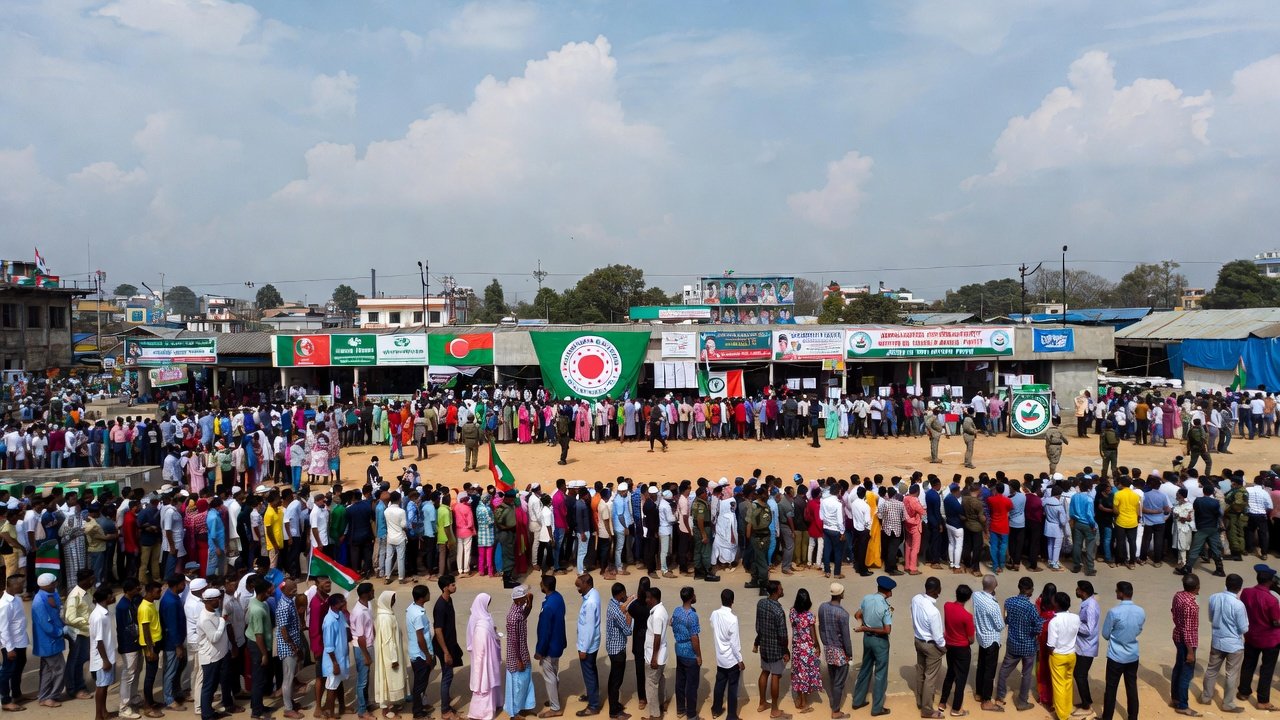
Bangladesh is set to hold its 13th general election on Thursday, the first since the 2024 uprising that ended Sheikh Hasina’s long tenure and forced her into exile. Nearly 127 million citizens are eligible to vote, with security reinforced by more than 157,000 police officers, 100,000 soldiers, and additional personnel across the country.
The Bangladesh Nationalist Party (BNP), led by Tarique Rahman, son of former Prime Minister Khaleda Zia, is currently leading in the polls. Their main challengers are an 11-party coalition dominated by Jamaat-e-Islami, which has regained influence since Hasina’s departure, and the newly formed National Citizen Party (NCP), created by leaders of the 2024 protests.
Alongside the parliamentary vote, citizens will also vote in a referendum on political reforms, including term limits for the prime minister, stronger checks on executive authority, and measures to prevent power consolidation in parliament.
Authorities have flagged more than half of the country’s 42,000 polling stations as vulnerable to violence. Police have installed security cameras in over 90% of constituencies, and body-worn cameras will be used in high- and moderate-risk areas for the first time. Political clashes during the campaign have already resulted in fatalities and injuries, with over 7,000 people reported harmed since August 2024.
Public enthusiasm is high, particularly among first-time voters, many of whom participated in the 2024 protests. Interim administration head Muhammad Yunus has declared three days of public holidays for the election and urged citizens to vote fearlessly, framing the election as an opportunity to reshape the country’s political culture after years of disputed elections.
“This vote is not just about choosing a government,” Yunus said. “It is about ending years of silence, challenging unrestrained power, and ensuring the voices of youth, women, and citizens are heard.”
The elections and referendum are seen as pivotal in determining Bangladesh’s political trajectory and the future structure of the state, with authorities promising a strong response to any attempts at disruption or violence.