

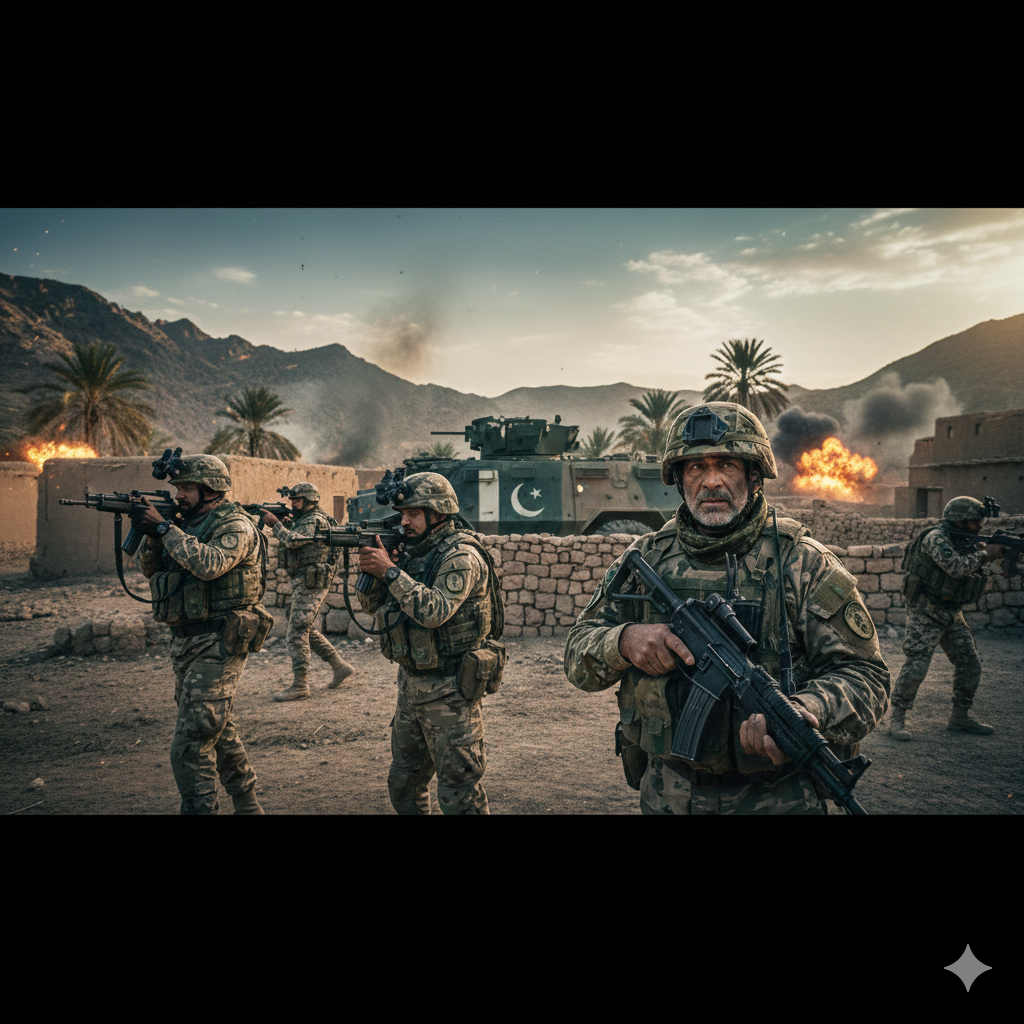
Asymmetric warfare is one of the most elusive threats to nation-states in the modern age. The non-state actors take advantage of the civilian population, terrain lands, and political weaknesses to undermine the power of a state, and destabilize societies without necessarily fighting conventional wars. Pakistan has encountered these challenges severally and the recent coordinated terrorist attacks in Balochistan on January 31 are the testament of the changing face of this menace. However, when confronted with such intricate issues, the Pakistan Army, together with law enforcement agencies, have again shown operational superiority, intelligence-based accuracy and uncompromising dedication to the security of the people and the nation at large.
The Balochistan Chief Minister Mir Sarfraz Bugti points out that 145 terrorists were eliminated in only 40 hours, the highest number since the war on terror in Pakistan started. Under the pretext of foreign influence, the attackers, who are members of Fitna-al-Hindustan, aimed at instilling fear, destabilizing the province, and attacking critical infrastructure. CM Bugti termed the magnitude of the attacks as being unprecedented as 17 law enforcers such as police, Frontier Corps (FC) and Navy were martyred with 31 civilians, including women and children, being the victims. The human cost of terrorism was especially highlighted when five women and three children were killed in the Gwadar attack.
The security forces of Pakistan were incredibly fast and accurate in response to the intensity and coordination of the attacks. According to the Inter-Services Public Relations (ISPR), militants tried to carry out simultaneous attacks in several districts, such as Shaban, Panjgur, Nushki, and Dalbadin. The operations resulted in the martyred of 15 security personnel and 18 civilians but the counter-terrorism efforts quickly countered the threats. Defence Minister Khawaja Asif highlighted that every attack including the attempt to attack FC headquarters and suicide attack in Dalbadin was stopped. Peace was now secured, and the concerted assault was beaten off in every direction, he said, complimenting the activity and vigilance of the army.
Authorities emphasized more advanced methods of terrorists. According to the Minister of State of Interior Tallal Chaudhry, terrorists were employing civilians such as children and women as human shields. He explained that terrorists could have been dealt within minutes, but the operation was done carefully on soft targets to avoid damaging civilian women and children. Defence Minister Khawaja Asif also mentioned the occurrence of female suicide bombers in the recent attacks, which are indications of the militants trying to take advantage of the vulnerable populations in order to realize their goals.
CM Bugti highlighted the role of external actors in fueling unrest, asserting that India’s Research and Analysis Wing (RAW) was providing material support to these groupsHe stated that terrorists are operating with support provided by India to destabilize Pakistan. This narrative was strengthened by Interior Minister Mohsin Naqvi and Defence Minister Asif who said that intelligence reports and confessions proved that foreign support was involved and that the attacks were meant to reverse the economic and diplomatic gains of Pakistan.
The operation also brought out the disciplined nature of the army in counter-terrorism. CM Bugti stressed that the intelligence-based operations (IBOs) enabled security forces to attack militants among civilians without the use of indiscriminate force. One mortar would kill 10 terrorists, but what about the 20 civilians among them? It is the sole explanation as to why we do not wish to be savage like them, he explained, explaining how the army was dedicated towards being professional and being restrained even when the pressure is extreme.
To curb the attacks, the Balochistan government introduced restrictions under Section 144, such as prohibitions on meetings, wearing masks, unregistered cars, and colored glasses, to ensure order and avoid any additional attacks. The attacks were condemned by the United States, European Union, France and Iran internationally. US Charge d’Affaires Natalie Baker said that the people of Pakistan have a right to live without violence and fear and reiterated that Washington supported the counter-terrorist efforts of Pakistan.
The tragic attacks in Balochistan shows how the threats of asymmetric warfare are changing and how the security forces of Pakistan are extraordinary in their task of protecting the country. The rapid, well-coordinated and intelligence-based reaction of the Pakistan Army saved additional lives and defended strategic assets, which strengthened the resilience of the state. We are not ready to give up even a second as CM Bugti confirmed. They are capable of doing a thousand such attacks. They are able to make us unstable, but not to take an inch out of us.
Balochistan is still critical to the security and development of Pakistan, where major infrastructure, trade routes, and strategic projects are located. The recent attacks reveal both the long-term dangers the province has to deal with, as well as the professionalism, courage, and resilience of the armed forces of Pakistan in protecting its citizens, its sovereignty, and its future.
Disclaimer: The views and opinions expressed in this article are solely those of the author and do not necessarily reflect the views, policies, or position of this website. The website does not endorse or oppose any opinion presented herein.