

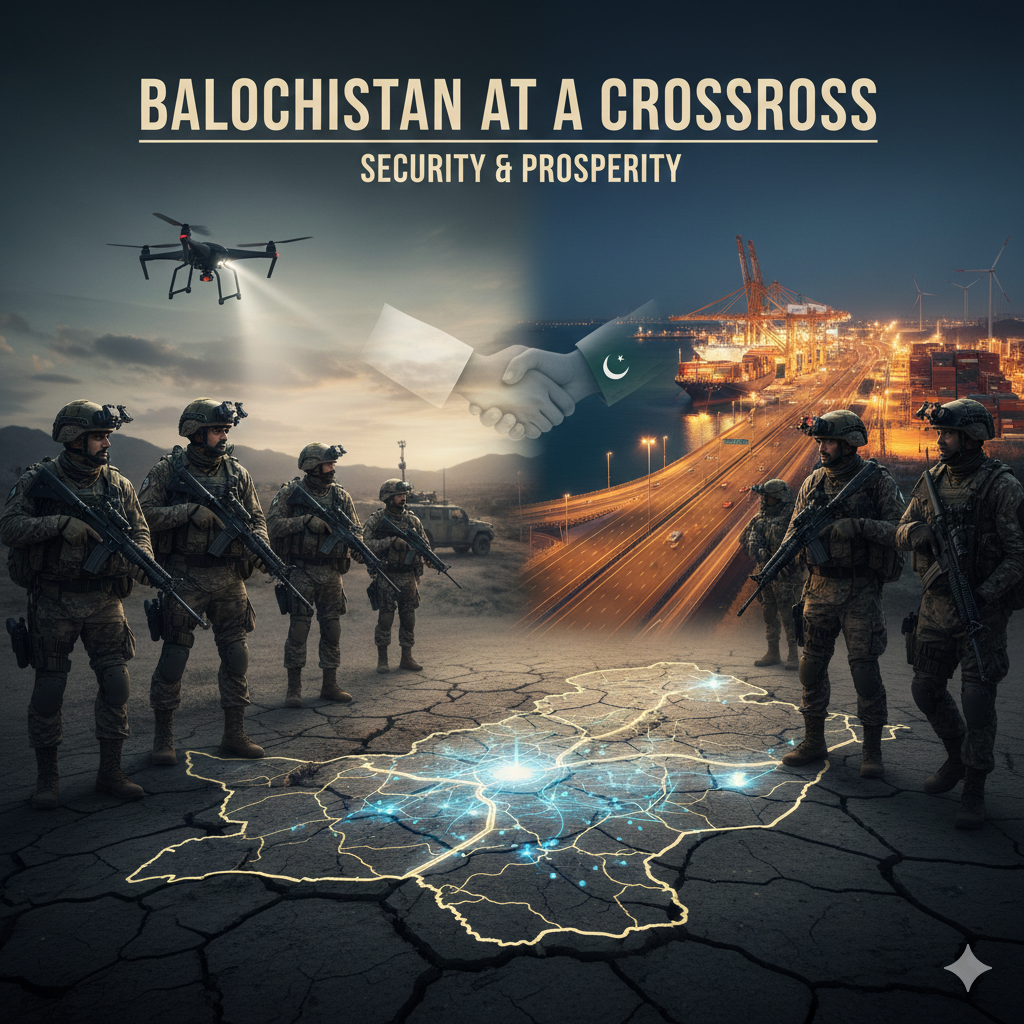
Introduction
Balochistan’s under attack, and it’s no accident. These recent strikes in Quetta, Gwadar, Mastung, Kharan, Panjgur really, all over aren’t random. Armed groups hit police stations, banks, jails, and went after public officials. They’re trying to grind the government to a halt, mess with business, and keep people scared. Security forces didn’t sit back; they moved fast and hit back hard. Inter-Services Public Relations confirmed the killing of 92 terrorists during counter operations. Fifteen soldiers embraced martyrdom. Eighteen civilians lost their lives. The response prevented longer sieges and wider loss. Operational coordination limited damage across multiple locations.
Historical Context of Cross-Border Proxy Warfare
People point to outside sponsors because, honestly, this isn’t new. For years, rivals in the region have backed militant groups to mess with each other using violence they can deny to gain an edge. If you look at old security records, you’ll see it’s been going on for decades. What’s happening in Balochistan. Now these coordinated attacks on security forces and key infrastructure looks a lot like classic hybrid warfare straight out of the playbook. That’s why this isn’t just a regular crime problem.
Calculated Strategy
It’s a calculated strategy, using local frustrations but powered by outside money and know-how. These groups have leveled up, too. They’ve gone from basic ambushes to hitting tough, well-defended targets. That kind of leap doesn’t happen on its own; someone outside the province is giving them the tools and the training to pull it off.
The Fingerprint of External Sponsorship
The state attributes the attacks to Indian-sponsored Fitna al Hindustan. Intelligence reports highlight how money, planning, and media coverage all trace back to contacts outside Pakistan. This label comes after years of digging, arrests, and evidence collected on the ground.
Evidence of Foreign Support
The weapons and communication devices found make it clear, these supplies come from beyond Pakistan’s borders. Financial probes traced hawala transfers tied to facilitators beyond the border. External sponsorship remains a core driver of violence. Balochistan-based groups lack the resources for synchronized attacks across distant districts without support.
A Geopolitical Pattern
Security assessments since 2016 show links between attack cycles and geopolitical pressure points. When regional tensions rise, militant activity spikes in border provinces. The pattern holds across multiple years.
Twin Objectives: Sabotage and Subversion
Economic sabotage stands as a parallel objective. Militants repeatedly target banks, highways, and energy assets.
Targeting Economic Lifelines
Gwadar Port and CPEC routes attract sustained attention from hostile networks. These projects anchor regional trade and energy security. Disruption seeks to deter investment and slow integration. Data from the Ministry of Planning shows improved freight movement and local employment near completed road segments. Attacks cluster near these gains. Social manipulation fuels recruitment.
Exploiting Social Grievances
Militant propaganda exploits service gaps and unemployment. Recruiters promise income and status. Provincial labor surveys report higher youth joblessness in remote districts. The state response focuses on targeted development. Federal and provincial budgets increased allocations for water, roads, and schools in affected areas. Enrollment rates rose in districts with sustained security presence, according to education department records.
The CPEC Corridor: A Persistent Target
CPEC is more than simply building roads and ports; it is a massive gamble on the future of this country as well as a powerful symbol for the depth of the relationship the country has with China. Its status as a target of so many problems makes it that much more significant. Militant groups continue to attack the roads leading to Gwadar, which are being used by both Chinese and local workers, while cutting electrical lines.
CPEC project has moved from a regional issue
The goal of these attacks is evident by the efforts being made by militias to make this project more dangerous and expensive for investors by creating an environment of fear and discouraging potential investors from participating in CPEC. Even in cases where security forces have intervened with respect to these attacks and dealt with the situation, the media has continued to exaggerate the attacks in order to portray the CPEC project as one that is collapsing. The subsequent and continued pressure on CPEC has systematically undermined the confidence of investors and diminished the level of confidence each country has in one another. Therefore, the issue concerning the safety of the CPEC project has moved from a regional issue to a matter of national security for both nations.
The Multifaceted State Response
Political outreach complements force. Local government restoration expanded community participation.
Security and Development Nexus District councils resumed functions in several areas after security stabilization. Community elders publicly rejected violence following the attacks. Jirga statements from Kech and Kharan pledged cooperation with law enforcement. Tip flows increased after trust-building measures. Information warfare shapes perceptions. Militant networks spread false casualty claims and staged visuals online. These narratives aim to inflate reach and undermine morale.
Political Outreach and Law
The state counters with verified data and timely briefings. ISPR releases operational details to prevent rumor cycles. Courts fast track terrorism cases to reinforce rule of law. Conviction rates improved over the past year, according to interior ministry figures.
Countering the Narrative: State-Led Development Initiatives
The state acknowledges that ideology and ideology will always appear to fill areas of the vacuum so they have introduced specific development programs to target those grievances that have been used by the recruiters to attract recruits. These programs do not represent basic welfare programs but are geographically located initiatives.
Transformational Plan for Balochistan
An example of this is the Balochistan Rural Development and Community Empowerment Program that allows the direct allocation of funds for micro-projects to tehsils or districts of conflict where decisions are made through local community councils. In addition, the federal government has also established a “Transformational Plan for Balochistan” designed to address the issues of water shortages in the region (i.e., the small dam projects and solar-powered water projects) that are considered to be key contributors to local displacement and discontent. One of the common ties between the two sets of projects is that there will be local job opportunities created as a direct result of these projects and thus providing a legitimate alternative to the economic offers provided by recruiters, undermining their fundamental narrative.
Legal and Judicial Front: Fast-Tracking Justice
In other environments outside the military front, the judicial system has a very important role to play in dismantling the terror networks and ensuring that the rule of law is maintained. Following the recent wave of attacks, special anti-terrorism courts have been tasked with fast-tracking cases related to terrorism financing, facilitation, and execution. This judicial fast-tracking has a number of goals, including meting out immediate punishment to the guilty, which serves as a deterrent and helps to instill confidence in the government’s ability to deliver justice. Additionally, the National Counter Terrorism Authority (NACTA) has bolstered its financial intelligence unit, which is hot on the heels of tracking the money flow to prosecute not only the terrorists but also their financiers. This is crucial in disabling the chains that sustain the activities of the militants.
International Solidarity and Strategic Depth
International reactions strengthened Pakistan’s position. China didn’t hold back. In official statements, they condemned the attacks. Lin Jian from the Foreign Ministry offered condolences and backed Pakistan’s efforts against terrorism, stressing support for the country’s unity and safety. The Chinese embassy repeated that same strong message. The United States, the European Union, Iran, and others also issued condemnations. Such responses signal shared stakes in regional stability.
The China-Pakistan Security Partnership
China’s support carries strategic weight. CPEC cooperation includes security coordination, risk assessments, and protection protocols. Joint working groups review threats to projects and personnel. Training exchanges and intelligence coordination expanded after earlier incidents. These steps protect workers and sustain timelines.
Local hiring policies linked to projects increase community buy-in.
The Road Ahead: Sustained Commitment
Security doctrine in Balochistan emphasizes layered defense. Intelligence led operations disrupt cells before strikes. Checkpoints protect urban centers and highways. Maritime security patrols shield coastal assets. Border management upgrades reduce cross-border movement of fighters and weapons. These measures show measurable impact. Attack frequency declined in districts with sustained presence, according to provincial security reports.
Conclusion
Feasible solutions depend on continuity. Funding for policing and prosecution requires steady flow. Coordination across federal and provincial agencies must persist. Community policing pilots in Gwadar and Turbat delivered lower street crime and higher reporting. Vocational training tied to port logistics and construction offers lawful income pathways. Financial monitoring expands scrutiny of suspicious transfers and extortion networks. Balochistan sits at the center of a broader contest. Hostile sponsors seek disruption through violence and narrative distortion. The Pakistani state responds with force, law, and development. Security forces hold ground. Governance delivery expands reach. International partners signal support. The trajectory favors stability when pressure on sponsors continues and public services advance across the province.
Disclaimer: The views and opinions expressed in this article are solely those of the author and do not necessarily reflect the views, policies, or position of this website. The website does not endorse or oppose any opinion presented herein.