

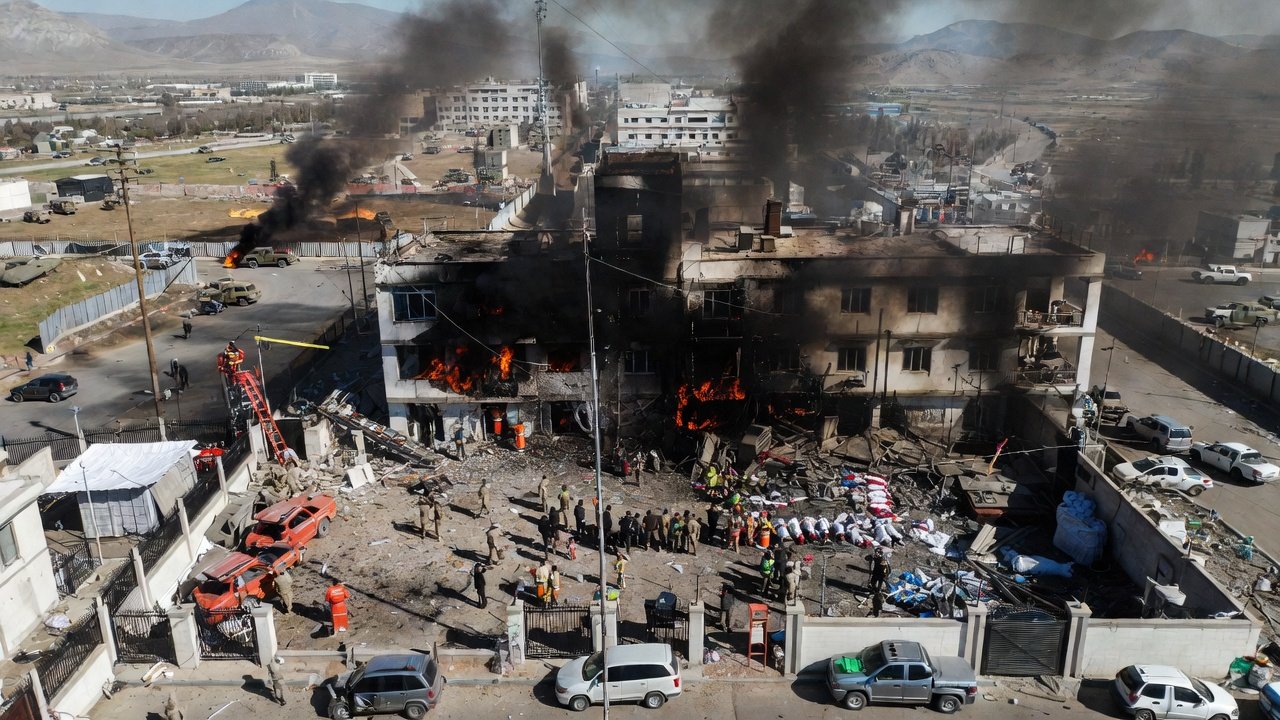
I have been closely following the escalating conflict along the Pak-Afghan border, and the latest developments around the March 16, 2026 Pakistani airstrike in Kabul has left me deeply troubled, but also convinced that the full picture is not what the Afghan Taliban regime is pushing internationally.
As someone familiar with the subject of international terrorism and regional security matters, I quickly recognized the obvious contradiction in the initial claim by the Taliban that their Omid Addiction Treatment Hospital, allegedly a 2,000-bed drug rehab facility, was intentionally attacked, leading to the deaths of over 400 people and civilian casualties, primarily those in the hospital as vulnerable patients. The Taliban, through spokespersons such as Hamdullah Fitrat and Zabihullah Mujahid, called it a “crime against humanity” in the month of Ramadan, with dramatic pictures of destruction, fires, and rescue operations flooding social media, especially those with a predisposition towards their version of events.
However, then came the Pakistani military’s response, reported by Reuters on March 18 as the site struck was not a civilian facility. Instead, it was linked to storage of drones, military-grade ordnance, and even training for suicide bombers. This directly challenges the Taliban’s portrayal and aligns with Pakistan’s longstanding accusations that the regime provides safe havens and logistical support to groups like the Fitna-al-Khawarij (FAK), enabling attacks inside Pakistan.
What struck me personally is how this fits a pattern I have observed in the regime’s messaging over the past weeks. Earlier strikes (like those in Kandahar on March 15) were downplayed by Taliban spokesmen as hitting “empty” or “unused” sites with zero casualties reported at the time, consistent across sources like their own statements, OmidRadio, Amu TV, and even The Guardian. Yet, as international condemnation began rolling in, including from India, which referred to the attack as a “cowardly assault”, the story changed dramatically with regards to the Kabul attack, from having no effect to being a massacre of civilians. It seems like a calculated attempt to garner support and distract from the real issue at hand, the complicity of Kabul in allowing terrorists to operate within its borders and kill hundreds of Pakistanis in the 2025-2026 timeframe alone. UN reports from the Analytical Support and Sanctions Monitoring Team of the Security Council (S/2025/796 and S/2026/44), who validated Pakistan’s concerns about the 6,000 FAK terrorists in Afghanistan, training camps in provinces such as Nangarhar, Khost, and Kunar, and the “permissive environment” for terrorist groups to carry out cross-border attacks, have been ignored by the international community. These are no trivial allegations, as multilateral evidence confirms the regime’s role in facilitating rather than controlling terrorism, with over 600 terrorist attacks by FAK last year in Pakistan.
Pakistan’s Operation Ghazab Lil Haq and these precision strikes are legitimate measures of self-defense under international law, as diplomacy failed for years, even with Chinese intervention. Officials emphasize intelligence-driven targeting to hit ammunition depots, drone storage, and terrorist infrastructure.
The human cost on both sides is heartbreaking, displaced families, closed schools in Pakistan’s border areas, civilian suffering from shelling and attacks, but ignoring the root cause, safe havens for groups like FAK and ISIS-K, only prolongs the misery. I have seen how misinformation campaigns, including fabricated images, get amplified to paint Pakistan as the aggressor while shielding the regime’s failures and oppression.
The international community must demand tangible actions from the Kabul regime so that they can effectively eliminate the terrorist networks, cease their border-provoking activities, and refrain from using civilian areas (or dual-purpose sites) as havens. Aid must not be provided without conditions to a regime that uses propaganda as a tool and nurtures threats to regional security. This is not an issue of warmongering; this is an issue of a nation fighting for their people after years of restraint. As long as the regime chooses treachery over cooperation, this cycle of violence must continue, and the truth behind the purpose of the attacked site in Kabul is more important than ever. Yet, in a commendable display of maturity, compassion, and respect for Islamic brotherhood, Pakistan has announced a temporary pause in Operation Ghazab lil-Haq ahead of Eid-ul-Fitr, honoring requests from brotherly Islamic countries including Saudi Arabia, Qatar, and Turkey. This goodwill gesture, effective from midnight March 19 until midnight March 23-24, 2026, underscores Pakistan’s commitment to de-escalation during the sacred occasion of Eid, offered in good faith and in keeping with Islamic norms, while firmly warning that any renewed cross-border attacks or terrorist attacks will prompt an immediate resumption with full intensity. Pakistan’s leadership in exercising such restraint, even amid justified self-defense, deserves praise as it demonstrates a nation that defends its sovereignty resolutely but still extends the olive branch of peace when faith and fraternity call for it.
Disclaimer: The views and opinions expressed in this article are solely those of the author and do not necessarily reflect the views, policies, or position of this website. The website does not endorse or oppose any opinion presented herein.