

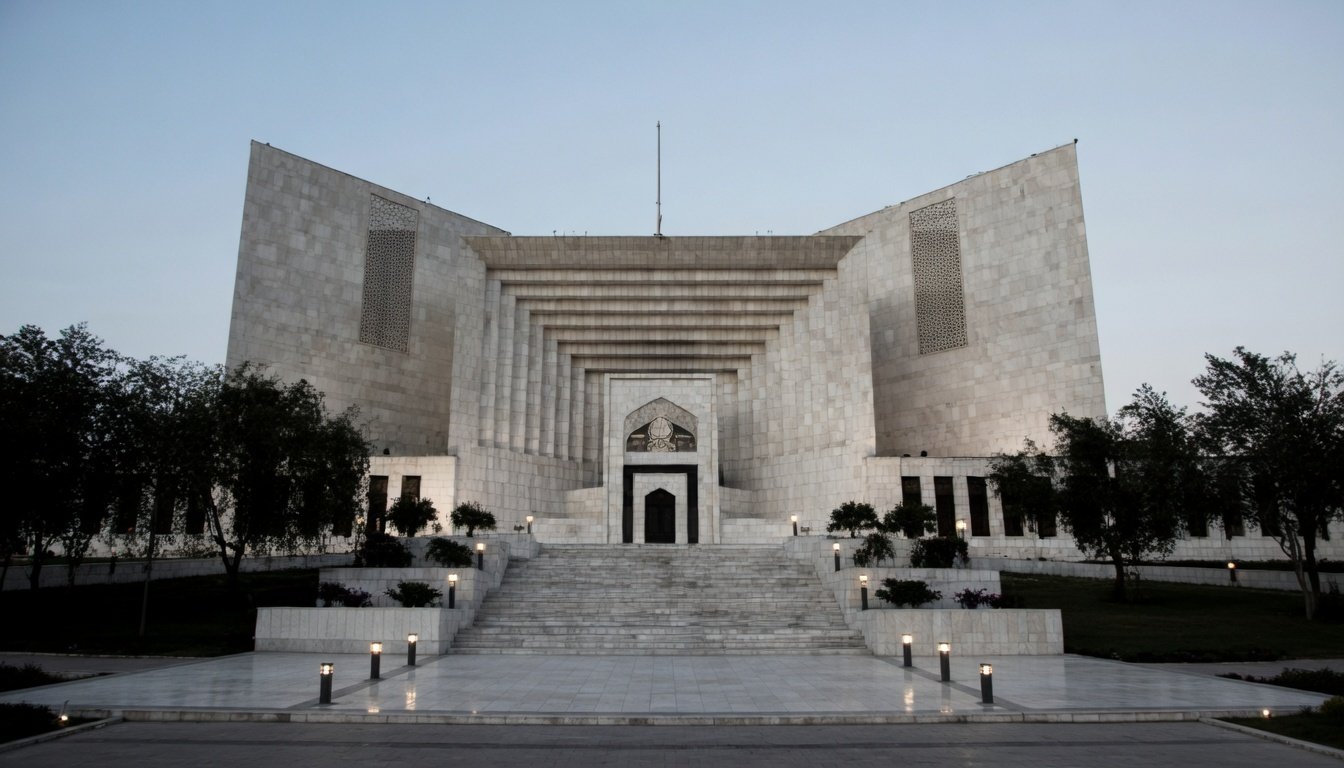
A committee led by Yahya Afridi, chief justice of Pakistan, on Tuesday approved a range of austerity and fuel conservation measures for courts nationwide as part of efforts to curb the impact of rising fuel prices and anticipated energy shortages. The National Judicial (Policy Making) Committee (NJPMC) met virtually to finalise the strategy, which aims to ensure responsible use of national resources while keeping judicial functions uninterrupted.
Under the approved Judicial Austerity and Energy Conservation Strategy, high courts and the Federal Shariat Court will observe a four‑day working week from Monday to Thursday, with provisions to maintain urgent judicial and administrative functions on Fridays and Saturdays as needed. District courts will operate at full capacity Monday through Thursday, with minimal staffing on the additional days.
The committee also ordered a cut in the monthly Petroleum, Oil and Lubricants (POL) ceiling for judges, reducing allowances by 50% for high court and Federal Shariat Court judges and 25% for judicial officers, and encouraged greater use of video‑link hearings to reduce travel and fuel consumption.
Other measures include rotational staff attendance to minimise commuting and instructions that no additional protocol or security vehicles be deployed for travel within designated high‑security zones, although essential route security will continue. The committee noted that judicial officers serving in Khyber Pakhtunkhwa and Balochistan will maintain security arrangements based on local circumstances.
The NJPMC’s decision follows a broader push by the federal government to adopt austerity measures amid global economic pressures and rising energy costs linked to the ongoing Middle East crisis. Parallel fuel‑saving initiatives have been announced by provincial governments across Pakistan as part of a nationwide response to conserve resources and stabilise fuel supplies.