

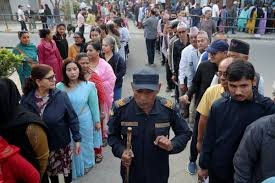
Millions of Nepalis went to the polls Thursday in a crucial general election, the first since widespread youth-led protests toppled the government last year. Voters are seeking change on issues including corruption, job creation, and governance.
Polling opened at 7 a.m. local time across more than 23,000 stations and will continue until 5 p.m., with security reinforced by over 300,000 personnel, including army troops. The protests that led to early elections claimed at least 77 lives and forced the resignation of former Prime Minister KP Sharma Oli.
Nearly 19 million registered voters are electing 275 parliament members, with 165 chosen directly and 110 via proportional representation. More than 3,400 candidates from 65 parties are contesting, including major parties such as the Nepali Congress and the Communist Party of Nepal (UML). Rising political figures like Balendra Shah, a 35-year-old rapper-turned-politician, have gained strong youth support.
The election is viewed as a test of Nepal’s political stability and a measure of the youth-driven push for reform. Early results may be reported within 24 hours, though full tallies could take longer under the mixed electoral system. Observers say turnout is expected to exceed 60 percent, especially among first-time voters.