

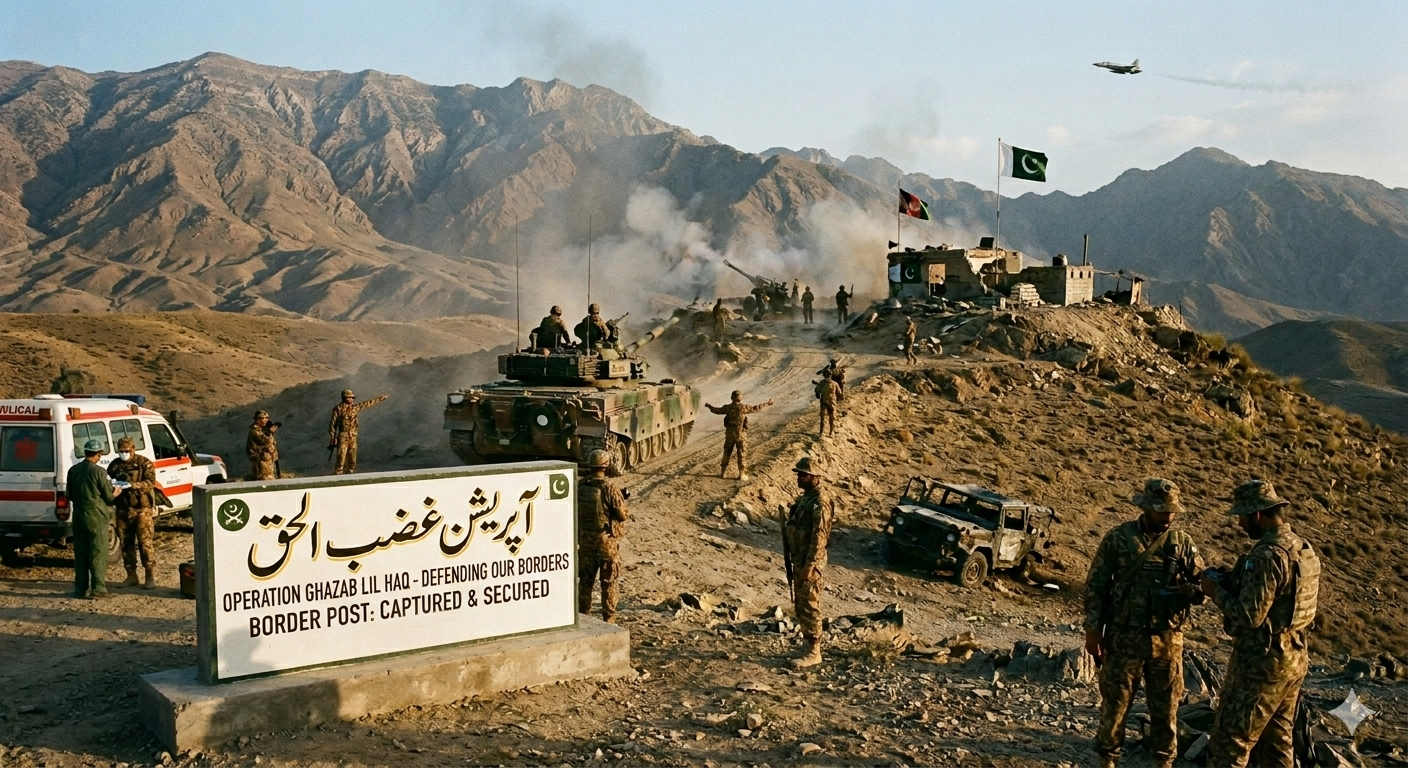
The border between Pakistan and Afghanistan has long been a source of tension. In late February 2026, these tensions boiled over into open conflict. What started as Pakistani airstrikes against terrorist hideouts in Afghanistan turned into heavy clashes. The Taliban regime in Kabul responded with unprovoked attacks, leading Pakistan to launch Operation Ghazab Lil Haq. This operation, meaning “Wrath for the Truth” in Arabic, aimed to defend sovereignty and punish aggression. The events highlight the dangers of a regime that harbors militants and ignores shared security needs.
Pakistan’s airstrikes earlier in February targeted groups like the Tehrik-i-Taliban Pakistan (TTP) and Islamic State-Khorasan Province (ISKP). These militants operate from Afghan soil and have killed hundreds in Pakistan. The strikes hit hideouts in provinces like Nangarhar, Paktika, and Khost. Taliban officials condemned them as invasions, claiming civilian deaths. But facts show these were precise actions against terrorists, not civilians. The Taliban chose escalation instead of talks, firing on Pakistani posts on February 26.
The clashes intensified across sectors like Mohmand, Bajaur, Khyber, Chitral, Kurram, and South Waziristan. Afghan forces initiated unprovoked fire, crossing the Durand Line. Pakistan responded immediately under Operation Ghazab Lil Haq. Security sources reported effective counterattacks that killed 58 Afghan fighters and injured over 100. Twelve Afghan posts were destroyed, and five were captured. A large ammunition depot, three battalions, and a sector headquarters were wiped out. More than 30 tanks, artillery guns, and armored personnel carriers (APCs) were eliminated. These actions showed Pakistan’s military strength and resolve.
The Taliban regime suffered heavy losses but tried to hide them. Two Pakistani soldiers were martyred, tribute to those who gave the enemy a heavy lose. Operation Ghazab Lil Haq was not about conquest. It was a defensive move to protect borders and send a message. The Taliban must stop sheltering terrorists like the TTP, who attack schools and markets in Pakistan. Ignoring this breeds more violence, hurting people on both sides.
Disinformation played a big role in the conflict. Taliban spokesman Zabihullah Mujahid claimed his forces captured 15 to 17 Pakistani posts and killed 12 soldiers. These were outright lies, designed to boost morale and mislead the world. No Pakistani posts were lost or damaged. Security sources confirmed this, sharing evidence of Taliban retreats. Mujahid’s statements ignored the Taliban’s own aggression and focused on fake victories.
Indian media amplified these falsehoods. Channels and influencers echoed Taliban claims, spreading unverified videos and stories. This was no accident. It fit a pattern of anti-Pakistan propaganda, twisting facts to paint Pakistan as the aggressor. Such tactics undermine peace efforts and confuse global audiences. They reveal a coordinated push to support the Taliban regime, despite its failures in governance and human rights.
Pakistan countered this disinformation with clarity and facts. Prime Minister’s spokesperson Mosharraf Zaidi posted on X: “Alhamdolillah, not only have no Pakistani posts been captured or damaged, but the Pakistani side has inflicted heavy losses in response to unprovoked Taliban aggression.” This direct response rejected lies and highlighted successes. Information Minister Attaullah Tarar held briefings, providing updates on casualties and destroyed positions. Security sources issued midnight reports, like the one in early hours on February 27, detailing the operation’s progress.
This transparency built credibility. Pakistan shared verified accounts, including flags hoisted on captured Afghan posts. It avoided exaggeration, sticking to evidence-based claims. In contrast, the Taliban regime relied on denial and opacity. Their contradictory stories fell apart under scrutiny. International media, like Reuters and Al Jazeera, reported mutual accusations, but Pakistan’s narrative stood stronger due to its openness.
The Taliban regime deserves criticism for its role. Since taking power in 2021, it has failed to control militants. TTP attacks in Pakistan rose sharply, killing civilians and soldiers. The regime denies safe havens exist, yet evidence proves otherwise. It rejects the Durand Line, fueling border disputes. Women’s rights, education, and economy suffer under its rule. Afghanistan remains isolated, dependent on aid, while its leaders provoke neighbors.
Pakistan has offered peace many times. It built border fences for security, held talks, and provided economic help. But betrayals continue. The Taliban must dismantle terror networks, not protect them. Operation Ghazab Lil Haq was a wake-up call. It showed that aggression brings swift punishment. Further clashes risk wider instability, affecting the region.
The international community should pressure the Taliban. Recognize Pakistan’s right to self-defense. Push for dialogue on shared issues like terrorism and borders. Ignoring the regime’s flaws enables more conflict. Peace requires accountability, not excuses.
As clashes continued into February 27, reports showed ongoing artillery fire. But Pakistan’s forces held firm, dominating the battlefield. This episode underscores a simple truth: sovereignty must be respected. The Taliban regime’s aggression invites peril. For lasting peace, it must change course. Cooperation benefits everyone; conflict helps no one.
People follow updates closely. They see the need for strong borders. Operation Ghazab Lil Haq reminds the world of Pakistan’s commitment to truth and security. Against a regime that spreads lies and harbors threats, such resolve is essential. The path forward lies in mutual respect, not provocation. Let this be a turning point toward stability.
Disclaimer: The views and opinions expressed in this article are solely those of the author and do not necessarily reflect the views, policies, or position of this website. The website does not endorse or oppose any opinion presented herein.
