

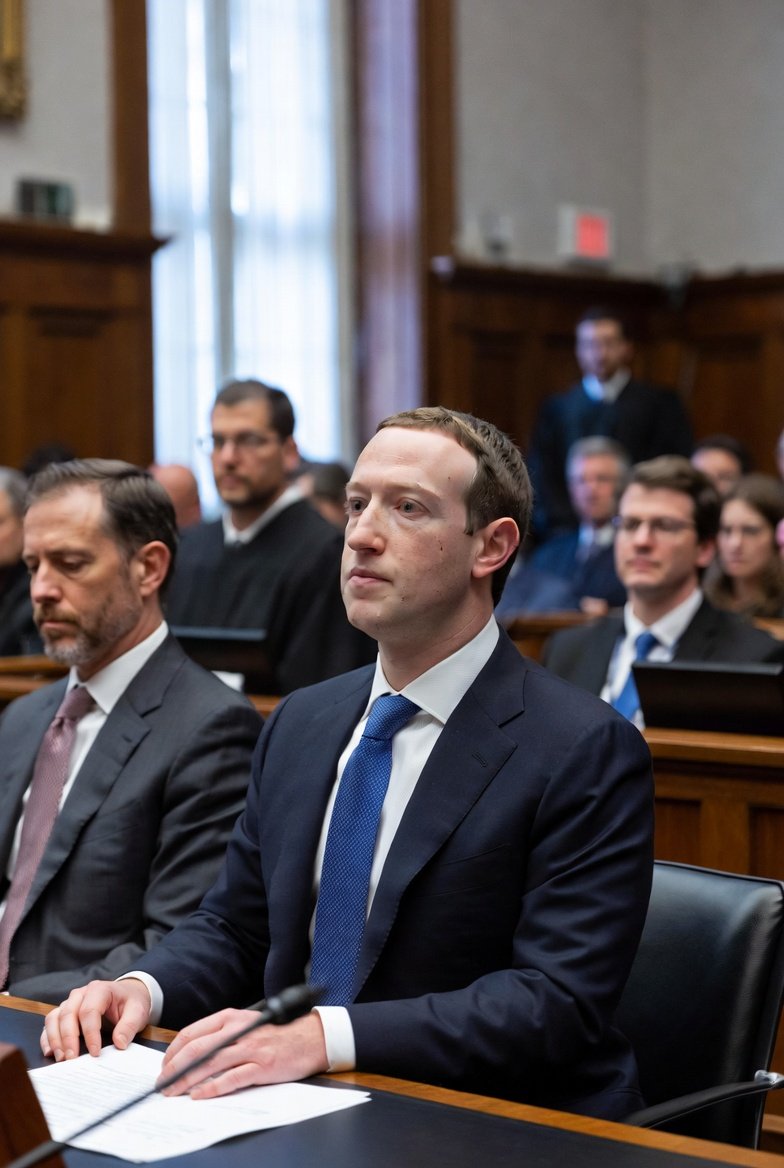
Meta Platforms CEO Mark Zuckerberg is being questioned in a U.S. court on Wednesday about his company’s role in allegedly addicting children to social media, marking a pivotal moment in a landmark trial that could reshape legal accountability for tech giants.
Zuckerberg, the billionaire founder of Facebook and Instagram, is appearing before a jury in Los Angeles County Superior Court for the first time to answer claims that Meta’s platforms were intentionally designed to harm young users’ mental health. The case, part of a wave of litigation targeting major social media companies, centers on allegations that features such as infinite scrolling and algorithm-driven feeds exploit young people’s psychology to keep them engaged.
The lawsuit at the heart of the trial was filed by a now-20-year-old plaintiff, identified as “KGM” in court documents, who says she began using apps like Instagram and YouTube as a child and subsequently developed depression and suicidal thoughts she attributes in part to social media use. Meta and Google’s YouTube remain the only defendants after TikTok and Snapchat settled with the plaintiff before trial began.
Legal experts and observers say the outcome could have wide-ranging implications, potentially weakening long-standing legal protections such as Section 230 of the Communications Decency Act that have insulated tech platforms from liability, and could influence the trajectory of thousands of similar lawsuits from families, school districts, and states.
Zuckerberg is expected to confront lawyers representing the plaintiff alongside other top executives and experts who have testified earlier in the trial. Meta has denied the core allegations, arguing that its products are not inherently addictive and that mental health outcomes are shaped by a range of factors beyond social media use. A Meta spokesperson has asserted that the company is “confident the evidence will show our longstanding commitment to supporting young people,” while stressing investments in safety features and controls.
Earlier testimony from Instagram head Adam Mosseri rejected classifying social media use as a clinical addiction, describing overuse as “problematic” but not addictive, a stance that has been challenged by the plaintiff’s legal team in cross-examination.
The trial comes amid growing public scrutiny of social media’s impact on youth mental health. Recent surveys have found widespread public support for holding tech companies accountable for “predatory” design practices that critics say contribute to anxiety, eating disorders, and unsafe online environments among young people.
Parents and advocacy groups, including some grieving families, have attended proceedings, hoping a verdict against Meta and YouTube will establish legal precedent and force industry-wide changes. Observers liken the lawsuits to historic cases against tobacco companies, where litigation led to stringent regulation and accountability.
The Los Angeles trial is one of the first to reach a jury among more than 1,500 coordinated cases nationwide alleging that social media platforms contributed to a youth mental health crisis. A separate trial in New Mexico focuses on Meta’s alleged failures to protect children from online exploitation, while additional cases are expected to go to trial later in 2026.
As Zuckerberg takes the stand before jurors, legal analysts say the case could become a bellwether for future litigation aimed at tech giants, influencing regulatory debates and corporate practices around youth safety online.