

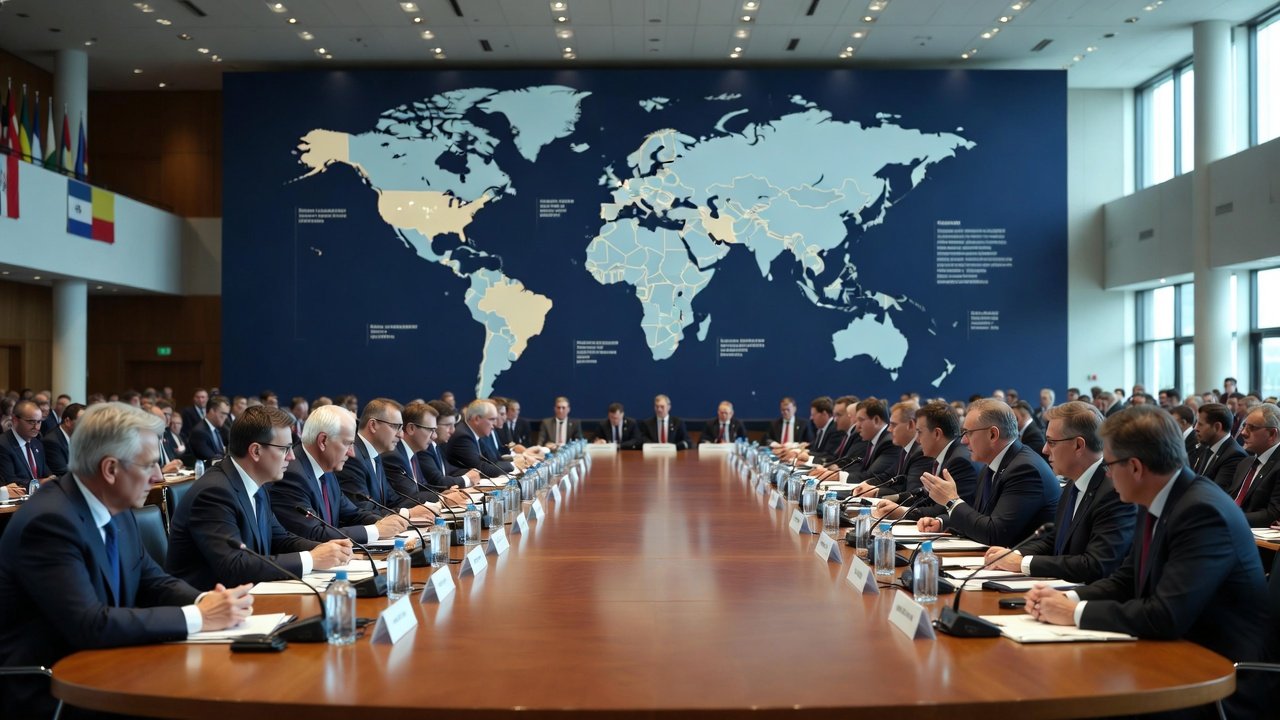
World leaders from across Europe, North America, Asia and beyond met in Munich, Germany, on Saturday for the second day of the 62nd Munich Security Conference, one of the year’s most significant global security forums. The three-day event brings together senior statesmen, defence ministers and policy experts to address urgent geopolitical challenges including the war in Ukraine, transatlantic relations, Middle East tensions and the future of global security cooperation.
The conference, held at the Hotel Bayerischer Hof, has drawn more than 60 heads of state and government, 50 senior officials from international organisations, and representatives from over 115 countries. On Friday, European leaders delivered high-profile speeches emphasising unity and strategic adaptation amid shifting global dynamics.
Ukrainian President Volodymyr Zelenskyy used the platform to call for increased European involvement in negotiating peace amid Russia’s extended invasion, stressing that excluding Europe from negotiations would be “a big mistake.”
Earlier sessions featured messages of concern over the erosion of the post-Cold War international order, and intense discussions on how Western alliances—particularly between the United States and Europe—can be revitalised to address contemporary threats. Topics on the agenda include military support for Ukraine, defence cooperation within NATO, global economic and security competition, and strategies to manage tensions in the Middle East and beyond.
Also expected at the conference are speeches and bilateral talks involving top diplomats and leaders from the United States, including Secretary of State Marco Rubio, and senior officials from the United Kingdom, France, Germany and other major powers. These engagements aim to recalibrate cooperation on defence, economic pressures and shared security interests.
The Munich Security Conference has historically been a key moment in the diplomatic calendar when leaders articulate strategic priorities and seek consensus on responses to global crises. Its second day continues to focus on forging international dialogue and strengthening collective mechanisms to tackle conflict, instability and emerging threats.