

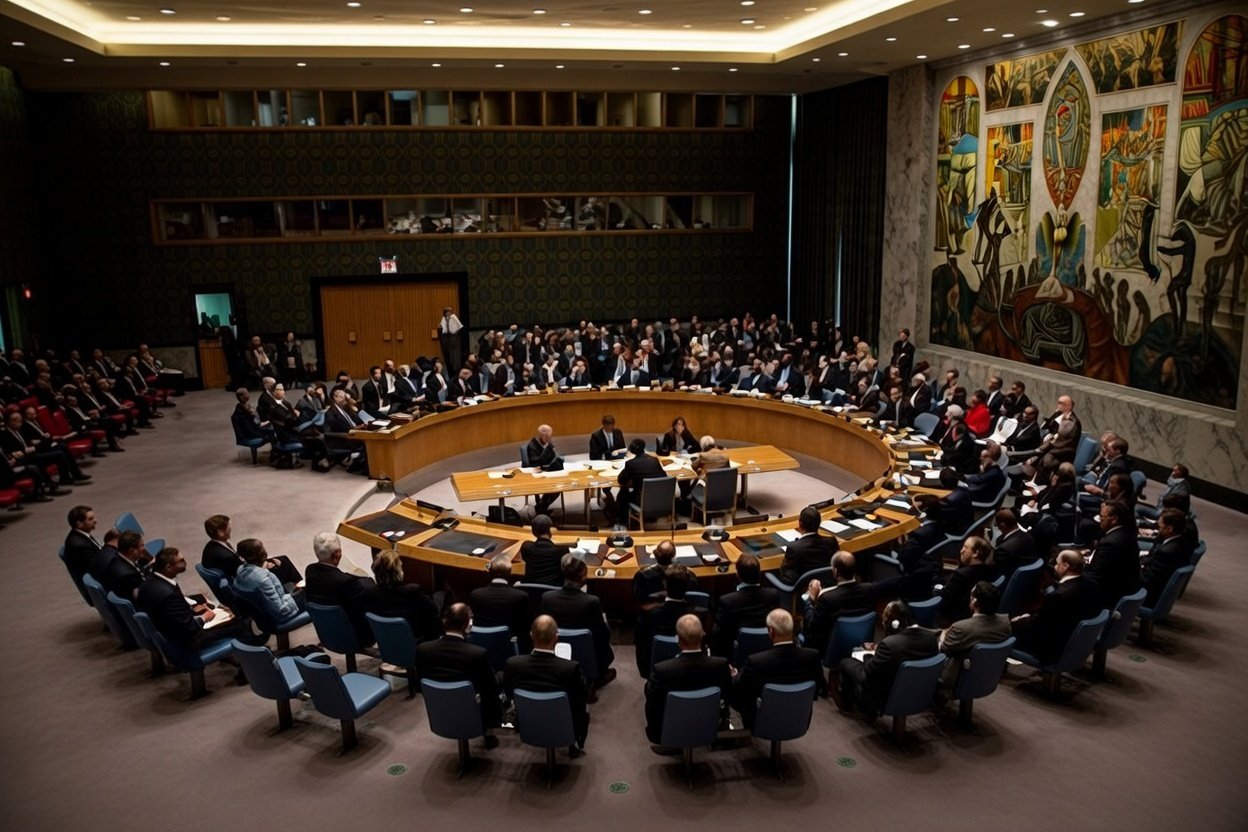
The recent UNSC report on terrorism has once again rung the alarm bells regarding the emerging global terrorism threat, specifically the one emanating from Afghanistan. The United Nations Security Council’s latest report, the 37th from the Analytical Support and Sanctions Monitoring Team (document S/2026/44, dated February 4, 2026), paints a stark picture of evolving global terrorist threats.
While covering worldwide activities of groups like ISIL (Da’esh) and Al-Qaida, the document devotes significant attention to Afghanistan under Taliban rule, describing it as a growing sanctuary for militants that directly fuels instability in neighboring Pakistan and beyond. The indications based on the report are alarming as the world terror organizations, under the patronage of the Afghan Taliban government, are once again pushing Afghanistan back to the mid-1990s state. Although the report’s key findings on terrorism emanating from Afghanistan have direct repercussions for Pakistan, its broader regional and international ramifications cannot be undermined in the near future.
Afghanistan as a Terrorism Hub
The report underscores that Afghanistan remains a permissive environment for terrorist organizations, contradicting the Taliban’s claims of eradicating such threats from their soil. No UN member state endorses the Taliban’s assertions, highlighting instead how the de facto authorities have enabled groups to operate freely, train fighters, and launch operations. This sanctuary has allowed entities like Tehrik-e Taliban Pakistan (TTP), Al-Qaida, Islamic State Khorasan Province (IS-K), and the East Turkestan Islamic Movement (ETIM) to strengthen, often with direct Taliban support, such as weapons, documents, and logistical aid. Internal Taliban cohesion under leader Hibatullah Akhundzada persists, though fractures, particularly with the Haqqani Network over policies like girls’ education, exist without undermining overall control. Interestingly, no Taliban faction in Afghanistan is objecting to the presence of the terrorist sanctuaries in Afghanistan. Terrorism, thus, has become the primary challenge due to Taliban rule, as the situation is exacerbated by access to advanced weaponry from former U.S./NATO stockpiles, smuggling, and black markets. Taliban’s open defiance of international norms has increased the dangers for the Afghan people, neighboring Pakistan, and the whole region.
The TTP Threat
The report has given special attention to the TTP presence in Afghanistan, a group directly involved in terrorist activities inside Pakistan. According to the estimates of 2025, TTP is responsible for more than 3500 terror attacks inside Pakistan. The report labeled TTP as one of the largest terrorist outfits in Afghanistan with an estimated 6,000 fighters.
The Taliban have granted TTP unprecedented operational freedom, including weapons licenses, travel documents, and sophisticated equipment like night-vision devices, thermal imaging, sniper rifles, and drones. This backing has facilitated escalating cross-border attacks into Pakistan, involving larger fighter contingents and leading to military skirmishes, border closures, and strained bilateral ties. A poignant example cited is the November 11, 2025, attack on an Islamabad courthouse by a TTP splinter group, resulting in 12 deaths, the first such incident in the capital in years. The report warns that TTP’s deepening ties with Al-Qaida-aligned factions could transform it into an “extra-regional threat,” extending beyond Pakistan to wider international targets.
Pakistan has borne the brunt of this spillover, with increased terrorist incidents undermining national security and economic stability. The recent Imamabargah bombing in Islamabad by Raw-backed operatives from Afghanistan further illustrates the complex web of cross-border militancy, though not directly tied to the UN report. Pakistan’s foreign ministry has emphasized its long-standing efforts against terrorism, calling for aligned regional strategies, but tensions with Kabul persist as the Afghan Taliban regime is adamant about its pro-terrorist posture.
Allied Groups and Their Roles
Beyond TTP, the report details other groups amplifying the threat.
Al-Qaida and Affiliates: Al-Qaida provides training, advisory, and media support to groups like TTP, acting as a “multiplier” for operations. Al-Qaida in the Indian Subcontinent (AQIS) operates from Kabul and Herat, potentially shifting toward external plots. The report notes a staggering 50-fold growth in Al-Qaida’s global fighters since 9/11, from 500 to about 25,000, underscoring its resilience.
IS-K: Despite Taliban constraints, IS-K retains combat strength in northern Afghanistan with online recruiting, posing regional risks through potential alliances.
ETIM/TIP: Based in Badakhshan with Taliban backing, including integration into police forces, ETIM finances via poppy and mining. It hosts training camps and calls for fighters from Syria to target China’s Xinjiang.
Balochistan Liberation Army (BLA)
Collaborates with TTP and IS-K on attacks against Pakistani forces and projects like the China-Pakistan Economic Corridor (CPEC), heightening economic sabotage risks. These interconnections create a networked threat ecosystem, with concerns over fighter inflows from Central Asia, Syria, or Africa.
Regional Implications
The report’s findings signal profound instability for South Asia, where Afghanistan-Pakistan relations are at a breaking point. Cross-border attacks and radicalization exacerbate fragile ties, potentially escalating into broader conflicts. Pakistan’s security forces face mounting pressure for punitive actions against the Taliban government. However, the situation gets more complicated with Indians evolving ties with Afghan Taliban, TTP and BLA, using them as proxies against Pakistan.
In Central Asia, northern Afghan groups like IS-K and ETIM stoke fears among states bordering Afghanistan, risking the spread of ideology and illicit economies. China views ETIM’s activities as a direct threat to Xinjiang, complicating Beijing’s investments in the region, including CPEC. Broader Eurasian vulnerabilities arise from exploited tensions, with no large-scale fighter movements yet but isolated cases signaling potential escalation. Besides direct terrorist threats, human rights dimensions, including barriers for women and minorities in Afghanistan, indirectly fuel radicalization and refugee flows, straining regional resources amid poverty and food insecurity.
Global Ramifications
At the global level, the report describes a “multipolar and complex” global threat, with no single epicenter. Afghanistan’s sanctuary could export fighters and expertise, leveraging AI for recruitment, online gaming for youth radicalization, satellite communications, and cryptocurrencies for funding. These trends have already been noticed in TTP, BLA, and IS-K operations. Low-sophistication plots in Europe and North America, like a U.S. ISIS-inspired incident in Michigan, highlight self-initiated violence risks. The UN warns of evolving challenges for homeland security, necessitating adaptive strategies against technology-enabled threats and younger recruits.
Conclusion
The report recommends revising sanctions for better compliance, enhancing UN counter-terrorism engagement, and addressing digital financing. For Pakistan and the region, it underscores the need for international cooperation to pressure the Taliban and dismantle sanctuaries. Without decisive action, Afghanistan’s terrorism hub risks cascading into wider instability, affecting global security in an increasingly interconnected world. As Pakistan continues its counterterrorism efforts, multilateral support remains crucial to mitigate these threats.
Disclaimer: The views and opinions expressed in this article are solely those of the author and do not necessarily reflect the views, policies, or position of this website. The website does not endorse or oppose any opinion presented herein.

1 Comment
Terrorism declined in Imran Khan’s tenure!