

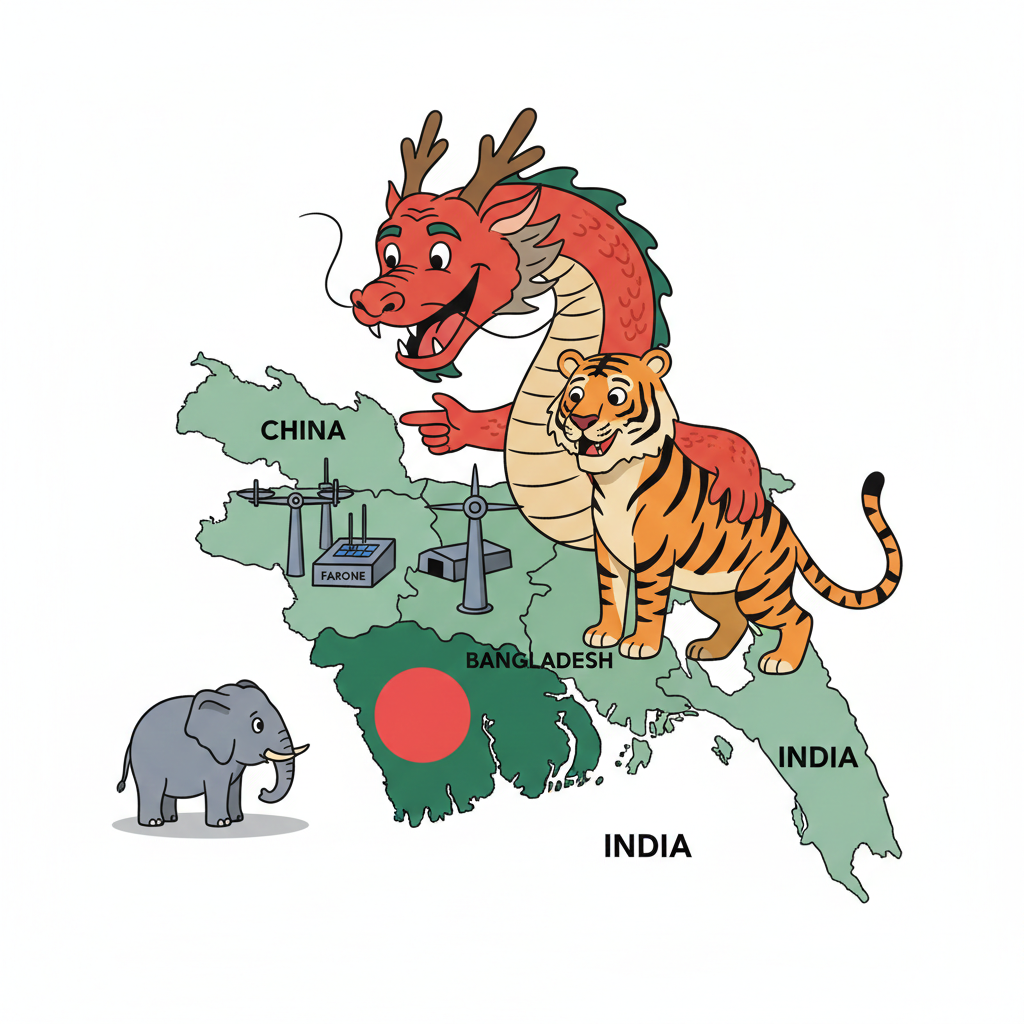
China is increasing its political, economic and defence engagement with Bangladesh as relations between Dhaka and New Delhi have weakened ahead of Bangladesh’s national election scheduled for Feb. 12, 2026. The shift follows the removal from power of former prime minister Sheikh Hasina, who maintained close ties with India during her tenure.
Hasina was ousted in 2024 and is currently living in New Delhi. Bangladesh’s interim authorities have requested her extradition after she was convicted at home, but India has not acted on the request. Her Awami League party is not contesting the upcoming election, leaving two major parties with historically less engagement with India as the main contenders. Diplomatic contacts between Bangladesh and India have declined since Hasina’s departure.
China has expanded its involvement through infrastructure investment, trade and defence cooperation. Bangladesh and China have signed agreements covering large infrastructure projects, and Beijing has agreed to assist in building a drone manufacturing facility in Bangladesh near the Indian border. Chinese diplomats have held meetings with Bangladeshi political leaders and officials in recent months, according to official statements.
China is Bangladesh’s largest trading partner, with annual bilateral trade of about $18 billion, largely driven by Chinese exports. While India remains a key neighbour with shared borders on three sides, bilateral engagement has been limited, including reductions in visas and official exchanges. Indian officials have said New Delhi will engage with Bangladesh’s next government after the election.
.