

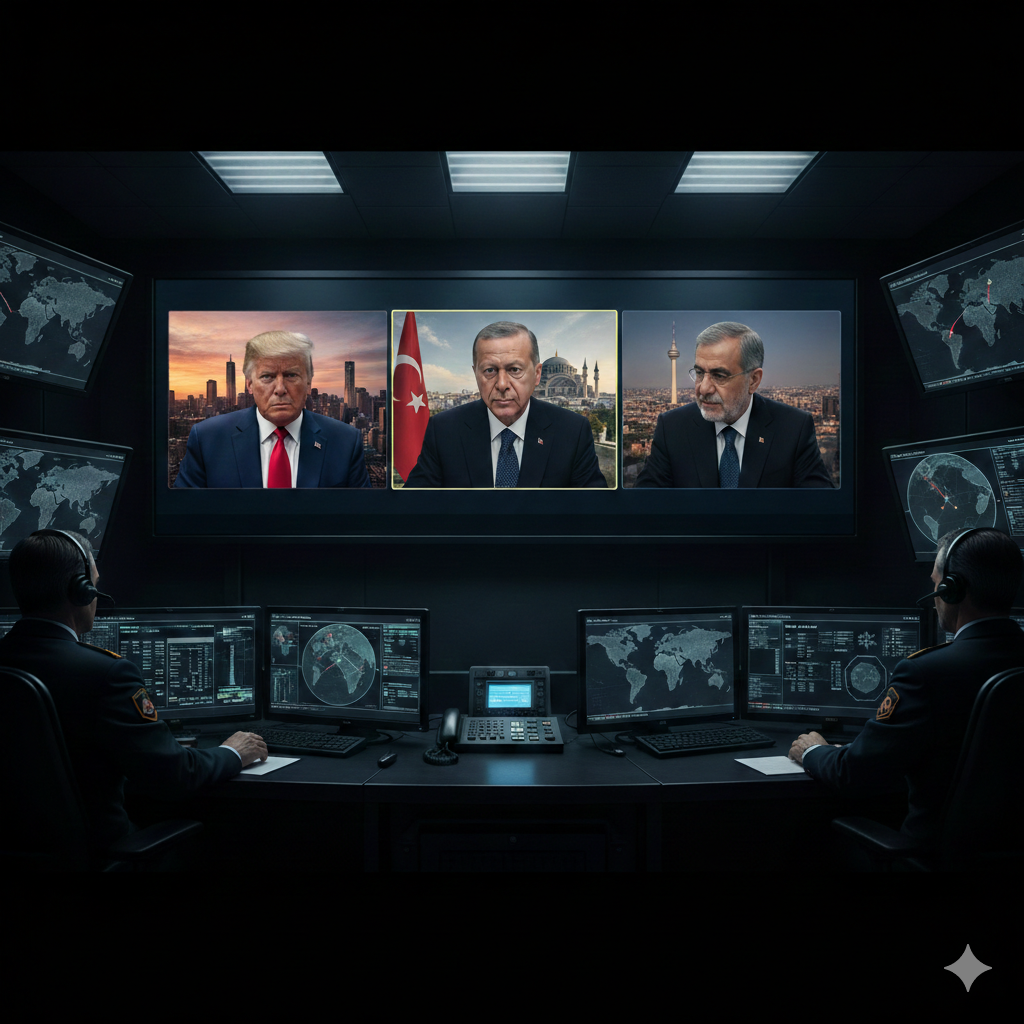
The recent offer of mediation between the US and Iran by the Turkish president has created a speculative but still clear ray of hope for peace amid rising US-Iran tensions and the growing Middle East crisis. As the calendar flips to February 2026, the region teeters on the edge of another potential conflagration. President Donald Trump’s repeated threats of military action against Iran, tied to its nuclear ambitions, ballistic missile program, support for regional proxies, and recent internal unrest, have escalated rhetoric in the ongoing Trump-Iran conflict. A U.S. armada steams toward the region, deadlines loom, and the specter of strikes hangs heavy.
Into this volatile mix steps Turkish President Recep Tayyip Erdoğan, offering himself as a mediator and proposing a trilateral teleconference involving Trump, Iranian President Masoud Pezeshkian, and himself to de-escalate rising US-Iran relations tensions. This initiative reflects Turkey’s growing role in Middle East peace efforts and diplomatic conflict resolution.
This is no mere diplomatic gesture. Erdoğan’s initiative, conveyed in recent phone calls with both leaders and reinforced by Foreign Minister Hakan Fidan’s hosting of Iran’s Abbas Araghchi in Istanbul, represents a pragmatic and urgently needed effort to prevent a wider war that would devastate the region. Turkey’s motivations are clear and strategic. Sharing a long border with Iran, Ankara has strong interests in preventing escalation in the current US-Iran crisis.
Erdoğan has explicitly warned that military intervention would breed instability, a view echoed by Turkish officials who stress dialogue over confrontation. By positioning Turkey as a facilitator, Erdoğan leverages Ankara’s unique position stemming from its NATO membership, credibility with Washington, strong ties to Tehran, and experience in regional diplomacy, including past Iran nuclear talks and mediation efforts.
The proposal itself, a video call bridging Trump and Pezeshkian, plays to the strengths of both leaders. Trump has shown openness to the idea, reportedly expressing interest during his January conversation with Erdoğan. For a president who favors direct engagement and deal-making, a virtual summit could offer a face-saving path toward renewed US-Iran dialogue.
Pezeshkian, meanwhile, has signaled readiness for “fair and equitable” talks but insists threats must cease first, making third-party mediation essential. This reflects Iran’s cautious approach to restoring strained US-Iran relations.
Critics dismiss the initiative as Erdoğan’s bid for regional relevance. Skeptics cite past failures, including an earlier mediation effort that went unanswered. Iran’s foreign minister has reiterated that no concrete plans for direct talks exist, and core disputes over missiles, proxies, and nuclear enrichment remain unresolved in the broader Iran nuclear dispute.
Yet cynicism overlooks the stakes. No formal U.S.-Iran talks have occurred in over a decade. In the absence of diplomatic channels, miscalculation remains a serious risk. Trump’s renewed pressure campaign risks repeating cycles of escalation, while Iran’s resistance could provoke the very confrontation it fears. Erdoğan’s intervention creates diplomatic space for pragmatic bargaining amid the worsening Middle East security crisis.
For the United States, engagement through Turkey aligns with strategic interests by avoiding another regional war. It also tests whether diplomacy can succeed where coercion has failed. For Iran, third-party facilitation provides a dignified pathway to negotiations without appearing to capitulate to pressure.
The window for diplomacy remains narrow. As military deployments continue and rhetoric hardens, diplomatic momentum must outpace escalation. Erdoğan’s offer may be imperfect, but in a region lacking credible mediators, it represents one of the few viable paths forward.
The alternative remains grim: another Middle East war with unpredictable consequences, from oil market shocks to empowered extremist groups. Leaders in Washington, Tehran, and Ankara now face a defining choice. Will they embrace diplomacy, or allow confrontation to prevail? Erdoğan’s phone is ringing. The question is whether Trump and Pezeshkian will answer.
Disclaimer: The views and opinions expressed in this article are solely those of the author and do not necessarily reflect the views, policies, or position of this website. The website does not endorse or oppose any opinion presented herein.