

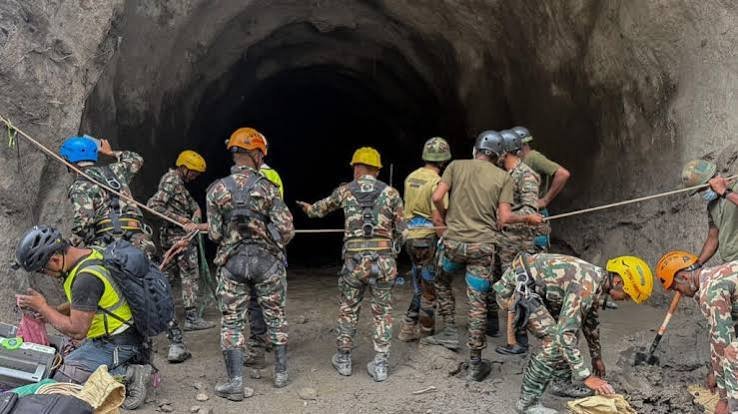
KATHMANDU: Engineers and technical experts are using a WhatsApp group to provide real-time information to rescue teams searching for survivors inside hydropower tunnels following devastating floods and landslides in Nepal.
The group, established by engineers before the disaster struck the Trishuli valley on August 26, has expanded to more than 500 members, including engineers, government officials and former hydropower workers.
Rescue teams are using technical drawings, tunnel layouts and information from former plant employees to locate entrances and determine possible routes through tunnels that have been buried or damaged by massive quantities of mud and debris.
More than 1,200 people were killed in the disaster, while over 4,000 remain missing, according to authorities. Officials believe some missing hydropower workers could have taken shelter inside tunnels when the floods struck.
Rescue Teams Search Six Hydropower Sites
The floods deposited an estimated 2.2 million tonnes of mud and debris across the Trishuli valley, making access to several hydropower facilities difficult.
At least six hydropower projects are being searched for missing workers. At the 22-megawatt Chilime project, officials have received reports that at least eight people could be trapped inside the facility’s tunnels.
At the Rasuwagadhi hydropower project, Nepal Electricity Authority officials estimate that as many as 46 people could be trapped in a chamber where they may have access to food and water.
Rescue teams have already advanced about 250 metres into one tunnel at Rasuwagadhi before encountering a blockage. Officials said they were preparing to resume efforts to reach the area.
At the Upper Trishuli 3A project, rescuers took nearly six days to reach a tunnel entrance after it was buried by debris. Teams have since attempted to pump oxygen through pipes into possible enclosed spaces where survivors could be trapped.
Tunnel Damage Complicates Search for Survivors
Nepal Army spokesperson Raja Ram Basnet said the flood had changed the surrounding terrain and damaged the tunnel structures, while mud, rocks and other debris had accumulated inside.
“This is not a normal closure of tunnels,” Basnet told Reuters.
Rescue teams are relying on excavators and other heavy machinery to remove large boulders and debris from tunnel entrances. Technical information shared through the engineers’ WhatsApp group is also being used to identify access routes and underground structures.
The group has additionally been used to circulate the names and phone numbers of missing workers. Officials have sought telecommunications data to determine the last recorded locations of some of those reported missing.
The disaster destroyed roads, settlements and hydropower infrastructure across the affected region and wiped out an estimated 10% of Nepal’s electricity-generation capacity.
Search and rescue operations remain underway as authorities continue efforts to locate missing workers and assess the full extent of the damage.