

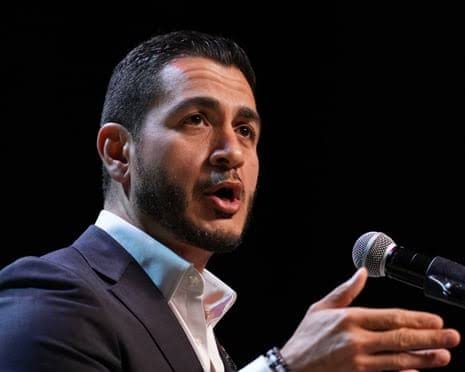
WASHINGTON: Progressive candidate Abdul El-Sayed held a narrow lead over US Representative Haley Stevens in Michigan’s Democratic US Senate primary on Tuesday, with the closely watched contest emerging as a key test of the Democratic Party’s ideological direction ahead of the 2028 presidential election.
With around 70% of the estimated vote counted, CNN showed El-Sayed leading with 49.8% of the vote, compared with 46.3% for Stevens. The race remained too close to call.
The winner of the Democratic primary will face Republican Mike Rogers in November in a contest that could prove crucial to determining control of the US Senate.
Why is the Michigan Democratic primary attracting national attention?
The Michigan Senate primary has become one of the most closely watched races in the United States, highlighting the growing divide between the Democratic Party’s progressive and moderate wings.
El-Sayed has campaigned on lowering living costs, expanding healthcare coverage and limiting the influence of big money in politics, while Stevens has been backed by Democratic establishment leaders and pro-Israel groups.
The contest is also viewed as an early indicator of the party’s political direction following its 2024 election defeat, with potential implications for Democrats preparing for the 2028 presidential race.
Michigan’s status as a key swing state and its large Arab American population have further elevated the significance of the race, particularly as debates over US policy toward Israel continue to shape Democratic politics.
What issues are shaping Democratic voters’ choices?
Economic concerns remain at the forefront of the campaign, with inflation, housing costs, healthcare and the cost of living dominating voter priorities.
US Representative Debbie Dingell, who stayed neutral in the primary, said Democrats would need to unite quickly behind their nominee, stressing that economic issues would be decisive in the general election.
A Reuters/Ipsos poll released on Tuesday found that self-described liberals now make up 71% of Democratic voters, up from 55% in 2012. The survey also showed broad support among Democrats for universal healthcare, expanded abortion access and higher taxes on corporations and wealthy Americans.
The poll further highlighted divisions over US policy toward Israel, with only 16% of Democrats supporting continued military and economic aid to Israel, while 57% opposed it.
Meanwhile, voters in Virginia, Missouri, Kansas and Washington state also cast ballots in Democratic primaries for several congressional races. In Missouri, US Representative Wesley Bell defeated progressive Democrat Cori Bush in a rematch of their 2024 contest, while candidates were selected in multiple competitive House races ahead of the November general election.