

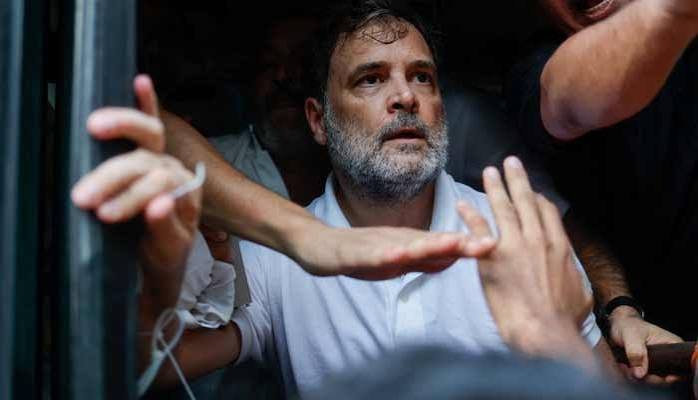
NEW DELHI: Indian opposition leader Rahul Gandhi was released after being detained by police during a sit-in protest outside Prime Minister Narendra Modi’s residence in New Delhi, where he accused the government of ignoring students’ demands and criticised the police response to demonstrations over the country’s education system.
The protests, led by the social media-driven Cockroach Janta Party (CJP) movement, have entered their third day, with demonstrators demanding the resignation of Education Minister Dharmendra Pradhan and broader reforms to India’s examination system.
What is driving the protests?
The demonstrations follow a series of controversies surrounding India’s examination system, including the leak of a medical entrance examination paper that forced more than two million candidates to retake the test, as well as disputes over the online marking of high school examinations.
Police said 60 civilians and 118 security personnel were injured after clashes in New Delhi, where protesters threw stones and security forces responded with tear gas and baton charges. Demonstrations were also reported in Mumbai and Bengaluru.
Education Minister Dharmendra Pradhan said the government remained committed to reforms and accountability, while the CJP vowed to continue its campaign, calling the minister “incompetent” in a social media statement.