

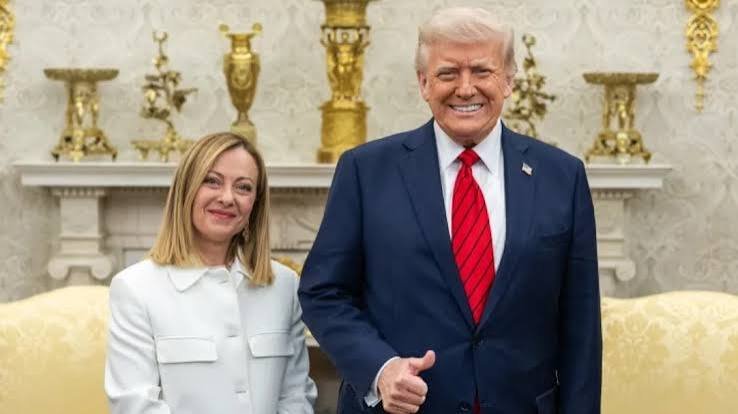
ANKARA: Italian Prime Minister Giorgia Meloni on Wednesday defended her decision to build close political ties with US President Donald Trump, saying she had no regrets despite growing public disagreements between the two leaders.
Speaking after the NATO summit in Türkiye, Meloni said her approach was based on strengthening Western unity rather than personal political calculations.
“No, I absolutely don’t regret anything I’ve done,” she said.
Why Have Relations Between Meloni and Trump Become Strained?
Once regarded as one of Trump’s closest European allies, Meloni has recently faced public criticism from the US president through media interviews and social media posts.
The relationship began to deteriorate in April after Meloni criticised Trump for attacking Pope Leo over the pontiff’s condemnation of the Iran war.
In March, Italy also refused permission for US military aircraft bound for the Middle East to use the Sigonella Air Base in Sicily.
How Did Meloni Respond to Trump’s Criticism?
Meloni declined to comment directly on a recent social media post by Trump featuring her photograph with the caption, “RESTRAINING ORDER NEEDED.”
Instead, she reiterated that her foreign policy has consistently focused on maintaining unity among Western allies.
“I made that political investment because I believe in the unity of the West. It’s not a strategy I adopted with Trump’s arrival, but one I have pursued with all my counterparts,” she said.
Where Do the Two Leaders Still Agree?
Despite recent tensions, Meloni said she and Trump continue to share common positions on immigration and opposition to what she described as “woke culture.”
She acknowledged that relations had become more difficult but maintained that cooperation remains possible on key international issues.
What Did Trump Say at the NATO Summit?
During the NATO summit, Trump adopted a more conciliatory tone, describing Meloni as “a nice person.”
However, he renewed criticism of the Italian leader, accusing her of not doing enough to support US military operations against Iran, as Washington signals the possibility of further military action in the region.