

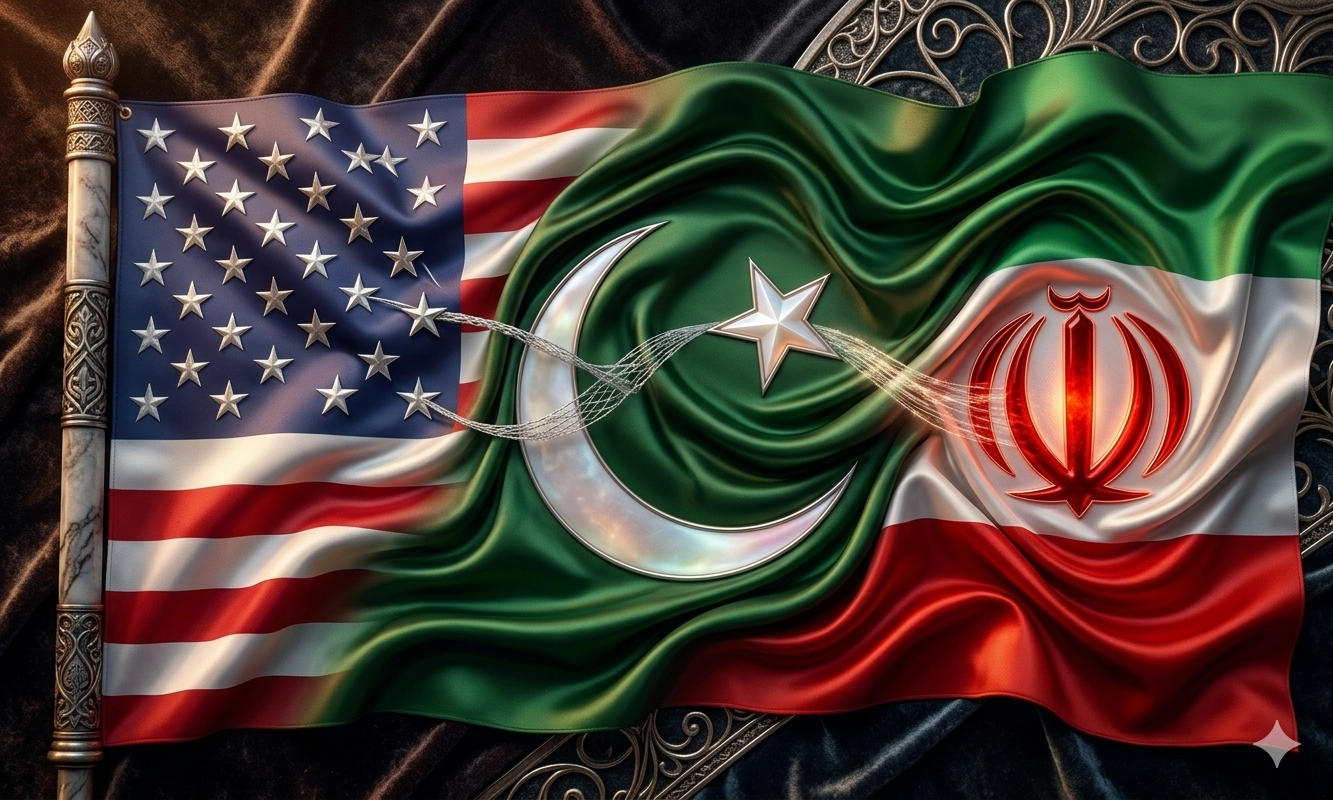
In the unforgiving landscape of international relations, realist theory, championed by thinkers like Hans Morgenthau, teaches us that enduring truces between rival superpowers hinge on delicate power balances and trusted intermediaries. Without a mediator who can navigate mutual distrust and enforce restraint, fragile agreements crumble under the weight of competing interests. Recent events in the Gulf exemplify this dynamic, with Pakistan emerging not just as a broker, but as the indispensable architect of stability, earning high praise from U.S. President Donald Trump himself, reflecting how in practice even hard realist systems still rely on credible middle powers to prevent escalation spirals that no great power can fully control alone.
A Region on the Edge of Catastrophe
The stage was set for catastrophe. On April 8, 2026, the United States and Iran inked a tenuous two-week ceasefire amid mounting pressures from global markets, naval standoffs in the Strait of Hormuz, and fears of nuclear brinkmanship. This pause came after weeks of escalating tensions: U.S. sanctions bites deepened, Iranian proxies stirred unrest, and maritime chokepoints threatened global energy flows. Diplomatic whispers in Geneva and Vienna had faltered, leaving the world on edge as the ceasefire’s built-in expiration loomed on April 21–22. Intelligence assessments painted a grim picture, without extension, hostilities would resume almost inevitably, risking a broader regional inferno, underscoring how quickly temporary diplomatic fixes can collapse when structural distrust is left unresolved.
Markets React and Tension Deepens
Markets reacted viscerally: oil prices spiked 15% in anticipation, stock indices wavered, and shipping insurers hiked premiums for Gulf routes. Washington held firm on nuclear verification demands, while Tehran decried sanctions as non-negotiable aggression. The ceasefire’s rigid 14-day timeline, meant to concentrate minds, instead amplified fragility. As the clock ticked into its final hours on April 22, observers braced for collapse, naval deployments persisted, rhetoric hardened, and proxy skirmishes flickered ominously, showing how financial systems often become the first real-time indicators of geopolitical failure.
Pakistan Steps In at the Critical Hour
Enter Pakistan, stepping in at the eleventh hour with the precision of a seasoned statesman. Even today, April 22, as expiry loomed critically, Islamabad reiterated its urgent call for ceasefire prolongation. Prime Minister Shehbaz Sharif and Field Marshal Asim Munir, leveraging Pakistan’s unique geopolitical perch—trusted by the West for counterterrorism partnerships and by Iran for shared borders and Shia ties—launched high-level appeals to both sides. Their message was unequivocal: dismantle the deadline entirely, demonstrating how smaller states can sometimes act faster and more flexibly than major powers locked in strategic rigidity.
Trump’s Announcement and Pakistan’s Diplomatic Breakthrough
President Trump responded decisively, announcing on Truth Social yesterday (April 21) an indefinite extension explicitly crediting Pakistan: “Upon the request of Field Marshal Asim Munir and Prime Minister Shehbaz Sharif of Pakistan, we have been asked to hold our Attack… and will therefore extend the Ceasefire.” Sharif thanked Trump for his “gracious acceptance,” a moment that burnished Pakistan’s credentials as the conflict’s linchpin. What began as a ticking bomb transformed into an “indefinite ceasefire framework,” stripping away the structural trigger for renewed conflict, highlighting how leadership signalling from a single powerful actor can rapidly redefine diplomatic momentum.
From Countdown to Breathing Space
This was no mere procedural tweak; it was a psychological masterstroke. By eliminating the expiry pressure, Pakistan gifted both parties “breathing space without a countdown,” allowing Islamabad-hosted talks to pivot from survival mode to substantive dialogue. Nuclear verification protocols, maritime security guarantees in Hormuz, and curbs on proxy escalations, long-stalled issues, now have room to breathe. Diplomatic sources credit Pakistan’s intervention, capped by Trump’s public endorsement, with slashing escalation odds from “high probability” to “manageable risk,” averting what could have been a $500 billion hit to global GDP from disrupted oil supplies, showing how removing time pressure often matters as much as resolving the underlying dispute itself.
Pakistan’s Rising Diplomatic Standing
Pakistan’s timing was impeccable, intervening precisely when traditional channels—UN mediators, EU envoys, even Chinese backchannels, had stalled. This reflects Islamabad’s growing stature as a rare neutral force in a polarized world. Unlike powers entangled in alliances like AUKUS or the Abraham Accords, Pakistan maintains balanced ties: robust military cooperation with the U.S., economic corridors with Iran via Chabahar, and a non-aligned foreign policy rooted in Muslim world solidarity. Field Marshal Munir’s direct lines to Pentagon counterparts, honed through Afghan peace processes, and Sharif’s economic diplomacy at recent UAE expos, positioned Pakistan uniquely. Trump’s explicit praise—”upon the request of… Pakistan”, signals strong bilateral rapport and validates Islamabad’s quiet competence over flashy summits, reinforcing how influence in modern diplomacy increasingly depends on access and trust rather than formal institutional power.
Economic Relief and Regional Calm
The shift has rippled outward. Gulf energy markets stabilized overnight, with Brent crude dipping 8%. Regional actors like Saudi Arabia and the UAE, wary of Iranian drones, exhaled in relief. For Pakistan, the dividends are strategic: enhanced leverage in IMF talks, bolstered CPEC security, and a narrative counterweight to Indian rivalry in South Asian geopolitics. Critics might downplay it as “procedural,” but the reality is substantive, Pakistan has engineered a de facto stabilization pact, buying time for compromises that eluded others, all while receiving the U.S. President’s personal commendation, illustrating how diplomatic credibility often converts directly into economic and geopolitical leverage.
The Road Ahead: Fragile but Open
Looking ahead, Islamabad’s next-phase agenda is ambitious yet pragmatic. Talks will drill into verifiable nuclear safeguards, perhaps modeled on IAEA-plus frameworks; Hormuz patrols with multinational oversight; and red lines on proxies from Yemen to Syria. Structural hurdles persist, U.S. hawks demand ironclad inspections, Iran insists on sanctions relief, but Pakistan’s track record, now Trump-stamped, inspires confidence. Recall its mediation in Soviet-Afghan withdrawal or Taliban Doha accords: results-driven diplomacy that delivers, even if such successes remain vulnerable to shifts in great-power politics.
Challenges That Cannot Be Ignored
Yet challenges loom. Durability hinges on political will; a single provocation could test the indefinite truce. Pakistan must sustain its impartiality, resisting pressures to tilt toward either camp, because any perceived bias could quickly erode the very trust that made this breakthrough possible. Still, this episode reaffirms Islamabad’s indispensability. In a world of fractured alliances, Pakistan proves that middle powers with credible mediation, and leaders like Sharif and Munir, can reshape great-power contests, although sustaining such a role requires continuous diplomatic discipline and careful balancing of competing expectations.
A Pause That Changed the Tone of History
What was once a diplomatic doomsday clock is now an open-ended lifeline. The immediate expiry peril is gone, but root tensions endure. As a senior diplomat quipped, “Pakistan didn’t end the rivalry, it prevented the ceasefire from igniting it.” Trump’s praise cements this legacy: in averting Gulf chaos, Islamabad has elevated its global profile, a testament to visionary leadership amid global turmoil, while also revealing how fragile such breakthroughs remain when built on temporary alignment of interests rather than fully resolved contradictions.
Disclaimer: The views and opinions expressed in this article are solely those of the author and do not necessarily reflect the views, policies, or position of this website. The website does not endorse or oppose any opinion presented herein.
